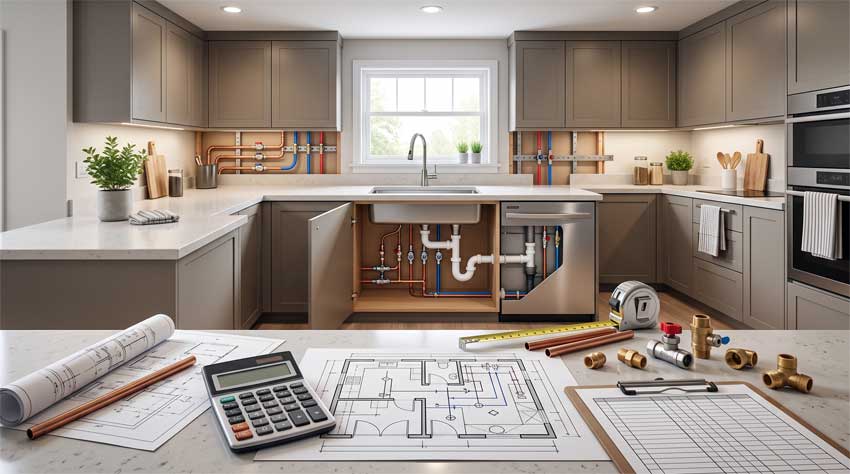
Oven Installation Calculator

Oven Installation Calculator Cost Guide
An Oven Installation Calculator helps homeowners estimate the potential cost of installing, replacing, or upgrading a kitchen oven before requesting quotations from appliance installers, electricians, gas engineers, or remodeling contractors.
Oven installation cost can vary significantly depending on oven type, product quality, kitchen size, project scope, existing condition, electrical or gas requirements, cabinet modifications, labour difficulty, and old-appliance removal.
This cost calculator supports both USA cost and UK cost estimates, displaying results in USD or GBP while allowing kitchen size to be entered in square feet or square meters.
It separates material cost, labour cost, installation cost, additional work, and removal expenses to provide a practical price estimate for freestanding ranges, single wall ovens, double ovens, gas appliances, and premium built-in oven projects.
Oven Installation Calculator
Estimate oven installation costs in the USA or UK based on kitchen size, oven type, material quality, project scope, existing condition, installation complexity, labour difficulty, removal, and optional electrical, gas, ventilation, or cabinet upgrades.
Please enter a valid value.
USA Oven Installation Estimate
$0
Kitchen Size: 0 ft²
Cost Breakdown
Materials$0
Labour$0
Installation$0
Additional$0
Removal$0
FREE PDF ESTIMATE
Get Your Oven Installation Cost PDF
Enter your details below to receive your oven installation estimate, selected options, and complete cost breakdown as a downloadable PDF.
✓ Your PDF is ready!
This estimate is intended for preliminary budgeting. Actual oven installation costs may vary based on oven brand, fuel type, dimensions, electrical load, gas requirements, cabinet opening, ventilation, delivery access, local code requirements, permits, local labour rates, taxes, and installer pricing.
Free Oven Installation Calculator
Material / Project Types
Oven installation projects can range from straightforward appliance replacements to custom built-in conversions requiring electrical, gas, cabinet, and ventilation work.
Freestanding electric ovens or ranges are usually among the simpler options because the cooking appliance combines the oven and cooktop in one unit. A like-for-like replacement can often use the existing opening and electrical connection.
Single wall ovens are installed directly into kitchen cabinetry. They usually require a suitable cabinet opening, adequate electrical supply, ventilation clearance, and precise fitting.
Double wall ovens provide additional cooking capacity but are larger, heavier, and generally more expensive than single ovens. Their higher electrical load and larger cabinet requirements can increase installation cost.
Also Read:
Gas ovens or ranges require an appropriate gas connection in addition to electrical requirements for ignition or electronic controls. Gas-line changes may add specialist labour and additional installation expenses.
Premium or smart built-in ovens may include advanced cooking modes, connected controls, steam functions, self-cleaning systems, premium finishes, and integrated designs. Higher product prices and more precise fitting can substantially increase material cost.
Project scope also affects cost. A like-for-like replacement is generally less expensive than changing oven dimensions, upgrading to a double oven, or converting cabinetry for a new built-in appliance.
Main Factors Affecting Cost
Oven type is one of the main factors affecting the total price estimate. A standard freestanding oven generally costs less than a premium double wall oven or integrated smart appliance.
Material quality also has a significant effect. Budget appliances provide essential cooking functions, while Premium and Luxury ovens may offer advanced controls, better insulation, high-end finishes, steam cooking, smart connectivity, and specialist accessories.
Existing condition can influence replacement cost and repair cost. If the current circuit, gas connection, cabinet opening, and surrounding surfaces are suitable, installation may be relatively straightforward. Damaged wiring, inadequate electrical capacity, leaking gas fittings, or unsuitable cabinetry can increase repair and preparation costs.
Installation type affects labour cost. A basic swap is usually simpler than a custom installation requiring cabinet modifications, trim work, new electrical connections, or precise built-in alignment.
Labour difficulty can increase when ovens are heavy, access is restricted, appliances are installed above floor level, cabinetry is tight, or new utility routes must be created.
Optional work such as dedicated circuits, gas-line modifications, cabinet opening changes, ventilation alterations, trim kits, and smart-control setup can further increase the total installation cost.
Cost Breakdown
Material Cost: Material cost represents the estimated oven and related installation materials. It varies according to oven type, quality level, kitchen size, project scope, and existing condition.
Labour Cost: Labour cost covers appliance handling, preparation, positioning, electrical or gas connection assistance, adjustment, testing, and other professional tasks associated with the project.
Installation Cost: Installation cost represents the complexity of fitting and connecting the oven. Basic replacements generally cost less, while built-in and custom installations can require cabinet alterations, new wiring, ventilation work, and precise fitting.
Additional Cost: Additional expenses can include a dedicated electrical circuit, gas-line connection or modification, cabinet opening work, ventilation changes, trim kits, finish work, and smart-control setup. Basic, Standard, and Advanced feature levels adjust these allowances.
Removal Cost: Removal cost applies when an existing oven or range must be disconnected, removed, hauled away, recycled, or disposed of. Double ovens, gas appliances, and integrated units may require more labour during removal.
The calculator combines material cost, labour cost, installation cost, additional cost, and removal cost to produce the estimated total oven installation price.
Why Use This Calculator?
The Oven Installation Calculator provides homeowners with a practical starting point for budgeting before purchasing an oven or arranging professional installation.
It allows several project scenarios to be compared quickly. Homeowners can compare a freestanding range with a single or double wall oven, evaluate Budget versus Premium products, or see how cabinet, electrical, gas, and ventilation changes affect the overall price estimate.
The calculator also helps identify expenses beyond the appliance purchase price. A complete oven project can involve delivery, removal, electrical upgrades, gas-line work, cabinet modifications, trim kits, ventilation changes, precise leveling, testing, and professional installation.
USA and UK pricing are selected independently from measurement units. USA estimates are displayed in dollars, while UK estimates are shown in pounds. Users may select square feet or square meters regardless of country. When square meters are entered, the calculator converts the area internally using 1 square meter = 10.7639 square feet while continuing to display the original kitchen size in square meters.
The result is intended as a preliminary budgeting tool rather than a guaranteed installer quotation, but it provides a useful starting point for comparing oven installation cost, replacement cost, repair cost, material cost, labour cost, USA cost, UK cost, and an overall oven price estimate.
Oven Installation Calculator Cost Guide
Quick Answer
An Oven Installation Calculator estimates the likely cost of fitting or replacing an oven based on installation complexity, oven type, electrical or gas requirements, cabinet changes, removal, and local labor conditions in the United States or United Kingdom.
A replacement oven can look like a straightforward appliance swap until the new unit reaches the kitchen. The cabinet opening may be slightly different, the junction box may sit where the new oven needs clearance, or the existing electrical supply may not match the manufacturer’s requirements.
Those details matter because the number shown by an Oven Installation Calculator is most useful when you understand what can turn a basic fitting job into a multi-trade project.
For a wall oven or other built-in appliance, the advertised width is only one measurement. GE Appliances distinguishes between the appliance’s overall dimensions, the cabinet cutout dimensions, and the required overlap around that cutout. The manufacturer also advises using the installation instructions for the exact model rather than treating nominal dimensions as universal. See the [GE Appliances wall oven dimension guidance](https://products.geappliances.com/appliance/gea-support-search-content?contentId=34443).
The same principle applies to electrical requirements. A new oven should be checked against its model-specific voltage, amperage, wiring, and circuit requirements before installation is booked.
Installation Summary
Lower-complexity projects usually keep the oven in the same location and reuse a compatible opening and utility connection.
Higher-complexity projects may involve cabinet alterations, a different electrical circuit, gas work, relocation, difficult access, or more than one trade.
An Oven Installation Calculator is a budgeting tool, not a substitute for the installation manual or a site-specific quotation.
How to Read Your Oven Installation Calculator Estimate
The result from an Oven Installation Calculator should be treated as a planning range rather than an installer promising to complete the job for one fixed number.
That distinction is important. Two homeowners can purchase the same oven and still receive very different installation quotes.
One home may already have a cabinet opening that matches the new model, a suitable electrical connection, clear access, and an installer who can remove the old appliance during the same visit. Another may need cabinet work and an electrician before the oven can even be positioned.
The appliance is identical. The installation scope is not.
A useful way to read your Oven Installation Calculator estimate is to ask three questions:
- What work is already known? This includes straightforward fitting, connection to an appropriate existing supply, and removal if selected.
- What work is uncertain? Old wiring, unknown breaker capacity, hidden junction-box locations, or cabinet measurements may remain unresolved until checked.
- What work is outside a standard appliance installation? New circuits, panel alterations, structural cabinet changes, gas-line relocation, or moving the oven usually require additional scope.
Consider a hypothetical homeowner replacing an older 30-inch wall oven. The new appliance is also sold as a 30-inch model, so the homeowner initially assumes it will be a direct swap.
After checking the installation sheet, the new oven needs a slightly different cutout height and places the electrical connection in a different area. The installer may now need cabinet adjustment and an electrician’s involvement.
The original Oven Installation Calculator estimate is still useful. It established a budget baseline. The homeowner simply needs to revise the project from a low-complexity replacement to a more involved installation.
Estimate Range vs. Contractor Quote
An estimate answers:
Also Read:
“What should I roughly budget for this scope?”
A contractor or installer quote answers:
“What will this provider charge to perform this defined scope at this property?”
Those are different questions.
Local labor markets, site access, installer minimum charges, permits where applicable, travel, scheduling, and excluded work can change the final figure.
For that reason, use your Oven Installation Calculator result to judge whether quotations are broadly reasonable and to identify which line items deserve questions—not as a guarantee of the final invoice.
How Much Does Oven Installation Cost?
Oven installation cost is usually lowest when the new appliance fits the existing opening and can use a suitable existing electrical or gas connection. Costs rise when the project requires new wiring, cabinet modification, gas work, relocation, difficult handling, or separate old-appliance removal. An Oven Installation Calculator helps account for these differences before quotes are requested.
Current UK retail examples also show why scope matters more than a headline fitting price. John Lewis currently lists different installation charges depending on oven amperage, while recycling is priced separately. Which? likewise reports that retailer installation and recycling charges vary by provider and oven type. See [John Lewis oven installation pricing](https://www.johnlewis.com/our-services/oven-installation) and the [Which? built-in oven installation comparison](https://www.which.co.uk/reviews/built-in-ovens/article/how-to-install-a-built-in-oven-aKFsp2d3MzKq).
The purpose of the Oven Installation Calculator is not to replace a quotation. It gives you a more informed starting point so you can separate a true like-for-like replacement from a project that requires additional trades.
Is Your Oven a Simple Replacement or a Complex Installation?
The fastest way to understand an Oven Installation Calculator estimate is to classify the project by complexity.
Simple Installation
A simple installation generally means the home is already prepared for the new appliance.
Typical signs include:
- The new oven’s required cutout fits the existing cabinet opening.
- The oven remains in the same location.
- The existing electrical or gas connection meets the appliance requirements.
- No structural cabinetry needs to be changed.
- The installation area is easy to access.
- The old oven can be removed without dismantling surrounding cabinets or doors.
This is the type of project most homeowners picture when they think about replacing an oven.
Even then, “simple” should be confirmed against the manufacturer’s installation instructions rather than assumed from the appliance’s advertised size.
Moderate Installation
A moderate project may still be completed without major remodeling, but at least one compatibility issue needs attention.
Common examples include:
- Minor enlargement or adjustment of the cabinet opening.
- Trim work after removing an older appliance.
- A junction box that needs professional repositioning.
- Electrical connections that require updating.
- A heavy wall oven that needs additional handling.
- Restricted access through a narrow kitchen or hallway.
This is where the Oven Installation Calculator becomes particularly useful. A homeowner who budgets only for “oven fitting” may otherwise overlook the smaller pieces of work that accumulate around the installation.
Complex Installation
A project becomes more complex when the new oven changes the infrastructure of the kitchen rather than simply replacing an existing appliance.
Examples include:
- A new dedicated electrical circuit.
- Electrical panel work.
- Gas-line alteration or relocation.
- Moving the oven to another cabinet or wall.
- Major cabinet reconstruction.
- Converting from a single wall oven to a double oven.
- Replacing an appliance in a kitchen with old or undocumented wiring.
- Changing between gas and electric cooking equipment.
An oven relocation can also overlap with a wider Kitchen Remodeling project because cabinetry, electrical routes, gas piping, wall finishes, flooring, or ventilation may all be affected.
Will the New Oven Fit the Existing Cabinet?
This is one of the most valuable checks to perform before buying a built-in oven.
A nominal appliance size is not the same thing as the exact space required for installation.
GE Appliances identifies three separate measurements for built-in wall ovens:
- Overall dimensions: the physical height, width, and depth of the appliance.
- Cutout dimensions: the cabinet opening needed to receive the oven.
- Overlap dimensions: the space around the cutout associated with trim overlap and required clearance.
GE advises using the installation instructions for the specific model to confirm these dimensions. Its replacement guidance also recommends measuring the existing oven and cabinet cutout before purchasing a replacement. See the [GE wall oven measuring guide](https://www.geappliances.com/ge/wall-oven/wall-oven-installation-guide.htm).
Whirlpool gives similar advice: 24-, 27-, and 30-inch categories are nominal sizes, while the exact measurements vary by model. The manufacturer recommends checking the required cabinet cutout before purchase. See [Whirlpool’s wall oven size and cutout guidance](https://www.whirlpool.com/blog/kitchen/wall-oven-sizes.html).
Why a “30-Inch Oven” May Not Be a Direct Replacement
Suppose an existing appliance is marketed as a 30-inch wall oven.
A homeowner finds another 30-inch oven and assumes the exchange is automatic.
The cabinet opening may still differ in:
- Required width.
- Required height.
- Minimum depth.
- Trim overlap.
- Junction-box clearance.
- Support requirements.
A small difference can matter when a built-in appliance has to slide precisely into fixed cabinetry.
The Oven Installation Calculator can help budget for cabinet modification, but the physical compatibility check should happen before the oven is ordered.
| Measurement | What to Check | Why It Matters |
|---|---|---|
| Opening width | Manufacturer cabinet cutout | Confirms side fit and required clearance |
| Opening height | Exact model installation specifications | Prevents a unit from being too tall or leaving an unsuitable gap |
| Opening depth | Cabinet cavity and rear clearance | Affects appliance depth, wiring space, and interference behind the oven |
| Door clearance | Floor, island, handles, adjacent cabinetry | Ensures the oven door can open and the user can stand safely in front |
| Junction-box position | Manufacturer installation diagram | Prevents the electrical connection from interfering with appliance placement |
| Trim overlap | Model-specific installation instructions | Determines whether the finished opening will be properly covered |
Expert Tip
Measure the cabinet opening, then compare those numbers with the exact installation manual for the model you plan to buy. Do not rely only on the product category, advertised width, or measurements from your old oven.
Electrical Requirements That Can Change Installation Cost
Electrical compatibility is one of the main reasons an apparent like-for-like oven replacement can require extra work.
Electric wall ovens often use a higher-voltage supply than ordinary small kitchen appliances, but the exact requirements are model-specific.
The relevant specifications may include:
- Voltage.
- Frequency.
- Connected electrical load.
- Required amperage.
- Dedicated branch circuit requirements.
- Wire size.
- Grounding.
- Junction-box location.
- Hardwired versus permitted connection method.
Do not assume all electric ovens use the same breaker.
Whirlpool, for example, states in its product support guidance that some wall ovens rated from 7.3 to 9.6 kW at 240 volts require a separate 40-amp circuit, while some lower-rated models require a separate 30-amp circuit. The manufacturer still directs users to the installation instructions for the specific model. See [Whirlpool’s wall oven electrical guidance](https://producthelp.whirlpool.com/Cooking/Wall_Ovens_and_Ranges/Wall_Ovens_new/Oven_Concerns/Operation/Oven_Not_Pre-Heating_-_Wall_Oven).
GE’s current delivery requirements provide another example: its electric wall ovens require hardwiring into an approved junction box and an individual properly grounded branch circuit, subject to the product’s requirements and local installation availability. See [GE Appliances delivery and installation requirements](https://www.geappliances.com/appliance-delivery-installation).
These examples are not universal specifications for every oven. They demonstrate why an Oven Installation Calculator should account for possible electrical work while the manufacturer’s documentation remains the controlling technical reference.
What Is a Dedicated Circuit?
A dedicated circuit serves the appliance rather than sharing the same branch circuit with unrelated loads.
For high-demand cooking appliances, the required circuit depends on the oven’s rating and the applicable installation requirements.
If the existing circuit is not suitable, the project may require a qualified electrician to assess the wiring, breaker, connection point, and electrical panel.
What Is a Junction Box?
A junction box is an enclosure where electrical conductors are safely connected.
Its location can matter physically as well as electrically. A box or cable positioned behind the wrong part of a built-in oven can interfere with the appliance sliding fully into its cabinet opening.
This is why a replacement can fit in width and height yet still fail during installation.
What About 120V vs. 208/240V?
Different appliances use different supplies. Many US electric wall ovens are designed for higher-voltage circuits, while some gas cooking appliances use a lower-voltage electrical connection for controls or ignition.
Never use a generic voltage assumption for a specific purchase.
Check the model’s rating plate, installation instructions, and local requirements. If the existing setup does not match, a qualified electrical professional should evaluate the work rather than treating it as a normal appliance hookup.
Also Read:
US vs UK Oven Installation: What Changes?
The Oven Installation Calculator serves both US and UK homeowners, but installation practices should not be treated as if one country’s pricing and trade structure can simply be converted into the other’s currency.
| Issue | United States | United Kingdom |
|---|---|---|
| Currency | USD | GBP |
| Common terminology | Wall oven, appliance installer | Built-in oven, integrated oven, oven fitter |
| Electrical context | Model-specific voltage, branch circuit, breaker, wiring, and local code requirements | Appliance rating, connection method, circuit suitability, and applicable electrical requirements |
| Gas work | Licensing and permit requirements vary by state/local jurisdiction | Gas work should be carried out by an appropriately qualified Gas Safe registered engineer |
| Quote structure | Installation may be separated from electrical work, modification, delivery, or haul-away | Fitting, electrical work, amperage-related service, gas work, and recycling may be separately priced |
| Regulatory context | National standards may interact with state and local requirements | UK electrical and gas safety requirements apply alongside manufacturer instructions |
United States
US installation scope can vary substantially by provider and jurisdiction.
Lowe’s, for example, states that its wall-oven installation service is performed by third-party professionals and that additional charges may apply if extra labor or an expansion of scope is required. Its current service page also notes that haul-away is an additional purchase and that standard installation assumes appropriate hookups are already in place. See [Lowe’s wall oven installation service](https://www.lowes.com/l/install/wall-oven-installation).
That distinction matters when comparing your Oven Installation Calculator result against a retailer installation price. A basic installation charge may not represent the cost of creating a new circuit, repairing unsuitable wiring, or rebuilding cabinetry.
United Kingdom
The UK’s service structure can be different.
John Lewis currently lists integrated oven installation by amperage category and charges separately for recycling. Its service also has installation prerequisites that must be met before the appointment.
Which? reported in July 2026 that installation and recycling prices differed among AO, Currys, Euronics, John Lewis, and independent installers, with some retailers charging separately for recycling.
For electrical safety, the UK Health and Safety Executive advises that electrical equipment should be suitable for the electrical supply, including the correct voltage and the ability of the supply to deliver the current the equipment requires. See the [HSE guidance on electrical equipment and supply suitability](https://www.hse.gov.uk/electricity/electricequip.htm).
For UK gas appliances, use an appropriately qualified Gas Safe registered engineer. Gas Safe Register advises consumers to use qualified registered engineers for gas appliance work, and its register identifies the appliance categories individual businesses are qualified to work on. See [Gas Safe Register’s gas safety guidance](https://www.gassaferegister.co.uk/gas-safety/seasonal-gas-safety-advice/lpg-gas-safety/).
When You May Need More Than an Appliance Installer
Not every installer performs every type of work.
A major advantage of reviewing your Oven Installation Calculator estimate before requesting quotes is that you can identify which trades may be needed before installation day.
Qualified Electrician
An electrician may be needed when:
- The new oven requires a different circuit.
- The existing breaker or wiring is not suitable.
- A junction box needs to be moved.
- The condition of existing wiring is uncertain.
- Electrical panel work is required.
- The oven’s manufacturer specifications cannot be met by the existing connection.
The goal is not to turn the homeowner into an electrician. The useful question is simply:
“Can the existing electrical installation support this exact oven without modification?”
If that answer is unknown, the Oven Installation Calculator estimate should leave room for professional electrical assessment.
Cabinetmaker, Carpenter, or Kitchen Fitter
Cabinet work may be required when:
- The cutout is too small.
- The opening is too large for a clean finished installation.
- A shelf or rail conflicts with the appliance.
- Additional support is required.
- Structural cabinet components need alteration.
- A trim kit cannot solve the fit problem.
A built-in appliance is part equipment and part cabinetry project. That becomes especially clear when replacing an older wall oven that was fitted around dimensions no longer common in current models.
Gas Professional
Gas work should be treated separately from ordinary appliance handling.
Professional involvement may be required where:
- A gas line must be altered.
- The appliance location is changing.
- The existing shutoff or connection is unsuitable.
- The previous installation condition is uncertain.
UK homeowners should use an appropriately qualified Gas Safe registered engineer for relevant gas work. US qualification and permitting requirements vary by location.
Oven Replacement Scenario Examples
Real projects make the Oven Installation Calculator easier to interpret than generic averages.
Scenario A: Like-for-Like Electric Wall Oven
The homeowner replaces a wall oven with a current model whose required cutout fits the existing cabinetry.
The electrical supply is confirmed as appropriate for the new appliance, the oven stays in the same location, and access is straightforward.
This is a low-complexity project because the kitchen infrastructure does not need to change.
The Oven Installation Calculator estimate can be compared directly with installer quotes, paying particular attention to whether disconnecting the old oven, fitting the new unit, testing, and haul-away are included.
Scenario B: Single Oven to Double Wall Oven
The homeowner wants more cooking capacity and plans to replace a single wall oven with a double unit.
The cabinet opening must be significantly taller. The new appliance may also have a different electrical load.
This is not merely an appliance swap.
The scope may now include:
- Cabinet reconstruction.
- Support changes.
- Electrical assessment.
- Heavier appliance handling.
- Finishing work around the opening.
The Oven Installation Calculator should be interpreted as a higher-complexity project rather than compared with basic wall-oven fitting prices.
Scenario C: Older Kitchen With Uncertain Wiring
A homeowner buys a replacement oven for a kitchen that has not been substantially renovated for decades.
The old appliance operated, but nobody has confirmed the wiring size, circuit configuration, breaker suitability, or connection point against the new model’s specifications.
A functioning old oven does not prove that the same circuit is automatically suitable for the replacement appliance.
The sensible budget approach is to treat electrical work as an uncertainty until the existing installation is assessed.
Scenario D: UK Built-In Oven Replacement
A UK homeowner replaces an integrated electric oven without moving its position.
The cabinetry is compatible, but the new appliance has different electrical requirements from the old one. The homeowner also wants the previous appliance removed and recycled.
The quote therefore needs to distinguish among:
- Oven fitting.
- Any required electrical work.
- Disconnection of the old appliance.
- Removal or recycling.
That reflects real retailer service structures. John Lewis currently prices integrated oven installation differently by amperage category and lists recycling separately.
Case Study: When a “Simple” Oven Replacement Became a Multi-Trade Job
Illustrative Residential Installation Case Study
This scenario is hypothetical and is designed to demonstrate how installation scope can change after compatibility checks. It is not presented as a HomeCostHub customer project.
Original Assumption
A homeowner plans to replace an older single wall oven with a newer appliance sold under the same nominal width category.
The kitchen cabinetry is staying.
The oven is staying in the same location.
At first glance, the homeowner expects the job to involve:
- Removing the old oven.
- Connecting the replacement.
- Sliding it into the same opening.
The initial Oven Installation Calculator estimate is therefore based on a straightforward replacement.
What the Pre-Installation Check Finds
The installation manual changes the picture.
Also Read:
The new model requires a different cutout height.
A cabinet rail reduces the usable opening.
The existing junction box occupies part of the clearance zone shown in the installation drawing.
The oven’s electrical rating also needs to be checked against the existing circuit.
None of these issues is dramatic by itself. Together, they change the scope.
Trades Involved
The appliance installer can still fit and test the oven once the site is ready.
A cabinet professional adjusts the opening and support.
An electrician checks the circuit and addresses the junction-box position according to the appliance requirements and applicable electrical rules.
How the Budget Changes
The appliance price did not change.
The installation cost changed because the work around the appliance changed.
That distinction is exactly why an Oven Installation Calculator should be used before purchasing and then reviewed again after model-specific compatibility checks.
What Could Have Been Checked Earlier?
Before ordering, the homeowner could have:
- Downloaded the exact installation instructions.
- Measured the cabinet cutout.
- Compared depth as well as width and height.
- Checked the required electrical specifications.
- Identified the existing junction-box location.
- Asked the installer what cabinet and electrical work was excluded.
The practical lesson is simple: appliance selection and installation planning should happen together.
Expert Tips Before Ordering an Oven
Buying first and checking compatibility later is one of the easiest ways to create avoidable installation expense.
Use these checks before placing the order.
Download the Installation Manual First
Do not rely only on the retailer’s product summary.
The installation document should show the model-specific:
- Cutout requirements.
- Clearances.
- Electrical specifications.
- Connection location.
- Support requirements.
Measure the Opening, Not Just the Old Oven
The cabinet opening determines what can actually be fitted.
If the old appliance overlaps the cabinet face, its visible dimensions may hide the true cutout.
Photograph the Existing Installation
Photographs can help an installer understand:
- Cabinet layout.
- Oven position.
- Nearby drawers or doors.
- Access conditions.
- Visible connection arrangements.
Do not open electrical enclosures or disturb gas connections just to take photographs.
Record the Old Oven Model Number
The old model number may help locate historical dimensions and installation information.
That can be useful when a replacement is being selected for an older cabinet.
Ask What “Installation” Actually Includes
The word installation can mean different things to different providers.
Ask whether the quote includes:
- Disconnection.
- Appliance fitting.
- Connection to an existing suitable supply.
- Electrical modification.
- Gas work.
- Cabinet adjustment.
- Testing.
- Removal.
- Recycling.
- Finishing work.
A detailed quotation can be far more useful than the cheapest headline price.
Expert Tip
Before accepting an installer quote, compare its scope with your Oven Installation Calculator assumptions. If the calculator includes removal or cabinet work but the installer excludes it, the two numbers are not directly comparable.
Oven Installation Planning Checklist
- Download the installation manual for the exact oven model.
- Measure the cabinet opening width, height, and depth.
- Compare the cutout dimensions with manufacturer requirements.
- Check whether the existing electrical or gas connection is suitable.
- Confirm whether cabinet modification may be required.
- Ask whether removal and recycling are included in the quote.
- Verify delivery access and appliance handling requirements.
- Compare at least two detailed installation quotations when practical.
Oven Installation Decision Tree
Use this decision tree after reviewing your Oven Installation Calculator estimate.
1. Does the new oven match the manufacturer’s required cabinet opening?
- Yes: Continue to the utility check.
- No: Cabinet alteration or a different oven model may be required.
- Unsure: Measure the opening and compare it with the exact installation manual before ordering.
↓
2. Does the existing electrical or gas setup meet the new appliance requirements?
- Yes: A standard replacement may be possible.
- No: Budget for the relevant qualified trade.
- Unsure: Have the existing supply assessed before installation day.
↓
3. Is the oven staying in the same location?
- Yes: Continue as a replacement project.
- No: Treat the project as higher complexity because utilities and cabinetry may need to move.
↓
4. Will the new oven affect structural cabinetry?
- No: Standard fitting may remain possible.
- Yes: Confirm whether a carpenter, cabinetmaker, or kitchen fitter is needed.
↓
5. Does the installation quote include the old oven?
- Removal included: Confirm whether recycling or disposal is also included.
- Removal excluded: Add haul-away or recycling to the project budget.
↓
6. Does the quote match the scope entered in the Oven Installation Calculator?
- Yes: Compare pricing and terms.
- No: Adjust either the quote comparison or calculator assumptions before making a decision.
Professional Oven Installation: Pros and Cons
Professional installation can reduce uncertainty, but it does not mean every related task is automatically included.
| Pros | Cons |
|---|---|
| Professional appliance positioning and fitting | Adds labor cost to the project |
| Connection can be checked against the installer’s defined scope | Electrical or cabinet work may still be separate |
| Lower risk of overlooked fit issues during installation | May require coordination between multiple trades |
| Installer can test appliance operation after fitting | Appointments and scheduling can extend the project timeline |
| Old appliance removal may be easier to coordinate | Removal or recycling may carry a separate charge |
| Clearer documentation of performed work | A basic installation package may have significant exclusions |
The strongest reason to use a professional is not simply convenience. It is the ability to define responsibility for fitting, connection, testing, and any problems discovered on site.
Still, professional installation does not guarantee that cabinet changes, circuit upgrades, gas-line work, or disposal are included. Confirm scope in writing.
Myth vs Fact: Oven Installation
Fact
Nominal appliance width does not guarantee compatibility. Manufacturer cutout dimensions, cabinet depth, clearances, trim, and connection locations must also match.
Fact
Electrical requirements vary by model and connected load. Check the exact manufacturer installation instructions and have unsuitable existing wiring assessed by a qualified professional.
Fact
Delivery, installation, and haul-away can be separate services. Retailer policies and charges vary, so each item should be confirmed before purchase.
Fact
A new model may need different cutout dimensions, support, trim, clearance, or connection space even when the advertised oven width appears similar.
Common Oven Installation Mistakes That Increase Cost
1. Ordering Before Checking Cutout Dimensions
The appliance arrives before anyone confirms that it fits.
If the opening is wrong, the homeowner may face cabinet modification, return fees, delays, or a different appliance selection.
Check the exact installation document first.
2. Assuming the Existing Circuit Is Automatically Compatible
An old oven operating successfully does not prove the supply is suitable for a different appliance.
Also Read:
The new model may have different electrical requirements.
3. Comparing Only the Advertised Width
“27-inch” or “30-inch” describes a product category, not a guarantee of identical cabinet requirements.
GE and Whirlpool both direct buyers toward exact cutout dimensions for the model being installed.
4. Forgetting the Junction-Box Position
A built-in oven needs physical space behind and around the appliance.
A junction box in the wrong location may interfere with installation even when the cabinet dimensions appear correct.
5. Ignoring Appliance Depth
Width receives most of the attention, but depth can create just as much trouble.
A deeper model may conflict with wiring, gas connections, cabinet backs, or other components.
6. Assuming Delivery Means Installation
Retail services can separate delivery, installation, and haul-away.
Lowe’s currently states that professional wall-oven installation must be purchased and that haul-away is an additional service.
7. Failing to Confirm Old-Oven Removal
Even when installation is included, recycling or disposal may be separate.
UK retailer pricing demonstrates this clearly. John Lewis currently lists a separate per-appliance recycling charge.
8. Assuming Cabinet Alterations Are Included
A standard appliance installer may not perform carpentry.
If the opening needs resizing, ask who will do that work before delivery day.
9. Moving the Oven Without Budgeting for Infrastructure
Relocation can affect electrical routes, gas piping, cabinetry, wall finishes, and floor areas.
At that stage, the project belongs closer to Kitchen Remodeling than a simple appliance replacement.
10. Comparing Quotes With Different Scopes
A $300 quote and a $500 quote cannot be compared fairly if one includes removal and electrical work while the other covers appliance fitting only.
The Oven Installation Calculator is most useful when each quote is mapped back to the same project scope.
How to Compare Oven Installation Quotes
The cheapest quote is not automatically the lowest final cost.
A good comparison asks what happens before, during, and after the appliance is fitted.
Use a table like this when reviewing quotations:
| Quote Item | Installer A | Installer B | What to Verify |
|---|---|---|---|
| Appliance fitting | Included | Included | Exact fitting and connection scope |
| Electrical work | Excluded | Allowance | What circuit or wiring work is covered? |
| Cabinet modification | Excluded | Minor work included | Maximum alteration allowed |
| Old oven removal | Included | Extra | Removal only or full disposal/recycling? |
| Installation materials | Extra | Included | Which materials are covered? |
| Testing | Included | Included | What final operational checks are performed? |
| Return visit | Extra | Not stated | What happens if the kitchen is not ready? |
These installers are hypothetical.
The purpose of the table is to compare an equal scope.
If Installer A excludes electrical work but Installer B includes a defined electrical allowance, their headline prices should not be compared without adjustment.
Questions Worth Asking Before Accepting a Quote
- Does the price assume the existing connection is already suitable?
- Does the installer verify the cabinet opening before delivery?
- Who handles cabinet modification?
- Is electrical work included or referred to another trade?
- Is gas work included where relevant?
- Who disconnects the old oven?
- Is old appliance removal included?
- Does removal also include disposal or recycling?
- Are return visits chargeable if the oven cannot be installed?
- Does the quote include final testing?
The more clearly these items are defined, the more accurately your Oven Installation Calculator estimate can be compared with the real-world quotation.
Project Complexity Cost Impact Table
Instead of focusing only on average national prices, this table shows how different installation conditions tend to affect project complexity.
| Situation | Likely Cost Impact | Why |
|---|---|---|
| Like-for-like replacement | Lower | Existing cabinet opening and utilities may remain usable |
| Minor cabinet adjustment | Moderate | Adds fitting or carpentry labor |
| Junction-box relocation | Moderate | May require qualified electrical work |
| New dedicated circuit | Moderate to high | Requires electrical labor and may involve new wiring |
| Single-to-double oven conversion | High | May increase cabinet, support, handling, and electrical scope |
| Oven relocation | High | New utility routes and remodeling work may be required |
| Gas-line modification | Higher | Requires appropriately qualified gas work |
| Old integrated oven difficult to remove | Moderate | More labor may be required before the new appliance can be fitted |
| Existing opening fits but trim differs | Low to moderate | Minor finishing work may still be necessary |
The Oven Installation Calculator can help identify these cost pressures before you request quotations, but local labor prices and actual site conditions still determine the final price.
How to Prepare for Oven Installation Day
Good preparation reduces avoidable delays.
Before the installer arrives:
- Confirm the exact oven model being delivered.
- Make sure the installation manual is available.
- Clear the route from the entrance to the kitchen.
- Remove loose items from nearby counters and cabinets.
- Confirm that planned cabinet work has already been completed.
- Confirm any required electrical or gas preparation is complete.
- Check whether the installer is removing the old oven.
- Confirm whether recycling is included.
- Make sure an authorized adult can be present if required by the service provider.
Lowe’s current appliance delivery guidance also advises customers to clear the delivery path, verify that the product fits the installation location, and make the area around the appliance accessible. See [Lowe’s appliance delivery and haul-away preparation guidance](https://www.lowes.com/l/help/appliance-delivery-haulaway).
Preparation is especially important for wall ovens because they are heavy appliances installed within fixed cabinetry.
Frequently Asked Questions
How much does oven installation cost?
Oven installation cost varies with project complexity. A like-for-like replacement with a compatible opening and existing utility connection generally costs less than a project involving new electrical work, cabinet modification, gas work, relocation, or old-appliance disposal. Use the Oven Installation Calculator to establish a budget range before requesting local quotes.
How much does it cost to install a wall oven?
Wall oven installation costs depend on more than the appliance size. Cabinet cutout compatibility, electrical requirements, junction-box position, installation access, removal, and local labor all affect the result. An Oven Installation Calculator is most accurate when those conditions are entered realistically.
Do I need an electrician to install an oven?
A qualified electrician may be required when the existing circuit, breaker, wiring, junction box, grounding, or panel does not meet the new oven’s specifications. Some installers can connect an appliance to an already suitable supply but do not perform circuit alterations. Confirm the installer’s scope before booking.
Can I install an oven myself?
Some preparation tasks, such as measuring the cabinet and reviewing the installation instructions, are reasonable homeowner tasks. Electrical and gas work should not be attempted without the appropriate competence and authorization. Manufacturer instructions and local requirements should control the installation.
How long does oven installation take?
A straightforward replacement can often be handled during a single service visit, but the timeline becomes longer when cabinetry, wiring, gas work, relocation, or separate trades are involved. Do not use a generic time estimate until the existing opening and utilities have been checked.
Does a wall oven need a dedicated circuit?
Many electric wall ovens require an individual circuit, but the required voltage and amperage are model-specific. Whirlpool’s support documentation, for example, shows different circuit requirements based on connected load. Check the exact installation instructions instead of assuming one breaker size applies to every oven.
Can I use the existing wiring for a new oven?
Existing wiring can be reused only if it is suitable for the new appliance and compliant with applicable requirements. The fact that it powered the previous oven does not prove that it is appropriate for a different model.
Will a new wall oven fit my existing cabinet?
Only if the cabinet opening matches the new model’s required cutout dimensions and installation clearances. Advertised appliance width alone is not enough. GE Appliances specifically distinguishes overall, cutout, and overlap dimensions for built-in wall ovens.
Are built-in ovens standard sizes?
Built-in wall ovens are commonly grouped into nominal size categories, but exact dimensions differ by model. Whirlpool notes that standard categories such as 24, 27, and 30 inches are approximate and recommends checking manufacturer cutout requirements before purchase.
Can a 30-inch oven replace a 27-inch oven?
Not without checking the entire installation. A wider appliance may require cabinet reconstruction, different support, altered trim, and potentially different electrical provisions. Measure the actual opening and review the exact new model’s installation instructions before assuming the conversion is practical.
How much can cabinet modification add to oven installation?
There is no universal cabinet modification price because the work may range from a small trim adjustment to rebuilding part of a tall oven cabinet. The Oven Installation Calculator should treat minor adjustment and major cabinetry changes as separate complexity levels rather than using one fixed allowance.
Does oven installation include removal of the old oven?
Not always. Retailers and installers can charge separately for removal, haul-away, or recycling. Lowe’s currently treats haul-away as an additional purchase, while John Lewis lists oven recycling separately from installation.
Is a double oven more difficult to install?
It can be. Double wall ovens are larger and heavier, and they require a taller cabinet opening. A conversion from a single to double oven may also affect cabinet support and electrical requirements. The exact installation instructions should be checked before purchasing.
How does oven installation differ between the US and UK?
The underlying compatibility questions are similar, but trade terminology, electrical arrangements, gas qualifications, service packaging, and pricing structures differ. The Oven Installation Calculator should therefore use US and UK assumptions independently rather than relying on currency conversion alone.
Is appliance delivery the same as installation?
No. Delivery may cover transporting and placing the appliance without completing professional fitting. Retailers can sell installation and haul-away separately. Check each service description before comparing the price with an Oven Installation Calculator estimate.
Why would an installer refuse to install my new oven?
Installation may be stopped if the site does not meet the provider’s requirements—for example, an unsuitable electrical connection, incompatible cabinet opening, missing required utility connection, or unsafe existing condition. Ask for the reason in specific terms so the correct trade can address it.
Can cabinet rails interfere with a replacement oven?
Yes. Older cabinetry may contain rails, shelves, or supports that conflict with the required cutout for a newer model. Structural elements should not be removed casually; a cabinet professional may need to determine how the opening can be altered safely.
Using Your Oven Installation Calculator Result Before You Buy
The most useful time to run an Oven Installation Calculator is before committing to an appliance.
Start with the project you expect.
Then challenge the assumptions.
Ask:
- Does the exact oven fit the opening?
- Does the electrical or gas supply match its requirements?
- Will the appliance remain in the same location?
- Does cabinet work appear necessary?
- Who removes the old oven?
- Does the installer perform all required work?
If the answers change, run the Oven Installation Calculator again using the revised scope.
That second estimate is often more useful than the first because it reflects the actual appliance and existing kitchen rather than an assumed straightforward replacement.
Planning Limitation
An Oven Installation Calculator provides a preliminary budgeting estimate. Actual installer quotations vary by location, property condition, appliance model, labor market, and scope. Manufacturer installation instructions control model-specific requirements, and applicable electrical, building, and gas rules may require appropriately qualified professionals.
About the Author
About the Author
Arden Cole Linscott (Expert — Residential Construction & Remodeling Cost Analysis)
Arden Cole Linscott writes about residential construction, remodeling cost analysis, project budgeting, scope evaluation, contractor estimates, and practical homeowner decision-making. His work focuses on helping homeowners understand the difference between a preliminary cost estimate and the real project conditions that can change labor, materials, trade requirements, and installation complexity.
Plan the Installation Before the Oven Arrives
Use the Oven Installation Calculator as your budgeting baseline, then verify the exact appliance before placing the order. Check the manufacturer’s cutout dimensions, electrical or gas requirements, cabinet compatibility, installation access, and removal arrangements.
When comparing professional quotes, compare the same scope—not just the total at the bottom of the page.
A well-prepared oven replacement is less about finding the lowest installation price and more about making sure the cabinet, appliance, utilities, installer, and budget all describe the same project.
A reliable oven installation budget starts with more than the appliance price. Use your Oven Installation Calculator estimate as a planning baseline, then confirm the exact cabinet cutout, electrical or gas requirements, installation access, and removal scope before ordering the appliance.
GE Appliances specifically recommends measuring the existing cabinet cutout and checking the installation instructions for the exact wall-oven model, since nominal oven size does not guarantee identical installation dimensions.
See the GE Appliances wall oven measuring and installation guide for manufacturer guidance. If the project involves relocating the oven, rebuilding cabinetry, expanding the kitchen, or changing the surrounding layout, use the Kitchen Extension Calculator to estimate the broader project before comparing contractor quotes.






Scroll to bottom
Remodeling Cost Calculators