Exterior Painting Cost Calculator

Exterior Painting Cost Calculator Cost Guide
An Exterior Painting Cost Calculator helps homeowners estimate the likely price of painting an exterior surface before requesting contractor quotes. Exterior painting costs can vary substantially depending on surface area, paint quality, existing wall condition, access difficulty, preparation requirements, and local labour rates.
This calculator provides a practical price estimate for projects in both the USA and UK while allowing measurements in either square feet or square meters.
It separates the estimate into material cost, labour cost, installation cost, additional preparation costs, and removal costs so homeowners can better understand where their budget may be spent. While the final contractor price can vary, using an exterior painting cost calculator is a useful first step when planning a repaint, repair project, or complete exterior finish.
Exterior Painting Cost Calculator
Estimate exterior painting costs for residential projects in the USA or UK based on project size, paint type, quality, condition, labour difficulty, preparation, removal, and finishing requirements.
Enter the approximate exterior surface area to be painted.
Please enter a valid value.
Removal Required
Extra Preparation
USA Exterior Painting Estimate
$0
Project Size: 0 ft²
Cost Breakdown
Materials $0
Labour $0
Installation $0
Additional $0
Removal $0
This estimate is intended for budgeting purposes. Actual exterior painting prices can vary by location, contractor rates, building height, access, surface condition, paint coverage, number of coats, and local market conditions.
FREE PDF ESTIMATE
Get Your Exterior Painting Cost PDF
Enter your details below to receive your exterior painting estimate, selected options, and complete cost breakdown as a downloadable PDF.
✓ Your PDF is ready!
Free Exterior Painting Cost Calculator
Material / Project Types
Exterior painting projects can involve several different coating systems. Acrylic latex paint is one of the most common options for residential exteriors because it offers good durability, flexibility, and weather resistance. Elastomeric coatings are generally more expensive but can be useful for masonry, stucco, and surfaces where additional waterproofing or crack resistance is required.
Oil-based exterior paints may also be appropriate for certain trim, wood, or specialized surfaces. Masonry paints are formulated for brick, concrete, render, and similar exterior materials.
Project scope also affects the overall cost calculator estimate. Painting exterior walls only is generally less expensive than painting walls and trim. A full exterior project may include walls, trim, fascia, soffits, decorative details, and other architectural features, increasing both material cost and labour cost.
Main Factors Affecting Cost
Project size is one of the biggest factors affecting an exterior painting price estimate. A larger exterior requires more paint, preparation materials, equipment, and labour hours.
Also Read:
Material quality also matters. Budget paint can reduce upfront costs, while premium or luxury coatings typically have a higher installation cost but may provide better coverage, durability, colour retention, or weather resistance.
The condition of the existing exterior can significantly affect replacement cost or repair cost. A relatively new and clean surface requires less preparation, while an older exterior with peeling paint, cracking, damaged siding, or deteriorated masonry can require scraping, patching, priming, and sealing before painting begins.
Labour difficulty is another major consideration. Multi-storey buildings, difficult access, complex architecture, extensive trim, and surfaces requiring ladders or specialized equipment can increase USA cost and UK cost estimates.
Cost Breakdown
The material cost includes exterior paint, coatings, primers, and related consumable materials. Higher-quality products and specialized paints generally increase this part of the estimate.
The labour cost represents the work required to prepare and paint the exterior. Labour can become one of the largest portions of the total price, particularly for complex or difficult-to-access properties.
The installation cost reflects the selected application method. Spray painting can be efficient on large open surfaces, while roller-and-brush application may require more labour. Hybrid application combines different techniques for improved coverage and detailing.
Additional costs can include pressure washing, primer application, caulking, sealing, or enhanced finishing work. These preparation steps may improve the final finish and long-term durability.
Removal cost applies when old, loose, or deteriorated coatings need to be scraped or removed. Heavy paint removal can substantially increase the total replacement cost or repair cost because of the additional labour involved.
Why Use This Calculator?
Using an Exterior Painting Cost Calculator allows homeowners to create an initial budget before contacting painters or contractors. Instead of relying on a single generic cost-per-square-foot figure, the calculator considers several variables that can affect the real project price.
It is particularly useful for comparing budget, standard, premium, and luxury material choices. Homeowners can also see how surface condition, labour difficulty, removal requirements, preparation work, and project scope influence the estimated total.
The calculator can be used for both USA cost and UK cost planning, with results displayed in USD or GBP. It also accepts square feet or square meters, making it practical for homeowners using either measurement system.
The result should be treated as a planning estimate rather than a guaranteed contractor quotation. Local wages, paint prices, property access, climate, regional demand, and contractor overhead can all affect the final price.
Exterior Painting Cost Calculator: From Estimate to Painter Quote
Quick Answer
An Exterior Painting Cost Calculator gives you a budgeting benchmark, not a substitute for a defined contractor scope. Compare the estimate with the surfaces included, preparation, coating specification, repairs, access requirements, trim, allowances, and exclusions in each painter’s quote before deciding which price represents better value.
How to Read Your Exterior Painting Calculator Estimate
Treat the estimate as a set of project assumptions expressed as a budget. Before comparing it with a contractor quote, confirm that both are describing the same exterior surfaces, preparation level, coating system, access conditions, and repair responsibilities. A price comparison is meaningful only when the underlying scope is comparable.
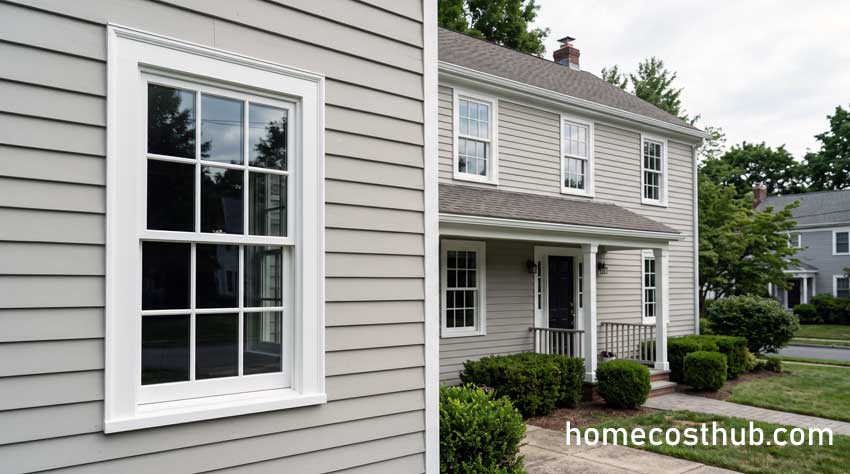
Start with the surfaces represented by your estimate. “Exterior walls” may sound straightforward, yet a real property can include siding, stucco, render, masonry, gable ends, fascia, soffits, window trim, doors, shutters, porch details, and garage elements. A contractor may include some of these automatically and list others as optional work.
Next, look at the condition assumed when you entered the project details. A wall that appears generally sound from the ground may have localized peeling below eaves, failed sealant around joints, exposed timber, hairline render cracking, or coating failure on weather-facing elevations. Those conditions can change the work described in the proposal without changing the basic size of the house.
Primer assumptions also deserve attention. One estimate may represent spot priming of bare areas, while a painter may specify a broader primer coat because of substrate condition, color change, staining, or coating compatibility. The same applies to finish coats: compare what is actually specified rather than assuming every painter is pricing the same coating sequence.
Access is another scope item that may be invisible in a headline total. Check whether the planning estimate assumed ordinary ladder access and whether the contractor has priced staging, a lift, tower access, or scaffolding.
Repairs should be reviewed separately. Minor filling and caulking may fall within painting preparation, while rotten siding, failed timber, damaged render, unstable masonry, or moisture-related defects can become separate repair work.
Expert Tip
Write down the assumptions behind your calculator result before requesting or comparing quotes. A short list covering surfaces, preparation, primer, finish coats, trim, access, and repairs makes it much easier to see why one contractor is pricing a different project from another.
Why a Contractor Quote May Be Higher or Lower Than the Calculator
A contractor sees conditions that an early planning estimate cannot fully inspect. Differences often come from a more detailed scope rather than a different opinion about the same work. A painter may identify additional preparation, access equipment, coating requirements, or repair work that changes the proposal after seeing the property in person.
Surface Failure Can Be More Extensive Up Close
Exterior deterioration is rarely distributed evenly. The front elevation may look sound while shaded walls show mildew, upper trim has peeling paint, or exposed timber has begun to soften.
A painter inspecting the property may find:
- Peeling beneath eaves or around gutters
- Chalking that affects coating adhesion
- Failed caulk around windows, doors, and joints
- Rotten timber or deteriorated trim
- Damaged or loose siding
- Cracked or hollow render
- Mildew or persistent surface contamination
- Old coatings that are no longer firmly bonded
The important question is not simply whether these conditions “increase cost.” Ask what work they create. Scraping, localized sanding, filling, replacing a section of trim, repairing render, or treating a contaminated surface should appear as identifiable tasks or exclusions.
Access Can Change the Work Method
Upper gables, steep ground, narrow side passages, roof projections, rear extensions, and conservatories can make an otherwise ordinary exterior harder to reach.
One painter may plan to use ladders. Another may consider staging or a lift more appropriate. A UK painter and decorator may price a mobile tower or scaffolding where the property geometry requires it.
That difference can alter labor planning, equipment cost, project duration, and the way areas are sequenced. It does not automatically mean the higher quote is excessive.
The Coating Specification May Not Match
Two quotes can use the same word—“paint”—while specifying very different systems.
One proposal might include spot primer plus finish coats. Another may specify a full primer on selected elevations. A masonry project could use a different coating system from painted wood siding, while a specialist coating may require additional preparation.
Compare:
- Primer or spot-primer requirements
- Finish-coat specification
- Product type
- Surface-specific coating requirements
- Color-change assumptions
- Preparation standard
There is no universal coat count that applies to every exterior. The appropriate system depends on the substrate, existing coating, condition, product instructions, color change, and required finish.
Repairs May Be Inside One Quote and Outside Another
Painting preparation and building repair are not the same service.
A painter may include minor caulking and filling but exclude rotten trim replacement. Another may include a carpentry allowance. A UK proposal might include small render patches but exclude larger areas that need a separate repair trade.
Typical boundary issues include:
- Rotten fascia or trim
- Failed siding
- Deteriorated render
- Moisture-damaged substrate
- Loose masonry
- Significant cracking
A higher proposal may be pricing more complete work. Before rejecting it, compare exactly what happens if deterioration is found after preparation begins.
Compare Exterior Painting Quotes by Scope, Not Just Price
Put competing quotes side by side and compare the work item by item. The best-priced proposal is not always the one with the lowest total; it is the one that clearly defines what is included, excluded, allowed for, and subject to additional approval.
Also Read:
| Quote Item | Calculator Assumption | Quote A | Quote B | What to Verify |
|---|---|---|---|---|
| Walls / siding / render | Included | Included | Included | Which elevations and materials are covered? |
| Fascia and soffits | Specified or excluded | Included | Unclear | Are both fascia and soffits part of the scope? |
| Exterior trim | Selected areas | Included | Allowance | Which trim elements are included? |
| Doors / shutters | Excluded unless selected | Excluded | Included | How many doors or shutters are priced? |
| Washing | Routine preparation | Included | Included | What cleaning method is planned? |
| Scraping / sanding | Condition-based | Specified | “As needed” | How much preparation is actually included? |
| Caulking / filling | Minor preparation | Included | Allowance | What is considered routine versus extra? |
| Repairs | May be excluded | Allowance | Excluded | Who handles deteriorated siding, timber, or render? |
| Primer | Assumption varies | Spot prime | Specified areas | Where and why will primer be used? |
| Finish coats | Project assumption | Specified | Specified | Are the coating systems equivalent? |
| Paint / coating | Selected quality level | Product specified | Brand range only | Exact product, finish, and substrate suitability |
| Access equipment | Normal or selected access | Included | Excluded | Who pays for lifts, towers, or scaffolding? |
| Protection / masking | Normal project work | Included | Included | Landscaping, windows, roofing, paving, and adjacent finishes |
| Cleanup | Expected project completion | Included | Included | Daily cleanup and final cleanup responsibilities |
| Waste / disposal | May vary | Included | Unclear | Who removes scraping debris and packaging? |
| Tax / VAT | Country-specific | Specified | Unclear | Is the quoted total inclusive where applicable? |
| Warranty | Not a calculator assumption | Specified | Specified | What is covered, for how long, and what is excluded? |
| Exclusions | Review separately | Listed | Limited detail | Which foreseeable costs remain with the homeowner? |
Wording matters. “Prepare surfaces as necessary” gives you less information than a proposal that identifies washing, scraping loose coatings, sanding defined areas, sealing specified joints, and priming exposed substrate.
Allowances deserve similar scrutiny. An allowance is not automatically a problem; some defects cannot be quantified until preparation exposes them. Ask how much work the allowance covers, how extra work will be priced, and whether your authorization is required before the contractor exceeds it.
Exclusions can create more financial uncertainty than a short warranty. A long warranty has limited budgeting value if the quote excludes access, timber repair, render defects, or most preparation beyond a minimal standard.
The Square Footage Mistake That Can Distort an Exterior Painting Budget
Interior floor area and paintable exterior area measure different things. A 2,000 sq ft home does not automatically have 2,000 sq ft of exterior wall to paint, and using the floor-area figure as if it were wall area can make comparisons misleading.
Exterior surface quantity is influenced by the building’s shape rather than only its living area.
Consider two homes with similar interior square footage. A compact two-story house may have a different exterior wall area from a wide one-story house. Add a garage, multiple gables, an extension, tall walls, large window openings, or deep architectural projections and the paintable envelope changes again.
Relevant geometry includes:
- Building footprint
- Wall height
- Number of stories or storeys
- Gable ends
- Attached garages
- Additions and rear extensions
- Windows and exterior doors
- Porches
- Bay windows and architectural projections
This is why contractor quantities should relate to the actual surfaces in scope, not simply the real-estate listing size of the house.
If your budget includes both indoor and outdoor painting rather than only the exterior envelope, the House Painting Cost Calculator can provide a broader planning reference for the combined scope.
When Surface Preparation Becomes a Separate Budget Issue
Routine repainting preparation and restoration-level preparation should not be treated as the same scope. The useful distinction is not a fixed percentage added to the contract; it is the amount of corrective work required before the new coating can be applied to a sound surface.
Light Preparation
A relatively sound exterior may need cleaning, isolated scraping, minor filling, and small caulk repairs. These tasks are often straightforward to describe in a painting proposal.
The scope should still make clear whether bare areas are primed and whether small defects are included.
Moderate Preparation
Preparation becomes more substantial when peeling occurs across several areas, joints have failed, bare spots are common, or localized cracking requires repair.
The painter may need more scraping, sanding, caulking, filling, masking, and spot treatment before finish work starts. At this level, vague wording can make it difficult to know how much labor has actually been priced.
Heavy Preparation or Repair
Widespread coating failure can change the character of the project. Rotten wood, deteriorated siding, failed render, moisture-related damage, unstable coatings, or extensive stripping may require a separate repair scope rather than simply “extra prep.”
If a contractor uses a preparation allowance, ask four questions before accepting the quote:
- What specific work is included in the allowance?
- What condition triggers an additional charge?
- How will extra labor or repair work be priced?
- Will you be asked to approve the additional work before it proceeds?
A clearly defined allowance reduces the chance of a budget dispute once scraping or cleaning exposes hidden deterioration.
When Repairs Should Happen Before Exterior Painting
Paint can protect and finish a suitable substrate, but it does not correct active moisture problems, structural defects, or deteriorated materials. When the substrate is failing, the repair sequence matters more than the choice of finish coat.
Rotten siding or trim should be assessed before it is coated. Painting over softened or decayed timber may temporarily improve appearance while leaving the underlying defect unresolved.
Active water intrusion also needs attention first. Leaking gutters, defective downpipes, damaged flashing, or another moisture source can continue to affect the wall after the painter leaves. A new coating should not be treated as a substitute for fixing the cause.
The same principle applies to masonry and render. Small cosmetic defects may fit within ordinary preparation, while unstable masonry, large cracks, hollow or failing render, and moisture-related deterioration can need a separate repair scope.
The practical boundary is:
Painter preparation makes a basically sound surface ready for coating.
Repair work restores a substrate that is damaged, unstable, decayed, or affected by another building defect.
For homeowners coordinating several areas of painting rather than one exterior package, the Painting Cost Calculator can help organize the broader painting budget without treating repair work as if it were simply another coat of paint.
US vs UK Exterior Painting Projects: What Changes?
US and UK projects share the same basic need for a defined scope, but measurement conventions, building types, terminology, access methods, tax treatment, and common exterior materials can differ. A useful comparison keeps the two markets separate rather than converting one country’s pricing into another currency.
| Project Detail | United States | United Kingdom |
|---|---|---|
| Typical measurement | Square feet | Square metres |
| Currency | USD | GBP |
| Common exterior terms | Siding, stucco, trim, fascia, soffit | Render, masonry, timber, fascia, soffit |
| Height terminology | Stories | Storeys |
| Access terminology | Ladders, staging, lifts | Ladders, towers, scaffolding where required |
| Common housing forms | Single-family homes and other residential types | Terraced, semi-detached, detached, and other residential types |
| Commercial check | Confirm applicable sales-tax treatment | Confirm whether applicable VAT is included |
Neither market can be reduced to one building type. US homes may be wood-sided, fiber-cement, vinyl-sided, stuccoed, masonry, or a combination. UK properties may have brick, painted masonry, smooth render, textured render, timber, or mixed elevations.
Access also needs property-specific judgment. A UK quote may include scaffolding where safe access or efficient working requires it, but scaffolding is not automatically required for every exterior repaint. The same principle applies to lifts or staging on US projects.
For related estimating tools across other coating and finishing scopes, HomeCostHub groups them in the Painting & Finishing category.
Scaffolding and Difficult Access: When the Estimate Can Shift
Difficult access does more than add a piece of equipment. It can change how the painter reaches the surface, how materials are moved, which elevations can be completed together, how protection is installed, and how long individual tasks take.
Consider an upper gable above a conservatory or extension. The wall area itself may not be large, yet reaching it safely could require a different method from the rest of the house.
On a contractor proposal, access may appear in several ways:
- Included within the painting price
- Listed as a separate line item
- Excluded and supplied by the homeowner
- Carried as a provisional allowance
- Priced later after an access specialist reviews the site
That distinction matters when comparing totals.
For example, a lower painting quote that excludes required access equipment may produce a higher final project cost once that equipment is arranged separately. Conversely, an inclusive quote may appear expensive because the access cost is already visible.
UK homeowners should look closely at wording around towers and scaffolding. The appropriate method depends on the property, working height, ground conditions, geometry, and contractor’s planned method rather than a blanket rule that every two-storey or multi-storey property requires the same setup.
The useful question is not “Does scaffolding cost extra?” It is “What access method has this quote assumed, and who is financially responsible for providing it?”
DIY vs Professional Exterior Painting: Which Costs Actually Change?
DIY can reduce paid labor, but it does not remove the need for preparation, equipment, safe access, protection, paint, repair materials, and homeowner time. The decision becomes less about headline savings and more about whether the project’s condition, height, complexity, and risk fit your skills and available time.
| Decision Factor | DIY | Professional |
|---|---|---|
| Cash outlay | Usually avoids paid painting labor but still requires materials and equipment | Includes labor plus contractor overhead and project delivery costs |
| Homeowner time | Can be substantial, especially during preparation | Most execution time is transferred to the contractor |
| Preparation skill | Homeowner must identify and correct coating failures appropriately | Preparation is part of the specified professional scope |
| Working at height | Homeowner assumes access and safety responsibility | Contractor plans the work method and access |
| Equipment | May require purchase or rental | Usually supplied within or alongside the contract scope |
| Coating compatibility | Homeowner selects products and application system | Painter specifies a system for the substrate and existing finish |
| Repair identification | Problems may require separate trade knowledge | Painter may identify defects, though repairs can still be excluded |
| Cleanup | Homeowner handles protection and cleanup | Should be defined in the contract |
| Project duration | Depends heavily on available personal time and weather windows | Planned around crew size and contractor schedule |
| Quality risk | Depends on preparation, technique, and product use | Depends on contractor scope, workmanship, and quality control |
| Safety responsibility | Falls primarily on the homeowner performing the work | Professional work should be planned and performed under the contractor’s applicable responsibilities |
A sound, accessible one-story surface with limited preparation is a different DIY decision from a multi-story property with widespread peeling, awkward rooflines, deteriorated timber, or questionable old coatings.
DIY also becomes less attractive when the main difficulty is not applying paint but safely reaching the surface or diagnosing why the existing coating failed.
Expert Tip
Before comparing DIY with a professional quote, list the equipment you would need only for this project. Access equipment, surface-preparation tools, protection, and disposal can change the cash comparison even before you place a value on your own time.
Older Paint Requires an Extra Safety Check
Older painted surfaces can create a different preparation risk from an ordinary modern repaint. Before aggressive sanding, scraping, or removal, establish whether additional lead-safe precautions may apply to the property and the people performing the work.
United States
For covered US housing built before 1978, paid renovation, repair, and painting activities that disturb painted surfaces may fall under federal lead-safe requirements.
The EPA Lead Renovation, Repair and Painting Program explains the requirements for firms performing covered paid work and the role of lead-safe work practices.
This does not mean every pre-1978 home definitely contains lead-based paint, nor does it mean every DIY homeowner is regulated in exactly the same way as a paid contractor.
Also Read:
The practical budgeting implication is simple: if an older coating may require different containment, preparation, cleanup, or contractor procedures, resolve that issue before comparing the job with an ordinary repaint.
Homeowners doing their own work can also consult the EPA lead-safe renovation guidance before disturbing older painted surfaces.
United Kingdom
Older UK properties can also contain historic paint layers that deserve care during preparation. Do not assume an old coating is harmless simply because the planned finish is modern paint. Where the existing coating is uncertain, obtain appropriate advice before heavy sanding, burning, or aggressive removal.
This article does not treat historic-paint assessment as an ordinary painting-cost assumption because the required approach depends on the actual coating and project conditions.
A Practical Decision Tree Before You Approve the Work
1. Is the exterior basically sound and suitable for routine preparation?
→ Yes: Check that the coating scope, preparation tasks, and access assumptions match your estimate.
→ No: Identify whether the problem is ordinary paint preparation or an actual substrate/building repair.
2. Does the work require significant height access or difficult positioning?
→ Yes: Confirm the proposed method and whether ladders, lifts, towers, staging, or scaffolding are included, excluded, or separately supplied.
→ No: Continue to scope comparison.
3. Are all contractors pricing the same surfaces?
→ No: Align the scope first. Check walls, trim, fascia, soffits, doors, shutters, gables, and other details.
→ Yes: Continue.
4. Are the preparation and coating specifications equivalent?
→ No: Compare washing, scraping, sanding, caulking, primer, finish coats, and coating products before comparing totals.
→ Yes: Continue.
5. Are repairs clearly assigned?
→ No: Clarify what is painter preparation, what is repair work, and how unexpected deterioration will be priced.
→ Yes: Continue.
6. Could old paint require special safety precautions?
→ Yes: Resolve the relevant safety requirements before approving aggressive paint disturbance.
→ No: Continue with ordinary quote evaluation.
7. Do the quotes now describe equivalent work?
→ No: Normalize the scope before judging which contractor is cheaper.
→ Yes: Compare exclusions, allowances, access responsibilities, warranty terms, schedule, and final price.
Illustrative Scenario: Calculator Estimate vs Contractor Quote
Illustrative scenario — not market-average pricing.
Consider a hypothetical two-story US home with painted wood siding. The homeowner’s calculator scenario assumes moderate preparation, exterior walls, selected trim, and normal access conditions.
For illustration only:
- Calculator planning estimate: $8,400
- Contractor quote: $10,750
- Illustrative difference: $2,350
These figures are fictional project assumptions used only to demonstrate how to interpret a quote. They are not US averages, contractor rates, or market benchmarks.
At first glance, the $10,750 proposal appears substantially higher. The site inspection, however, changes several assumptions.
The contractor identifies localized rotten trim that needs repair before painting. Peeling is more widespread on one weather-facing elevation than the homeowner assumed. Several exposed areas require more primer, and an upper elevation is difficult to reach from ordinary ladder positions.
The proposal also includes additional trim that was not part of the original calculator scenario.
The difference can therefore be understood as a scope change:
- More extensive scraping and preparation
- Localized timber repair
- Additional primer work
- Access equipment for one difficult elevation
- More trim included in the finished scope
The decision is not to accept the higher number automatically. The homeowner should ask whether each added item is necessary, whether the quantity is clearly described, and whether another contractor is pricing the same work.
If competing painters agree that the deterioration and access requirements are real, comparing the $10,750 proposal directly with the original $8,400 planning scenario would be misleading. They no longer represent identical projects.
A UK version of the same problem could involve different items. A painter and decorator might identify render repairs or a need for scaffolding on one elevation that the planning estimate did not include. VAT treatment may also need clarification in the written proposal. The US example should not be converted into pounds and treated as a UK price benchmark.
Questions to Ask Before Accepting an Exterior Painting Quote
Exterior Painting Quote Checklist
- Confirm exactly which walls, siding, render, trim, fascia, soffits, doors, shutters, or other surfaces are included.
- Ask what washing, scraping, sanding, caulking, filling, and minor repairs are included.
- Confirm the primer specification and when primer will be used.
- Confirm the specified finish coats or coating system.
- Check the paint or coating product specification rather than relying only on words such as “premium.”
- Confirm who supplies ladders, lifts, towers, scaffolding, or other access equipment.
- Identify repair allowances and what triggers additional charges.
- Check protection, masking, cleanup, and waste disposal responsibilities.
- Read exclusions and clarify unclear items before signing.
- Confirm whether applicable tax or VAT is included in the quoted total.
Four Exterior Painting Myths That Can Lead to Bad Budget Decisions
Fact
Interior floor area and paintable exterior wall area are different measurements. Building footprint, wall height, stories, gables, additions, openings, and architectural geometry can all change the exterior surface quantity.
Fact
A lower total may cover less preparation, fewer surfaces, a different coating specification, or exclude repairs and access. Compare equivalent scope before judging value.
Fact
Routine paint preparation and substrate repair are different scopes. Minor scraping and filling may be included while rotten timber, failed siding, deteriorated render, or moisture damage remains separate.
Fact
The appropriate access method depends on property height, geometry, ground conditions, work scope, and the contractor's safe working method. Scaffolding may be appropriate for some projects but is not automatic for every property.
Exterior Painting Cost Calculator FAQs
How accurate is an Exterior Painting Cost Calculator?
It is most useful as a planning estimate based on the project information entered. Accuracy improves when the surface area, condition, project scope, material, preparation, and access assumptions closely match the actual property. A site quotation can still differ because the painter can inspect defects and working conditions directly.
Why is my exterior painting quote higher than the calculator estimate?
Check whether the contractor has included work that was not represented in the original estimate. Common differences include heavier preparation, repair work, more trim, different coating requirements, difficult access, or scaffolding and lift equipment.
What should an exterior painting quote include?
A useful quote should define the surfaces being painted, preparation, coating or paint specification, primer requirements, finish coats, access arrangements, protection, cleanup, exclusions, and repair responsibilities. More complex projects may also need clearly stated allowances.
Also Read:
Is house square footage the same as exterior paintable area?
No. House square footage usually refers to interior floor area, while exterior painting depends on the actual wall and detail surfaces being coated. Building shape, wall height, gables, garages, additions, windows, and doors can change the paintable area.
Does exterior painting always require primer?
Not in every situation. Primer requirements depend on factors such as bare substrate, existing coating condition, staining, surface repairs, coating compatibility, and the selected paint system. Ask the painter to explain where primer is specified rather than assuming a universal requirement.
Is DIY exterior painting cheaper than hiring a professional?
DIY can remove paid painting labor from the budget, but the homeowner still carries material, equipment, access, preparation, cleanup, and time costs. The comparison becomes less favorable when a project involves height, extensive deterioration, specialized preparation, or difficult access.
Does scaffolding affect exterior painting cost in the UK?
It can when scaffolding is the chosen access method. Check whether it is included in the painter’s price, separately quoted, provisional, or expected to be arranged by the homeowner. Not every UK exterior project automatically requires scaffolding.
Should damaged siding or render be repaired before painting?
Material that is rotten, unstable, moisture-damaged, or substantially deteriorated should be assessed before it is coated. Painting can finish a sound substrate, but it should not be used to hide a building defect that still needs repair.
How should I compare two exterior painting contractors?
First make sure both are pricing the same surfaces, preparation, repairs, access arrangements, and coating specification. Then compare allowances, exclusions, schedule, cleanup responsibilities, warranty terms, and total price. A price comparison without a scope comparison can be misleading.
Turn the Estimate Into a Defined Project Scope
The most useful next step after receiving an exterior painting estimate is to convert its assumptions into a written scope that contractors can price consistently.
Confirm which exterior surfaces are included. Define the expected preparation. Separate routine painter preparation from siding, timber, render, masonry, or moisture-related repairs. Clarify primer and finish-coat specifications. Identify who is responsible for lifts, towers, scaffolding, or other access equipment.
Then read the exclusions.
A proposal that clearly tells you what is not included can be easier to budget than a shorter quote filled with broad phrases. Ask how unforeseen deterioration will be handled, how additional work will be approved, and how allowances will be adjusted.
Once the scope is aligned, contractor prices become far more informative. The Exterior Painting Cost Calculator can remain your planning benchmark while the contractor proposal becomes the document that defines the work actually being purchased.
Cost Summary
An Exterior Painting Cost Calculator is most useful as a budgeting benchmark. Before approving a quote, make sure the contractor is pricing the same surfaces, preparation, coating system, repairs, access, and exclusions represented by your planning assumptions.
About the Author
Arden Cole Linscott
Expert — Residential Construction & Remodeling Cost Analysis
Arden Cole Linscott focuses on residential construction cost interpretation, remodeling budgets, contractor quote analysis, and practical project decision-making. His editorial approach helps homeowners separate planning estimates from real project scope so they can compare proposals, identify exclusions, and make better-informed renovation decisions.
Scroll to bottom
Remodeling Cost Calculators