Painting Cost Calculator

Painting Cost Calculator Cost Guide
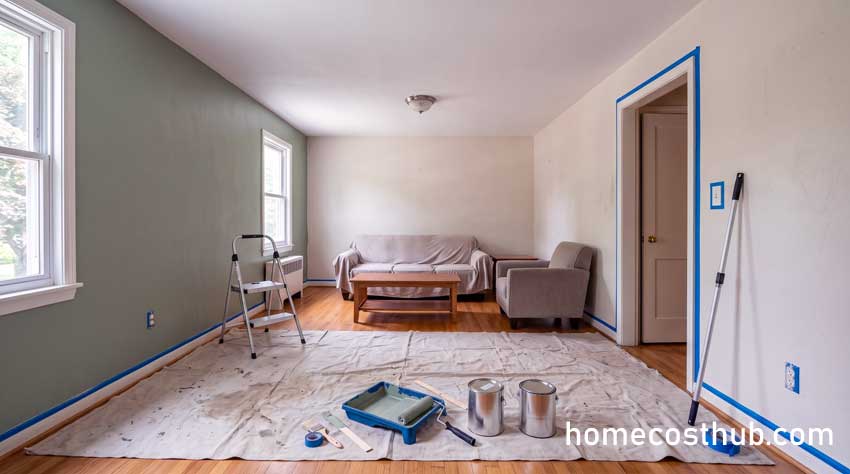
A Painting Cost Calculator helps homeowners estimate the potential cost of repainting interior or exterior surfaces before requesting professional quotations. Painting prices can vary considerably depending on total surface area, paint type, material quality, project scope, existing surface condition, preparation requirements, labour difficulty, and removal work.
This cost calculator supports both USA cost estimates in US dollars and UK cost estimates in pounds sterling. Users can enter the painting area in square feet or square meters and select options for walls, ceilings, full rooms, exterior surfaces, or whole-house projects.
The resulting price estimate separates material cost, labour cost, installation cost, additional preparation or finishing features, and removal expenses, providing a practical starting point for planning a residential painting budget.
Painting Cost Calculator
Estimate painting costs in the USA or UK based on project size, paint type, material quality, project type, existing condition, application method, labour difficulty, removal work, and optional features.
Please enter a valid value.
Removal Required
Additional Features
Additional features may include primer, trim painting, doors, accent walls, stain blocking, crack filling, caulking, high-ceiling access, decorative finishes, or specialty coatings.
USA Painting Estimate
Total Estimate
$0
Painting Area: 0 ft²
Cost Breakdown
Materials $0
Labour $0
Installation $0
Additional $0
Removal $0
This calculator provides a preliminary planning estimate. Actual painting costs may vary according to surface condition, number of coats, paint brand, wall height, trim details, access, primer requirements, colour changes, repairs, local labour rates, contractor pricing, taxes, and project-specific conditions.
FREE PDF ESTIMATE
Get Your Painting Cost PDF
Enter your details below to receive your painting estimate, selected options, and complete cost breakdown as a downloadable PDF.
✓ Your PDF is ready!
Free Painting Cost Calculator
Material / Project Types
Different paints and coatings are designed for different rooms, surfaces, and performance requirements.
Standard latex or emulsion paint is commonly used for interior walls and ceilings. It is widely available, relatively economical, easy to apply, and suitable for many general residential painting projects.
Washable or scrubbable paint is designed to withstand more frequent cleaning. It can be useful in hallways, kitchens, family rooms, children’s rooms, and other high-traffic areas.
Moisture-resistant paint may be suitable for bathrooms, kitchens, utility spaces, basements, and other areas where humidity is a concern. These coatings generally have a higher material cost than basic interior paint.
Specialty or designer coatings can include premium architectural paints, decorative coatings, specialty finishes, or products with enhanced durability and appearance. These options can substantially increase the price estimate.
Also Read:
Project type also affects the total. Painting walls alone is generally simpler than painting walls and ceilings, while exterior work may require additional preparation, access equipment, weather-resistant coatings, and more labour.
Main Factors Affecting Cost
Project size directly influences the quantity of paint, primer, masking materials, rollers, brushes, caulk, and labour required. Larger painting areas generally produce a higher total estimate.
Material type affects the price of the paint itself. Standard coatings are usually less expensive than washable, moisture-resistant, or specialty finishes.
Material quality can significantly change material cost. Budget paints may reduce initial spending, while premium and luxury products often offer improved coverage, durability, finish quality, or colour performance.
Project type influences how much preparation and access work is required. Walls are generally straightforward, while ceilings, exterior surfaces, detailed rooms, and full-house projects can require additional time.
Existing condition has a major effect on repair cost and preparation. New or smooth surfaces may require little work, while peeling paint, cracks, stains, damaged drywall, rough plaster, or deteriorated exterior surfaces can require repairs before painting begins.
Labour difficulty reflects high ceilings, stairwells, difficult exterior access, detailed trim, unusual architecture, occupied rooms, and other conditions that slow the work.
Installation type represents the level of preparation and finish. A basic application can cost less than standard preparation with two coats, while custom work may involve multiple colours, decorative finishes, detailed cutting-in, or specialty application techniques.
Removal requirements can also increase cost when old coatings, wallpaper, flaking paint, or other surface materials need to be removed before repainting.
Cost Breakdown
The Painting Cost Calculator divides the estimated project total into five main categories.
Material Cost: Material cost includes paint, primer, caulk, masking supplies, rollers, brushes, trays, protective materials, and other consumables required for the selected project.
Labour Cost: Labour cost covers surface preparation, masking, cutting-in, rolling, brushing, spraying where applicable, cleanup, and the time required to complete the selected painting work.
Installation Cost: Installation cost reflects the selected application and finish level. Standard preparation with multiple coats generally costs more than basic application, while detailed custom finishes can increase this category further.
Additional Cost: Additional features may include primer, trim painting, doors, accent walls, stain blocking, caulking, crack filling, high-ceiling access, decorative finishes, or specialty coatings.
Removal Cost: Removal cost covers scraping, stripping, wallpaper removal, or removal of deteriorated coatings. If no removal is required, this category remains visible with a zero value.
Actual USA cost and UK cost figures can vary according to regional labour rates, paint brand, contractor pricing, access requirements, surface condition, taxes, and the number of coats required.
Why Use This Calculator?
A Painting Cost Calculator provides homeowners with a practical way to establish an initial painting budget before contacting professional painters or remodeling contractors.
Instead of relying on one generic cost-per-square-foot figure, the calculator considers project size, paint type, material quality, painting scope, existing condition, application method, labour difficulty, removal requirements, and optional features.
It can also help compare different scenarios. Homeowners can evaluate standard wall painting against a full-room project, compare budget paint with premium products, or see how difficult access and additional preparation affect the overall price estimate.
The cost breakdown makes it easier to understand how the projected budget may be divided between material cost, labour cost, installation cost, additional preparation or features, and removal work.
The calculator should be treated as a preliminary planning tool rather than a guaranteed contractor quotation. Final pricing may also include detailed surface repairs, specialist primers, scaffolding, lead-safe preparation, replacement cost, repair cost, colour changes, trim refinishing, and other property-specific requirements.
Painting Cost Calculator: Understanding Your Estimate
Quick Answer
Use your Painting Cost Calculator result as a budgeting benchmark and a reference point for comparing professional quotes. A contractor’s final price may differ when an on-site inspection reveals repairs, access problems, extra preparation, additional coats, or surfaces that were not included in the original estimate.
How to Read Your Painting Cost Calculator Estimate
A useful painting estimate is a range for planning, not a promise that the finished project will cost one exact amount. Focus on what the estimate assumes about scope, preparation, materials, access, and finish quality before comparing it with a painter’s proposal.
The Cost Guide above already separates the main categories of spending. The next step is understanding what those numbers mean when you start making decisions.
Start with the total estimated range. If the calculator produces a low-to-high range, the lower figure generally represents a simpler version of the selected scope, while the upper end gives more room for labor difficulty, preparation, materials, or project complexity.
Do not treat the midpoint as an automatic target price. Two homes with a similar painting area can require very different amounts of preparation and detailed brushwork.
Then look at which category is driving the estimate. A project dominated by paint and ordinary wall labor is different from one where repair, removal, trim work, or difficult access represents a substantial share of the budget.
For example, a whole-room repaint with smooth walls may be relatively predictable. The same floor plan with damaged plaster, stained ceilings, several doors, detailed molding, and a stairwell has more variables that a contractor will need to inspect.
Finally, review your inputs against the actual work you expect. If your calculator selection covered walls but the contractor is quoting walls, ceilings, trim, and doors, the totals are not measuring the same project.
Expert Tip
Before deciding that a contractor is expensive, make the calculator estimate and contractor quote describe the same scope. Comparing totals without matching surfaces, preparation, coats, and exclusions can make a reasonable quote look artificially high or a limited quote look unusually cheap.
Why a Painter’s Quote May Differ From Your Estimate
A professional quote can move above or below an online estimate because the painter sees conditions that cannot always be captured by area alone. The most meaningful differences usually come from the exact preparation required, surfaces included, access conditions, coating system, and assumptions written into the proposal.
A site visit turns broad estimating inputs into specific work.
For example, “fair condition” in a calculator may mean modest preparation. During inspection, a painter may find that several areas require separate treatment.
Surface Repairs Become Specific Tasks
A quotation may identify:
- nail and screw holes;
- cracked drywall joints;
- damaged plaster;
- loose or peeling coatings;
- water stains that require investigation or stain-blocking treatment;
- failed caulk around trim;
- damaged exterior wood;
- rough or porous masonry.
These items can turn a straightforward repaint into a preparation-heavy project.
The useful question is not simply, “Why did the price increase?” It is:
Also Read:
What work was added to the scope, and is that work actually necessary?
Coat Assumptions May Be Different
One estimate may assume two finish coats while another proposal may allow for one coat over areas that are already in good condition. A strong color change, repaired areas, porous substrates, or certain coating systems may change the number of applications required.
Paint requirements also vary by product and surface. Dulux notes that coverage estimates can change according to the particular product, surface, sheen, and color, and its calculator adjusts recommended quantities according to the selected coating. Dulux paint coverage guidance provides a useful example of why paint quantity should not be treated as a universal fixed rate.
Access Can Turn Into a Separate Cost
For interior work, this may involve stairwells, vaulted ceilings, or rooms that cannot easily be cleared.
Exterior projects can introduce:
- multiple storeys;
- limited ladder positions;
- sloping ground;
- scaffolding;
- difficult rooflines;
- landscaping that restricts access;
- extensive masking around windows, fixtures, or neighboring surfaces.
Those conditions affect production time even when the nominal paintable area does not change.
What a Professional Painting Quote Should Clearly State
A useful painting proposal should make it possible to understand what you are buying. The total price matters, but scope detail is what allows two estimates to be compared fairly and reduces the chance of disagreement once work begins.
| Quote Item | What to Check | Why It Matters |
|---|---|---|
| Surfaces included | Walls, ceilings, trim, doors, windows, siding, masonry, or other surfaces | Prevents two different scopes from appearing comparable |
| Preparation | Filling, sanding, scraping, caulking, cleaning, and minor repairs | Preparation can represent a significant amount of labor |
| Primer | None, spot priming, or full priming where required | Repairs, stains, bare surfaces, and some substrates may need different preparation |
| Finish coats | Number of coats included in the price | Changes labor and material requirements |
| Paint specification | Product, grade, sheen, and sometimes color | Allows meaningful material comparison |
| Access | Ladders, lifts, or scaffolding included or excluded | Difficult access can create a separate project expense |
| Protection | Floors, furniture, fixtures, landscaping, and adjacent surfaces | Clarifies what preparation and protection work is included |
| Cleanup | Daily cleanup, final cleanup, and material disposal | Reduces assumptions about who handles the finished work area |
| Taxes or VAT | Whether applicable charges are included in the displayed total | Allows like-for-like quote comparison |
| Exclusions | Repairs, moving furniture, rot, moisture remediation, specialty coatings, or other omitted work | Shows which costs may arise separately |
A short quotation is not automatically a bad quotation, and a long quotation is not automatically better. What matters is whether the proposal gives you enough information to understand the scope and identify areas where extra charges could arise.
Painting Quote Review Checklist
- Confirm exactly which walls, ceilings, trim, doors, and exterior surfaces are included.
- Check the stated surface preparation and repair scope.
- Confirm primer requirements and number of finish coats.
- Identify the paint product, grade, and finish when specified.
- Check whether ladders, scaffolding, or difficult-access costs are included.
- Confirm protection, cleanup, and disposal responsibilities.
- Review exclusions and how additional repairs will be priced.
- Check whether taxes or VAT are included where applicable.
How to Compare Two Painting Quotes Fairly
Compare painting quotes by making the scopes equivalent before comparing the totals. A lower proposal may exclude preparation, trim, doors, primer, access equipment, or additional coats that another contractor has already included.
Start by placing each proposal beside your calculator result and identifying three things:
- What surfaces are included?
- What condition is the contractor assuming?
- What finished result is included in the price?
Then normalize the differences.
If one proposal includes walls and ceilings while another covers only walls, ask for the ceiling portion to be identified separately.
If one includes doors and trim, determine what the other contractor would charge for the same scope.
If a quote says “repairs extra,” find out which repairs are excluded and how additional work will be approved.
Illustrative Scenario — Not Market Pricing
Consider a hypothetical US homeowner whose Painting Cost Calculator result indicates a planning range of $5,800 to $7,200 for the selected project. These figures are illustrative only and are not US market averages.
The homeowner then receives two fictional quotations:
| Scope Item | Quote A | Quote B |
|---|---|---|
| Illustrative total | $5,400 | $6,750 |
| Walls | Included | Included |
| Ceilings | Excluded | Included |
| Trim and doors | Excluded | Included |
| Minor patching | Extra | Included within defined limits |
| Finish coats | Not clearly stated | Two coats stated |
| Final cleanup | Included | Included |
Quote A initially appears cheaper than both the calculator range and Quote B. That does not automatically make it better value.
The homeowner cannot compare the two totals fairly until the excluded ceiling, trim, doors, patching, and coat requirements are priced on the same basis.
The useful decision is not:
“Which total is lowest?”
It is:
“What would each contractor charge to deliver the same finished scope?”
Once the work is normalized, the relative value of each proposal may look very different.
Expert Tip
Ask for clarification before accepting a quote with broad phrases such as “minor prep included” or “repairs as necessary.” The wording may be reasonable, but you need to understand where included preparation ends and separately chargeable repair work begins.
When a Low Painting Quote Deserves a Closer Look
A low quote is not necessarily a warning sign. It deserves closer review when the price difference appears to come from unclear scope rather than an identifiable efficiency, smaller workload, or different business structure.
Look more closely when:
- the proposal does not state which surfaces are included;
- surface preparation is described only vaguely;
- the number of finish coats is unclear;
- paint grade or finish is unspecified;
- primer is excluded without explaining how repaired or bare areas will be handled;
- trim and doors appear in the conversation but not in the written scope;
- exterior access or scaffolding has not been addressed;
- substantial repairs are listed only as “extra” with no approval process;
- taxes or VAT are unclear;
- cleanup responsibilities are not stated.
A homeowner can reduce uncertainty by asking the contractor to revise the scope rather than negotiating only the final number.
For example:
“Please confirm whether the price includes two finish coats on all walls, spot priming of repaired areas, and painting the listed doors and trim.”
That question produces more useful information than simply asking for a discount.
Interior vs Exterior Estimates: What Changes During Quote Review?
Interior and exterior painting quotes should be reviewed differently because the risks behind the price are different. Interior proposals are often more sensitive to room contents, detailed finishes, and wall repairs, while exterior proposals can be more sensitive to substrate condition, height, access, preparation, and weather exposure.
Interior Painting Quotes
For interior work, confirm how the contractor handles:
- moving or protecting furniture;
- floor coverings;
- occupied rooms;
- wall and ceiling repairs;
- stairwells and high ceilings;
- baseboards or skirting boards;
- doors and door frames;
- crown molding, coving, or detailed trim;
- major color changes;
- touch-ups after other trades finish.
If the project is specifically focused on indoor surfaces rather than whole-house work, the Interior Painting Calculator can provide a more focused reference for that scope.
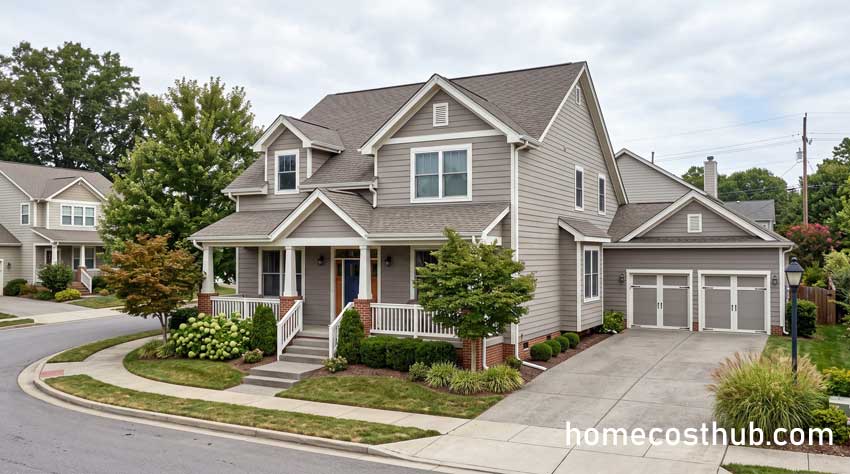
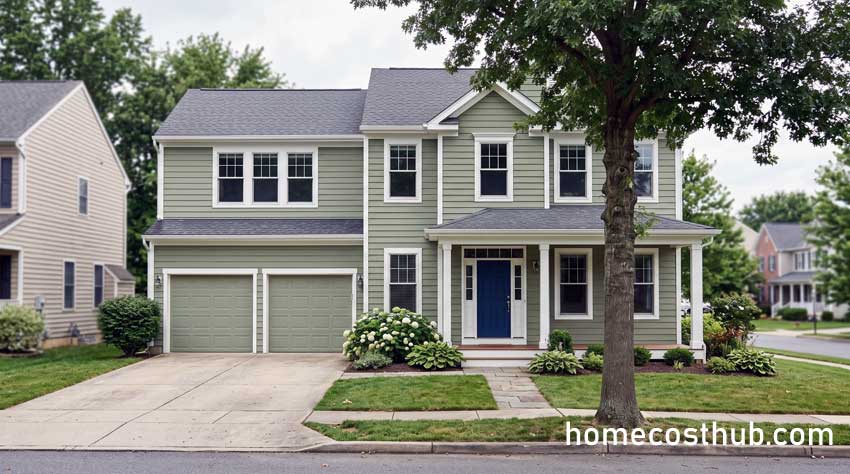
Exterior Painting Quotes
Exterior proposals require a different set of questions.
Determine whether the quote accounts for:
- washing or cleaning;
- scraping loose coatings;
- exposed wood or masonry preparation;
- minor wood repair versus replacement;
- caulking and sealing;
- access to upper elevations;
- scaffolding, lifts, or other access equipment;
- masking windows and adjacent materials;
- landscaping protection;
- weather-dependent scheduling.
Two contractors can measure the same exterior area but make different assumptions about how much preparation is required before coating begins. That difference should be resolved before price becomes the deciding factor.
US vs UK Painting Estimates Are Different Markets
US and UK painting estimates should be evaluated using their own units, terminology, tax treatment, and local contractor market. Converting a US dollar estimate into pounds does not create a valid UK market estimate, and the same principle applies in reverse.
| Estimate Detail | United States | United Kingdom |
|---|---|---|
| Currency | US dollars | Pounds sterling |
| Area | Square feet | Square metres |
| Paint quantity | Gallons | Litres |
| Common trade wording | Painter / painting contractor | Painter and decorator |
| Lower wall trim | Baseboards | Skirting boards |
| Building levels | Stories | Storeys |
| Tax comparison | Confirm applicable taxes in the proposal | Confirm whether applicable VAT is included |
The terminology difference is easy to handle. Pricing comparisons require more discipline.
A US estimate should be compared with US proposals for a similar project in the relevant location. A UK estimate should be compared with UK painter-and-decorator quotes for comparable scope.
Do not assume that a contractor’s quoted total automatically includes every applicable tax. UK homeowners comparing proposals should check how VAT is treated rather than making a blanket assumption. HMRC’s construction guidance includes specific treatment of painting and decorating within VAT rules, so the written quotation should state how applicable VAT is handled. See the HMRC VAT guidance for painting and decorating work.
Older Paint Can Change the Scope Before Repainting Starts
Older painted surfaces may require more than routine preparation. In particular, work that disturbs lead-based paint can create health and regulatory considerations, so a quote for an older property should not be evaluated as if every coating can simply be sanded or scraped in the normal way.
United States: Pre-1978 Homes
The US Environmental Protection Agency states that paid renovation, repair, and painting work that disturbs painted surfaces in many pre-1978 homes and child-occupied facilities falls under the Lead Renovation, Repair and Painting Rule, subject to its scope and exemptions. Contractors performing covered work must meet applicable certification and lead-safe work-practice requirements. EPA Lead Renovation, Repair and Painting Program provides the current homeowner and contractor guidance.
For a homeowner, the estimating implication is straightforward: if substantial preparation will disturb older coatings, confirm that the quotation has considered the condition and applicable requirements instead of assuming ordinary sanding or scraping.
Do not assume that every pre-1978 painted surface contains lead. EPA guidance explains that older homes are more likely to contain lead-based paint and provides procedures and resources for determining how covered work should be handled.
United Kingdom: Older Painted Surfaces
The UK’s Health and Safety Executive states that lead pigments were historically used in paint and can remain beneath later coatings in older buildings. HSE specifically identifies stripping or preparing old leaded paint as work that can create exposure to lead dust or fumes. See the HSE guidance on lead exposure in construction.
Also Read:
For quote comparison, this means older paint in poor condition may require a different preparation approach from a routine repaint. The objective is to identify the condition before treating a low preparation allowance as a saving.
DIY vs Professional Painting: Which Estimate Should Guide Your Decision?
DIY can reduce direct labor spending on straightforward, accessible work, but the comparison should also account for preparation skill, equipment, time, access, and the consequences of an uneven finish or incomplete repair. Professional work becomes more attractive as preparation, height, detail, or schedule complexity increases.
| Consideration | DIY | Professional |
|---|---|---|
| Cash labor expense | Lower because homeowner labor is not billed | Professional labor is part of the contract price |
| Time commitment | Homeowner supplies preparation and application time | Lower homeowner involvement in the physical work |
| Equipment | Must be owned, bought, rented, or borrowed | Ordinary trade equipment is usually contractor-managed within the agreed scope |
| Surface repair | Depends on homeowner skill | Can be incorporated into the professional scope |
| Difficult access | May add safety and equipment challenges | Experienced crews may be better equipped for complex access |
| Finish consistency | Depends heavily on preparation and application skill | Professional skill can improve consistency, especially on detailed surfaces |
| Scheduling | Can be spread around personal availability | Can reduce project duration but requires contractor scheduling |
DIY tends to be easier to evaluate for accessible interior rooms with sound surfaces and modest preparation.
Professional help deserves stronger consideration when the project involves:
- multi-storey exterior work;
- high stairwells;
- substantial cracking or coating failure;
- older coatings with lead-related concerns;
- detailed trim or multiple finishes;
- significant plaster or drywall repair;
- a tight completion deadline.
A DIY comparison should not count your own labor as “free” without recognizing its time cost. You may still choose DIY, but doing so knowingly creates a better comparison than looking only at the cost of paint.
Fact
Painting quotes can include different preparation, coats, products, trim, access, cleanup, and exclusions. Compare equivalent scope before judging value.
Fact
Floor area does not fully describe paintable surfaces. Ceiling height, room layout, openings, doors, trim, stairwells, and exterior geometry can change the actual workload.
Fact
Paint quality affects material cost and may change coverage or durability, but labor, preparation, repairs, access, and detailed work can remain substantial parts of the project.
Fact
The calculator provides a planning benchmark. A site inspection may reveal repairs, access conditions, substrate problems, or scope items that were not represented in the original inputs.
Should You Accept a Painting Quote Yet?
Use this decision path before signing a proposal.
1. Does the quote clearly identify the surfaces being painted?
→ No: Request a written scope before comparing prices.
→ Yes: Continue.
2. Does the quote state the preparation and repair work included?
→ No: Clarify what preparation is included and what would be charged separately.
→ Yes: Continue.
3. Are primer requirements and finish coats clear?
→ No: Ask how repaired areas, bare surfaces, stains, and the selected finish will be handled.
→ Yes: Continue.
4. Can you identify the paint product, grade, or finish where specification matters?
→ No: Request enough detail to compare material scope between bids.
→ Yes: Continue.
5. Are trim, doors, ceilings, access, cleanup, and exclusions addressed?
→ No: Resolve the gaps before treating the total as final.
→ Yes: Continue.
6. Are taxes or VAT handled clearly where applicable?
→ No: Ask whether the displayed total includes applicable charges.
→ Yes: Continue.
Decision: Once these items are clear, compare the proposal with your Painting Cost Calculator result and any competing quotes on equivalent scope. A price difference now gives you useful information instead of simply reflecting different assumptions.
Painting Work Inside a Larger Remodel
Painting should be priced in the context of the remodeling sequence when other trades are still working. Painting too early can create avoidable patching and touch-up work after electrical, plumbing, drywall, trim, flooring, or fixture work changes finished surfaces.
A typical renovation sequence may involve:
- demolition and removal;
- structural or mechanical changes where required;
- electrical and plumbing rough work;
- wall and ceiling repair;
- drywall or plaster finishing;
- trim installation and preparation;
- painting and decorating;
- final fixtures;
- touch-ups and final cleanup.
Projects involving multiple rooms are better evaluated as part of the broader Whole House Remodeling budget rather than treating paint as an isolated line item.
If the work also includes removing damaged materials, old finishes, demolition waste, or significant renovation debris, the Debris Removal Calculator can help separate disposal planning from the painting scope.
This sequencing matters when reviewing quotes. A painter asked to work before other disruptive trades finish may need to return for repairs or touch-ups. If responsibility for that work is unclear, the final cost can differ from the initial painting estimate.
Questions to Ask Before Approving the Final Scope
A short set of precise questions can reveal more than negotiating from the total alone.
Ask:
- Exactly which surfaces does this price include?
- What surface preparation is included before painting?
- Which repairs would be considered additional work?
- Is primer included where the surface requires it?
- How many finish coats are included?
- Which paint product, quality level, and sheen are being quoted?
- Are ceilings, trim, baseboards or skirting boards, doors, and frames included?
- For exterior work, is access equipment included?
- Who moves furniture or protects fixed items and landscaping?
- How will unforeseen repairs be approved and priced?
- Is cleanup included?
- Does the quoted total include applicable tax or VAT?
You do not need every contractor to structure a proposal identically. You need enough information to understand what each total buys.
Painting Cost Calculator FAQs
How accurate is a Painting Cost Calculator?
A calculator can provide a useful preliminary budget when the project size, condition, finish, and scope inputs are realistic. Accuracy decreases when the property has hidden damage, difficult access, unusual substrates, or additional work that was not represented in the inputs. A site quotation can account for those property-specific conditions.
Why is my painter’s quote higher than the calculator estimate?
Check the scope before assuming the quote is too high. The contractor may have included more preparation, additional surfaces, primer, extra coats, detailed trim, access equipment, protection, or repairs that were not part of the calculator inputs.
How do I compare painting quotes?
Compare the same surfaces, preparation level, primer requirements, number of coats, paint specification, trim and door scope, access, cleanup, taxes or VAT, and exclusions. Totals become meaningful only after the scopes are reasonably equivalent.
Should a painting quote include paint and primer?
The proposal should make the arrangement clear. Some quotes may include materials, while others may structure them separately. Primer may also be required only on particular surfaces or repairs. Clarify both items rather than assuming they are included.
How many coats should a painting quote include?
The proposal should state the assumed coating system or number of finish coats where it affects scope. Requirements can vary according to the selected product, existing surface, color change, repaired areas, and desired result. Manufacturer guidance should be followed for the specific coating.
Do painters charge by square foot or by the project?
Contractors can use area measurements internally when estimating but present the customer with a project total, day rate, unit pricing, or another quotation structure. Detailed components such as doors, trim, repairs, and access may be treated separately. Compare the written scope rather than relying only on the pricing unit.
Should I subtract windows and doors from the paintable area?
For paint quantity calculations, openings may be deducted when measuring actual wall surface. For professional estimating, doors and windows can also create cutting-in, masking, trim, and detail work, so simply subtracting their area does not necessarily reduce labor in direct proportion. Dulux’s measuring guidance recommends subtracting openings when calculating paint quantity.
Can surface preparation significantly change a painting quote?
Yes. Filling, sanding, scraping, caulking, treating stains, repairing damaged plaster or drywall, and preparing deteriorated exterior surfaces all require labor before finish paint is applied. The relevant comparison is how much preparation each proposal includes.
Is DIY painting cheaper than hiring a professional?
DIY normally removes the contractor labor charge from the homeowner’s cash budget, but the comparison also needs to account for supplies, equipment, preparation skill, time, access, and possible rework. Simple accessible rooms are different from tall exteriors, extensive repairs, or older coatings.
Why do interior and exterior painting quotes differ?
Interior work is often shaped by occupied-room protection, ceilings, trim, detailed cutting-in, and wall repairs. Exterior work introduces substrate weathering, scraping, washing, height, access equipment, landscaping protection, and weather-dependent scheduling.
Does a UK painter and decorator quote include VAT?
Do not assume that VAT is included simply because a total is shown. Check the quotation and the contractor’s VAT treatment. Applicable rules and circumstances can vary, and official HMRC guidance should be used for tax questions rather than converting or borrowing US pricing assumptions.
Is scaffolding always included in an exterior painting quote?
Not necessarily. The proposal should state whether scaffolding, lifts, or other access arrangements are included, supplied separately, or unnecessary for the planned work. This is especially important when comparing exterior bids with noticeably different totals.
What should I ask a painter before accepting a quote?
Ask what surfaces are included, how preparation and repairs are handled, which paint system is specified, how many coats are included, whether trim and doors are covered, what access equipment is required, what is excluded, and how additional work will be approved.
Can an online painting estimate replace an on-site contractor quotation?
No. A calculator is best used for budgeting, scenario comparison, and checking the general scale of a proposal. An on-site contractor can inspect surface condition, repairs, access, detailing, and other property-specific conditions that may not be visible in calculator inputs.
Cost Summary
Treat your Painting Cost Calculator estimate as a budgeting benchmark rather than an exact bid. When contractor prices differ, compare matching surfaces, preparation, primer, finish coats, materials, access, exclusions, cleanup, and applicable tax or VAT before deciding which proposal offers the strongest value.
Using Your Estimate to Make the Final Decision
Once you have a calculator result and one or more professional quotes, the most useful next step is to reconcile the scopes rather than chase an exact match.
A quote inside your estimated range may still need clarification if major work is excluded. A quote above the range may be reasonable if it includes necessary preparation, difficult access, additional surfaces, or a more extensive coating system. A quote below the range can also be perfectly legitimate when the actual property is simpler than the assumptions used in the estimate.
Your decision should be based on three questions:
Also Read:
- Does the proposed scope match the work I actually want completed?
- Are exclusions and potential extras clear enough to control budget risk?
- Am I comparing each proposal on an equivalent basis?
Used this way, the Painting Cost Calculator gives you something more useful than a single target price: it provides a reference for questioning assumptions, reviewing contractor proposals, and planning the painting portion of a larger Whole House Remodeling budget.
About the Author
Arden Cole Linscott
Expert — Residential Construction & Remodeling Cost Analysis
Arden Cole Linscott focuses on residential construction, renovation planning, project-cost analysis, and practical homeowner budgeting. His editorial work helps homeowners interpret remodeling estimates, compare project scopes, and understand the variables that can affect final construction and improvement costs.
Scroll to bottom
Remodeling Cost Calculators