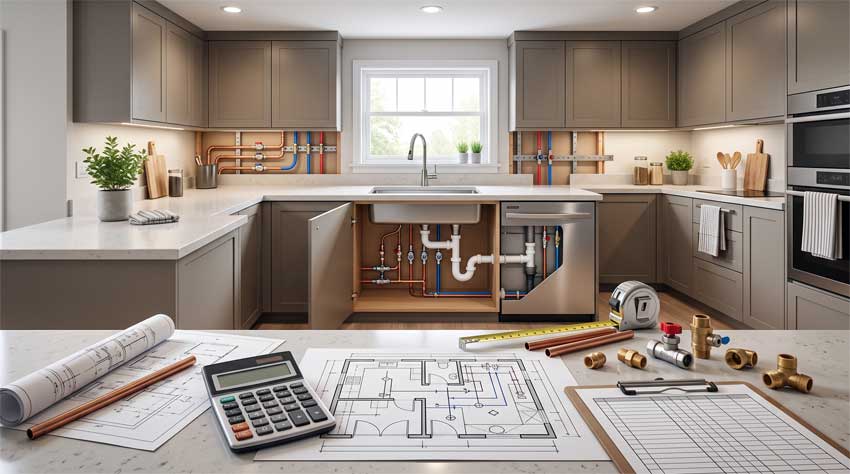
Sink Replacement Calculator

Sink Replacement Calculator Cost Guide
A Sink Replacement Calculator helps homeowners estimate the potential cost of removing an existing kitchen sink and installing a new one before requesting quotations from plumbers, countertop specialists, or remodeling contractors.
Sink replacement cost can vary significantly depending on sink material, quality, size, mounting style, countertop condition, plumbing configuration, labour difficulty, and optional upgrades.
This cost calculator supports both USA cost and UK cost estimates, displaying results in USD or GBP while allowing kitchen size to be entered in square feet or square meters.
It separates material cost, labour cost, installation cost, additional work, and removal expenses to provide a practical price estimate for stainless steel, granite composite, fireclay, cast iron, copper, and specialty kitchen sink replacement projects.
Sink Replacement Calculator
Estimate kitchen sink replacement costs in the USA or UK based on kitchen size, sink material, quality, project scope, existing condition, installation method, labour difficulty, removal, and optional plumbing or countertop upgrades.
Please enter a valid value.
USA Sink Replacement Estimate
$0
Kitchen Size: 0 ft²
Cost Breakdown
Materials$0
Labour$0
Installation$0
Additional$0
Removal$0
FREE PDF ESTIMATE
Get Your Sink Replacement Cost PDF
Enter your details below to receive your sink replacement estimate, selected options, and complete cost breakdown as a downloadable PDF.
✓ Your PDF is ready!
This estimate is intended for preliminary budgeting. Actual kitchen sink replacement costs may vary based on sink dimensions, mounting style, countertop material, plumbing condition, faucet selection, drain configuration, disposal or dishwasher connections, local labour rates, taxes, and contractor pricing.
Free Sink Replacement Calculator
Material / Project Types
Kitchen sinks are available in several materials, and the selected material can have a significant effect on both product price and installation requirements.
Stainless steel sinks are among the most common choices for kitchen remodeling. They are durable, relatively lightweight, widely available, and suitable for Budget through Premium installations.
Granite composite sinks combine stone particles with resin to produce a dense, durable surface. They can provide a more substantial appearance than stainless steel and are available in a variety of colors.
Fireclay or ceramic sinks are commonly used for farmhouse and apron-front designs. These sinks are heavy and can require additional cabinet support and careful installation.
Also Read:
Cast iron sinks are also heavy and often coated with enamel. Their weight can increase labour requirements, particularly when removing an existing cast iron sink or installing one into modified cabinetry.
Copper or specialty sinks are usually Premium or Luxury products. They can include hand-finished surfaces, unusual shapes, custom mounting systems, and higher material cost.
Project scope also affects the price. A like-for-like replacement using the same opening and mounting style is generally less expensive than changing sink dimensions, converting from a drop-in to undermount installation, or relocating the sink.
Main Factors Affecting Cost
Sink material is one of the most important factors affecting material cost. Stainless steel is generally more affordable, while fireclay, cast iron, copper, and specialty designs can be significantly more expensive.
Material quality also affects the overall price estimate. Budget sinks focus on basic functionality, while Premium and Luxury products may offer thicker materials, sound insulation, handcrafted finishes, accessories, deeper bowls, or designer styling.
Existing condition can influence replacement cost and repair cost. Corroded plumbing, leaking valves, damaged drains, cracked countertops, or deteriorated sink mounts may require repair before a new sink can be installed.
Mounting style has a major influence on installation cost. A standard drop-in sink is generally easier to replace than an undermount model that must be secured below the countertop. Farmhouse or specialty sinks can require cabinet reinforcement and detailed cutting.
Labour difficulty increases when access beneath the sink is restricted, plumbing components are corroded, the countertop is stone, or the new sink requires a larger or differently shaped opening.
Additional work may include faucet installation, drain modification, countertop cutting, garbage disposal reconnection, dishwasher drain reconnection, and new shutoff valves or supply lines.
Cost Breakdown
Material Cost: Material cost represents the estimated sink and related installation materials. It varies according to sink material, quality, kitchen size, project scope, and existing condition.
Labour Cost: Labour cost covers plumbing disconnection, preparation, fitting, sealing, drain work, testing, and other professional tasks required to complete the replacement.
Installation Cost: Installation cost represents the complexity of mounting the new sink. Basic drop-in installations generally cost less, while undermount, farmhouse, and custom installations can require more precise fitting and countertop work.
Additional Cost: Additional expenses can include a new faucet, drain or P-trap modification, countertop cutout changes, garbage disposal reconnection, dishwasher drain reconnection, and new shutoff valves or supply lines. Basic, Standard, and Advanced feature levels adjust these allowances.
Removal Cost: Removal cost applies when the old sink must be disconnected, released from the countertop, lifted out, and disposed of. Heavy fireclay or cast iron sinks and complicated undermount installations can require more removal labour.
The calculator combines material cost, labour cost, installation cost, additional cost, and removal cost to generate the estimated total sink replacement price.
Why Use This Calculator?
The Sink Replacement Calculator gives homeowners a practical starting point for budgeting before purchasing a new sink or hiring a plumber or countertop professional.
It makes it easier to compare different replacement scenarios. Homeowners can compare stainless steel with granite composite or fireclay, evaluate Budget versus Luxury products, or see how converting to an undermount sink affects the overall price estimate.
The calculator also helps identify expenses beyond the sink itself. A complete project can involve removal, drain modifications, new valves, faucet installation, countertop cutting, garbage disposal connections, dishwasher connections, cabinet adjustments, sealants, and professional testing.
USA and UK pricing are selected independently from measurement units. USA estimates are displayed in dollars, while UK estimates are shown in pounds. Users may choose square feet or square meters regardless of country. When square meters are entered, the calculator converts the area internally using 1 square meter = 10.7639 square feet while continuing to display the original kitchen size in square meters.
The result is intended as a preliminary budgeting tool rather than a guaranteed contractor quotation, but it provides a useful starting point for comparing sink installation cost, replacement cost, repair cost, USA cost, UK cost, price estimate, material cost, and labour cost.
Sink Replacement Calculator: Estimate Your Real Replacement Cost
Quick Answer
A Sink Replacement Calculator gives the most useful budgeting result when the replacement sink fits the existing opening, cabinet, mounting method, and plumbing. Changing the sink dimensions, mount type, countertop or worktop opening, cabinet, or drain position can turn a straightforward replacement into a more involved project.
A homeowner can buy a new 33-inch sink, bring it home, and still find that it does not fit the opening left by the old 33-inch sink. The problem is rarely the advertised width alone. Cutout dimensions, corner radius, rim shape, bowl depth, mounting hardware, and drain position can all be different.
That distinction matters when interpreting a Sink Replacement Calculator estimate. A simple fixture swap assumes much more compatibility than a project where stone has to be cut, cabinetry altered, or drain piping repositioned.
The best planning approach is to verify the physical fit before treating any sink replacement cost estimate as settled. Measuring the cabinet, checking the manufacturer’s cutout information, and looking beneath the existing sink can reveal many of the problems that otherwise appear after work has started.
Sink Replacement Planning Summary
A direct sink replacement is simplest when the new sink matches the existing cutout, mounting method, cabinet space, and plumbing position. Changing dimensions or sink style can introduce countertop, cabinet, or plumbing work. Check the manufacturer’s cutout specifications before purchasing, use the calculator as a budgeting estimate rather than a guaranteed quote, and compare contractor quotes based on the same scope of work.
Is Your Sink Replacement Really a Like-for-Like Swap?
A like-for-like sink replacement means more than buying another sink with a similar label on the box. The practical question is whether the new fixture can occupy the same space and connect to the existing plumbing without significant alteration.
For a replacement to remain genuinely straightforward, the new sink should have a compatible mounting style, cutout requirement, cabinet width, bowl depth, faucet or tap arrangement, and drain position.
A new drop-in sink that covers the existing countertop opening may be close to a direct replacement. An undermount model that leaves part of an old cutout exposed is not.
Drain position matters too. Moving from a centered drain to an offset drain can require changes below the sink even when both sinks have the same external dimensions.
Bowl depth deserves equal attention. A deeper bowl extends farther into the cabinet. That can place the drain outlet closer to the P-trap, garbage disposal, shelf, drawers, or cabinet floor.
Consider two kitchen sinks both advertised as 33 inches wide. One may require a slightly different opening, have tighter corner radii, or need a wider minimum cabinet. The product description may make them look interchangeable, but the installation details can say otherwise.
Expert Tip
Do not choose a replacement sink from advertised width alone. Compare the manufacturer’s cutout template, overall dimensions, bowl dimensions, corner radius, and minimum cabinet width with the existing installation before ordering.
Will the New Sink Fit the Existing Countertop or Worktop?
Sink compatibility starts at the opening.
The outside dimensions tell you how large the fixture is. The cutout dimensions tell you how much countertop or worktop must be removed. Those measurements serve different purposes.
Check at least these items before assuming the replacement fits:
- Overall sink width and front-to-back depth
- Required cutout dimensions
- Rim coverage
- Corner radius
- Minimum cabinet width
- Bowl depth
- Mounting clip or rail clearance
- Faucet or tap hole position
- Backsplash clearance
- Drain outlet position
A sink that technically fits inside the cabinet can still fail to cover an existing cutout correctly. Likewise, a sink that fits the opening may interfere with a backsplash, faucet, disposal, or cabinet hardware.
Drop-In Replacement
Drop-in sinks are often more forgiving because the visible rim rests on top of the countertop and covers the cut edge.
Also Read:
That does not mean any similarly sized sink will work. The new rim must extend far enough over the existing opening to provide support and adequate sealing surface.
An existing opening that is slightly smaller than required may sometimes be enlarged, depending on the countertop material and manufacturer requirements. An opening that is already too large is usually more troublesome because material cannot simply be added back.
Undermount Replacement
Undermount sink replacement requires closer attention to the finished opening because the cut edge of the countertop remains visible.
The relationship between the sink bowl and countertop edge—often described as the reveal—must also suit the new sink and mounting method.
A replacement undermount bowl with different corner geometry can leave gaps or create an uneven visual edge even when the sink’s advertised size appears correct.
Stone condition matters as well. Granite, quartz, marble, and similar surfaces require appropriate fabrication methods if the opening must be changed.
Expert Tip
Before purchasing an undermount replacement, inspect the visible stone edge around the current sink. Chips, cracks, unusual corner shapes, or a highly customized opening can limit which replacement models will fit cleanly.
Farmhouse or Apron-Front Conversion
A farmhouse or apron-front sink is not simply another bowl dropped into an existing opening.
The front of the cabinet normally has to accommodate the exposed apron, and the sink may require a support system beneath it. Cabinet doors and false drawer fronts can also affect fit.
Because these sinks often change both the countertop opening and cabinet configuration, converting from a conventional drop-in sink to a farmhouse model should be treated as a remodeling change rather than an ordinary fixture swap.
Sink Replacement Compatibility Checklist
Sink Replacement Compatibility Checklist
- Measure the existing countertop or worktop opening.
- Check the new sink manufacturer’s cutout dimensions.
- Confirm the minimum cabinet width.
- Compare the old and new drain locations.
- Measure bowl depth and under-sink clearance.
- Check faucet or tap hole configuration.
- Confirm garbage disposal compatibility where applicable.
- Inspect shutoff valves, supply lines, and drain connections.
- Identify whether countertop or cabinet modification is required.
- Confirm how the old sink is attached before removal.
A single failed compatibility check can alter the project. A drain that sits lower than expected may need plumbing adjustment; an incompatible worktop opening may require fabrication; a sink that exceeds the cabinet’s usable width may require a different model entirely.
What Can Turn a Simple Sink Replacement Into a Bigger Job?
The biggest changes in sink replacement cost often occur when the job stops being a direct replacement and becomes a small remodeling project.
The Existing Cutout Is Too Large
A new sink must have enough countertop or worktop support around its perimeter.
If the existing opening extends beyond the new sink’s required support area, the new fixture may not cover the cutout or provide a suitable mounting surface.
Making an opening smaller is generally harder than enlarging it because the missing countertop material has already been removed. The practical options may involve choosing a different sink, modifying the surface using a method suitable for that material, or replacing part or all of the countertop.
The New Sink Requires a Larger Opening
Enlarging an opening may sound easier, but the countertop material determines how practical the change is.
Laminate and timber worktops present different fabrication issues from granite, engineered quartz, or marble. Stone cutting requires suitable tools, dust control, edge treatment, and an assessment of whether enough material will remain around the opening.
A plumber is not automatically the correct professional for stone fabrication. A countertop or worktop specialist may need to handle that portion of the project.
The Drain Moves to a Different Position
Changing from a center drain to an offset drain can move the outlet horizontally. A deeper sink can move it vertically.
Either change may prevent the existing P-trap or UK waste arrangement from lining up properly.
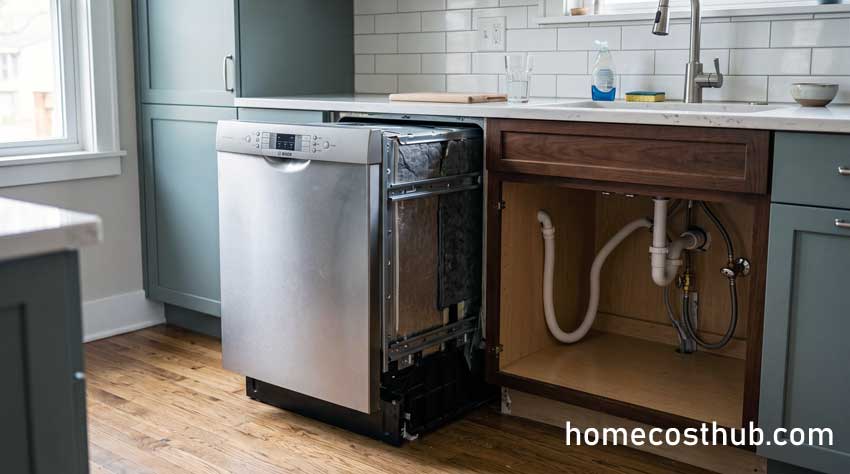
The issue is particularly noticeable in cabinets containing a garbage disposal, dishwasher hose, water filter, pull-out bins, or storage drawers.
The New Bowl Is Deeper
A deeper bowl increases washing capacity but consumes more cabinet space.
Before buying one, measure from the underside of the existing sink to the trap, waste pipe, disposal, shelf, and cabinet floor. If the new drain outlet sits substantially lower, the existing waste connection may no longer align as expected.
Expert Tip
Measure downward as well as side to side. A sink can fit perfectly in the countertop opening yet create a plumbing conflict because the new bowl places the drain lower inside the cabinet.
The Mounting Style Changes
A drop-in-to-undermount conversion changes more than the hardware holding the sink.
The countertop edge becomes visible, so its shape and finish matter. The existing opening may not have been fabricated to serve as a finished undermount edge.
A standard-to-farmhouse conversion can be more disruptive because cabinetry and support may also change.
The Cabinet Needs Modification
Cabinet width specifications should be checked before buying the sink.
A large bowl may physically fit within the countertop dimensions yet interfere with cabinet sides, internal rails, drawer hardware, or support framing.
Farmhouse sinks deserve extra scrutiny because the apron occupies the cabinet front and the weight of the sink must be carried appropriately.
Corrosion Appears During Removal
Old plumbing can look serviceable until fittings are disturbed.
Corroded nuts, seized shutoff valves, deteriorated supply hoses, drain fittings, and disposal flanges may become obvious only after disassembly begins.
This is one reason a Sink Replacement Calculator result should be treated as a budgeting baseline rather than a promise that every existing component can be reused.
Repair the Existing Sink or Replace It?
Not every leaking or loose sink needs a new fixture. The source of the problem matters.
A leak at a drain connection may involve a seal, fitting, or waste assembly rather than failure of the sink body. Loose mounting can sometimes be corrected if the sink and surrounding countertop remain sound.
Cracks through ceramic, severe rust-through, major enamel deterioration, or repeated functional problems point more strongly toward replacement.
| Situation | Repair May Make Sense | Replacement May Make More Sense |
|---|---|---|
| Leaking drain connection | Leak is isolated to the drain seal or fitting | Sink body around the drain is cracked, corroded, or damaged |
| Loose mounting | Sink, clips, and countertop remain structurally sound | Mounting surface or sink rim is badly damaged |
| Failed sealant | Sink position and surrounding surface are sound | Movement or structural damage keeps causing failure |
| Chipped finish | Damage is small and mainly cosmetic | Damage is extensive or exposes vulnerable material |
| Cracked ceramic or fireclay | Minor surface mark is not structural | Crack passes through the sink body or continues growing |
| Rust-through | Surface discoloration only | Metal has perforated or lost structural integrity |
| Severe enamel damage | Small isolated cosmetic area | Large areas are damaged and difficult to maintain |
| Poor sink layout | Existing bowl still serves household needs | Size, bowl arrangement, or drain position causes daily frustration |
| Recurring leaks | Cause has been identified and is repairable | Multiple failures or structural defects keep returning |
| Cosmetic dissatisfaction | Appearance can be improved without replacement | Replacement is already planned as part of renovation work |
Repair vs Replace Decision Tree
Is the sink body cracked, rusted through, or structurally damaged?
→ Yes → Replacement is usually the more practical path.
→ No → Continue.
Is the problem limited to the drain, sealant, mounting clips, faucet or tap, or supply connection?
→ Yes → Investigate repair before replacing the sink.
→ No → Continue.
Does the existing sink still fit your functional needs?
→ No → Compare compatible replacement options.
→ Yes → Continue.
Does the sink repeatedly leak or loosen after previous repairs?
→ Yes → Investigate the underlying cause and consider replacement if the fixture or mounting area is damaged.
→ No → Continue.
Would replacement require changing the countertop, worktop, cabinet, or plumbing?
→ Yes → Compare the value of replacement with the larger project scope before proceeding.
Also Read:
→ No → Continue.
Are you already replacing the countertop or vanity?
→ Yes → This may be a practical time to coordinate the sink, faucet or tap, and opening dimensions together.
→ No → A targeted repair may make more sense if the existing fixture remains serviceable.
This decision tree is a planning aid rather than a diagnosis. Water damage, electrical components near plumbing, stone fabrication, or uncertain structural conditions may justify professional inspection.
DIY Sink Replacement vs Hiring a Professional
A straightforward drop-in replacement can be within reach of an experienced DIY homeowner if the opening, plumbing, and fixture configuration remain unchanged.
The risk rises quickly once the project requires stone cutting, drain relocation, difficult undermount support, cabinet work, or electrical work connected with a garbage disposal.
| Consideration | DIY | Professional |
|---|---|---|
| Like-for-like drop-in sink | Possible for experienced DIYers with accessible plumbing | Useful when fittings are old or access is difficult |
| Undermount sink | More difficult because support and alignment matter | Often preferable, especially with stone surfaces |
| Stone countertop modification | Poor DIY candidate without proper fabrication experience | Countertop fabricator or stone specialist is usually appropriate |
| Plumbing relocation | Requires stronger plumbing knowledge and may involve local requirements | Plumber commonly appropriate |
| Farmhouse conversion | Can involve cabinetry and support work | May require a kitchen fitter, carpenter, fabricator, and/or plumber |
| Corroded valves | Can create complications when disturbed | Plumber can assess and replace defective components |
| Garbage disposal reconnection | Requires attention to plumbing and electrical safety | Professional help may be appropriate depending on scope |
| Leak testing | Essential after DIY work | Normally part of professional completion checks |
Professional plumbing labor should not be equated directly with published employee wage data. The Bureau of Labor Statistics occupational wage data for plumbers describes occupational earnings, while a contractor quotation can also reflect business overhead, travel, insurance, scheduling, equipment, and project scope.
Pros and Cons of Replacing a Sink During a Larger Kitchen Remodel
Coordinating sink replacement with broader renovation work can remove some compatibility restrictions because the countertop and cabinetry can be planned around the new fixture rather than adapted afterward.
Pros
- Countertop coordination: The opening can be fabricated for the selected sink rather than adjusted later.
- More freedom in sink size: New cabinetry and worktops can accommodate dimensions that would not fit the old installation.
- Better faucet planning: Faucet holes, accessories, and clearances can be coordinated before fabrication.
- Cabinet reinforcement can be planned: This is useful for heavy farmhouse or apron-front sinks.
- Plumbing changes can be coordinated: Drain and supply work can be scheduled alongside other trades.
- Less modification after completion: Cutting or altering newly finished surfaces later is less likely.
Cons
- The sink choice can influence countertop templating and fabrication.
- Changing the selected sink late may delay other work.
- A sink conversion can expand the cabinet and plumbing scope.
- More trades may need to coordinate around the same installation.
- Upgrading several fixtures simultaneously can place pressure on the remodeling budget.
If the sink is part of a broader renovation, the Kitchen Remodeling section can help place the fixture decision within the wider project rather than treating it as an isolated purchase.
Common Sink Replacement Mistakes
1. Shopping by Nominal Width
A 33-inch label describes only part of the product. Cutout size, bowl geometry, rim dimensions, and minimum cabinet width can differ.
2. Measuring the Sink but Not the Cabinet
Cabinet sides, rails, drawers, and hardware can restrict usable space beneath the countertop.
3. Assuming Any Same-Size Undermount Sink Will Fit
The old countertop opening remains visible with an undermount installation. Different corner radii or bowl shapes can create gaps or an unattractive reveal.
4. Ignoring Bowl Depth
A deeper bowl can move the drain lower and interfere with the trap, disposal, waste pipe, shelving, or cabinet floor.
5. Forgetting Drain Position
Moving from a center drain to a rear or side drain changes the path below the sink.
6. Ignoring Faucet or Tap Hole Configuration
A one-hole faucet and a three-hole deck require different arrangements. Accessories such as soap dispensers can add another clearance requirement.
7. Choosing the Sink After Countertop Fabrication Starts
For undermount installations especially, fabricators often need accurate sink specifications when preparing the opening.
8. Removing the Existing Sink Before Confirming the Replacement
If the new sink does not fit, the kitchen or bathroom can remain unusable while another fixture or fabrication solution is found.
9. Assuming Old Shutoff Valves Will Work
Valves that have not been operated for years may be stiff, seized, or unreliable when the supply lines are disconnected.
10. Forgetting Disposal or Dishwasher Clearance
A deeper bowl or different drain location can alter the space available for these connections.
11. Ignoring the Stone Edge Around an Undermount Sink
Existing chips, cracks, and unusual corner geometry can restrict replacement choices.
12. Treating a Farmhouse Sink Like a Drop-In Replacement
Apron-front sinks can change the cabinet face, support arrangement, and worktop opening even if the plumbing remains nearby.
Myth vs Fact: Sink Replacement
Fact
Two sinks sold at the same nominal width can use different cutout dimensions, corner radii, bowl depths, and mounting systems.
Fact
A different mounting style, bowl size, or sink shape may require modifying the existing opening, and some conversions are far more involved than a direct replacement.
Fact
A deeper bowl can reduce clearance for the P-trap, waste pipe, garbage disposal, drawers, shelving, or cabinet base.
Fact
Some leaks originate from drain fittings, sealant, supply connections, faucets, or waste plumbing rather than the sink itself.
Kitchen Sink vs Bathroom Sink Replacement
A Sink Replacement Calculator can apply to both rooms, but the surrounding components differ enough that the projects should not be treated as identical.
| Factor | Kitchen Sink | Bathroom Sink |
|---|---|---|
| Typical plumbing complexity | May include disposal and dishwasher connections | Usually centered around faucet, trap, vanity, and drain connections |
| Garbage disposal | Common in many US kitchens | Generally not applicable |
| Dishwasher connection | May connect through the sink or disposal area | Generally not applicable |
| Vanity/cabinet interaction | Base cabinet dimensions strongly affect fit | Vanity top, drawers, and cabinet layout matter |
| Faucet/tap configuration | Often deck- or sink-mounted with optional accessories | May be sink-, countertop-, or wall-mounted |
| Mounting types | Drop-in, undermount, farmhouse/apron-front | Drop-in, undermount, vessel, pedestal, integrated vanity |
| Countertop considerations | Large openings and stone fabrication are common issues | Vanity-top replacement can sometimes be considered alongside the basin |
| Common replacement complications | Drain position, disposal, cabinet width, worktop opening | Vanity clearance, faucet spacing, drain alignment, integrated tops |
For bathroom projects involving faucet replacement, the EPA WaterSense bathroom faucet guidance states that WaterSense-labeled bathroom sink faucets and accessories use a maximum of 1.5 gallons per minute and can reduce flow by 30% or more compared with the 2.2 gpm standard flow while meeting performance criteria. EPA’s label applies to specific faucet categories, not every kitchen faucet.
United States vs United Kingdom Sink Replacement Planning
Homeowners in both markets face the same physical compatibility questions, but terminology, quotations, tax treatment, and common accessories can differ.
| Planning Point | United States | United Kingdom |
|---|---|---|
| Currency | USD | GBP |
| Water fixture term | Faucet | Tap |
| Surface term | Countertop | Worktop |
| Supply shutoff | Shutoff valve | Isolation valve |
| Drain terminology | P-trap and drain piping | Trap and waste pipe |
| Garbage disposal | Common consideration in many kitchen replacements | Less central to typical sink replacement planning |
| Trade quotation | Labor and project pricing vary by contractor and region | Labour, call-out arrangements, project scope, and VAT treatment may affect quotations |
For England, Approved Document H: drainage and waste disposal provides Building Regulations guidance dealing with foul-water drainage and related pipework. A straightforward sink swap should not automatically be described as requiring Building Regulations approval; the relevance depends on the work being undertaken and the applicable jurisdiction.
UK homeowners should also check whether quoted prices include VAT. GOV.UK VAT guidance for builders and similar trades states that most work on houses and flats by builders and similar trades, including plumbers, is charged at the standard 20% VAT rate, subject to listed exceptions and the contractor’s applicable VAT position.
Understanding Your Sink Replacement Calculator Result
A Sink Replacement Calculator result should be read as a planning range, not a contractor promise.
The lower-complexity end generally represents a job where the replacement fits the existing opening, mounting arrangement, cabinet space, and plumbing configuration with little alteration.
A higher-complexity scenario may involve work outside the basic fixture swap: a different cutout, deeper bowl, moved drain, cabinet modification, stone fabrication, deteriorated plumbing, or another trade.
Contractor quotations can differ even when two professionals agree on the basic installation. One quote may include old fixture disposal, valves, sealants, reconnecting accessories, cleanup, or taxes, while another presents those items separately.
Compare the scope line by line rather than selecting the lowest final figure automatically.
Replacement Planning Formula
Compatible Sink + Existing Opening + Existing Plumbing = Lower Project Complexity
Mount Conversion + Countertop Changes + Plumbing Changes + Cabinet Work = Higher Project Complexity
This is a planning framework, not a contractor pricing formula. Actual sink replacement cost depends on local labor conditions, project details, accessibility, materials, and the condition revealed once the existing installation is opened.
What Should Be Included in a Sink Replacement Quote?
Sink Replacement Quote Checklist
- Confirm removal of the existing sink.
- Confirm installation and sealing of the new sink.
- Identify whether faucet or tap work is included.
- Confirm drain and waste connection work.
- Identify countertop or worktop modification separately.
- Confirm cabinet modification or reinforcement if required.
- Clarify garbage disposal work where applicable.
- Ask whether replacement valves or supply lines are included.
- Confirm waste disposal and cleanup.
- Clarify taxes or VAT where applicable.
- Ask how unforeseen plumbing problems will be priced.
Two sink replacement quotes can look very different while describing similar labor. One contractor may provide a nearly all-inclusive price, while another separates plumbing adjustments, fabrication, disposal, and materials.
Expert Tip
Compare quotations by scope, not total price alone. Ask each contractor to identify what is included, excluded, assumed reusable, and treated as an extra if hidden damage or incompatible plumbing is found.
Sink Replacement Project Complexity Table
| Replacement Scenario | Complexity | Common Extra Work | Professional Help Often Needed? |
|---|---|---|---|
| Same-size drop-in → drop-in | Low to moderate | Minor sealing or drain alignment | Not always, if plumbing and fit are genuinely compatible |
| Same-size undermount → undermount | Moderate | Mounting, alignment, edge inspection, possible fabrication | Often useful, especially with stone |
| Drop-in → undermount | Moderate to high | Finished countertop edge, cutout changes, mounting support | Usually appropriate |
| Standard sink → farmhouse | High | Cabinet face modification, support, worktop alteration | Commonly requires multiple skills or trades |
| New sink with deeper bowl | Moderate | Trap or waste adjustment, disposal clearance | May be needed if plumbing no longer aligns |
| Different drain location | Moderate | Drain or waste rerouting | Plumber often appropriate |
| Stone countertop opening modification | High | Cutting, edge finishing, dust control, structural assessment | Stone or countertop fabricator commonly appropriate |
| Sink relocation | High | New supply and waste routing plus related building work | Professional plumbing and possibly other trades commonly required |
Example Case Study: When a “Same-Size” Sink Is Not a Direct Replacement
Consider an educational example involving a US homeowner replacing an older 33-inch drop-in stainless steel kitchen sink.
The new sink is also marketed as 33 inches wide. At first glance, it appears to be a direct replacement.
Closer checking reveals three differences.
First, the manufacturer’s cutout dimensions do not match the existing countertop opening exactly. The new rim may still cover the old opening, but that must be verified rather than assumed.
Second, the replacement has a deeper bowl. The drain outlet will sit lower inside the cabinet, reducing the vertical space available for the existing P-trap and garbage disposal connection.
Also Read:
Third, the shutoff valves are older. They appear functional, but their condition cannot be confirmed from appearance alone before they are operated.
The homeowner intends to retain the countertop, which makes sink compatibility more important than it would be during a full countertop replacement.
The faucet could remain, provided its hole configuration and condition are suitable. Replacing it is an optional scope item rather than automatically part of the sink project.
In this scenario, the Sink Replacement Calculator provides a useful starting budget for the planned replacement. Before accepting the figure as a realistic project expectation, the homeowner should verify rim coverage, bowl clearance, drain alignment, valve condition, disposal clearance, and what a plumber’s quote includes.
UK Variation
The same project in the UK would be described using slightly different language. The homeowner would verify whether the new sink fits the existing worktop, whether the tap arrangement remains compatible, and whether the deeper bowl changes the alignment of the waste pipe.
Older isolation valves should be considered when the supply is disconnected. A labour quotation should state what plumbing adjustments are included and whether VAT applies to the quoted total where relevant.
The physical compatibility problem is the same. The terminology and quotation structure differ.
Sink Replacement Calculator FAQs
How much does it cost to replace a sink?
Sink replacement cost depends on the fixture, mounting method, existing opening, plumbing condition, and whether countertop or cabinet changes are required. A like-for-like replacement is generally simpler than a conversion. Use the Sink Replacement Calculator for a preliminary range, then compare local quotations based on the same scope.
How much does a plumber charge to replace a sink?
Plumber pricing varies by region, business overhead, access, project scope, and the condition of existing plumbing. A straightforward reconnection is different from work involving new valves, drain relocation, disposal changes, or unexpected corrosion. Published employee wage data should not be treated as a contractor’s retail hourly rate.
Can you replace a sink without replacing the countertop?
Yes, if the new sink is physically compatible with the existing countertop opening and mounting arrangement. Drop-in sinks can be relatively forgiving when the new rim fully covers the opening. Undermount replacements require closer matching because the countertop cut edge remains visible.
Can an undermount sink be replaced without removing the countertop?
Often, yes, but access, mounting method, adhesive, bowl dimensions, and the existing countertop opening all matter. The replacement sink must work with the finished cutout. If the new bowl geometry does not match, stone modification or a different sink may be required.
Will a new sink fit my existing countertop opening?
Do not assume it will based on advertised sink width. Compare the manufacturer’s cutout requirements, corner radius, rim or reveal, mounting arrangement, bowl depth, minimum cabinet width, and drain position with the existing installation before purchasing.
Can I replace a 33-inch sink with another 33-inch sink?
Possibly, but “33-inch” does not guarantee compatibility. Two sinks with the same nominal width can require different cutout sizes and minimum cabinet dimensions. Compare the technical specifications and cutout template rather than relying on the product name alone.
Is a deeper sink harder to install?
A deeper sink can create additional plumbing and clearance issues even if the countertop opening remains unchanged. The lower drain position may interfere with the P-trap, waste pipe, garbage disposal, cabinet shelf, drawers, or cabinet floor.
Do I need new plumbing when replacing a sink?
Not necessarily. Existing plumbing may remain usable when the replacement drain sits in a compatible position and the current components are in good condition. A different drain location, deeper bowl, damaged valve, corroded fitting, or sink relocation can require plumbing changes.
Should I replace the faucet when replacing the sink?
Not automatically. A faucet or tap in good condition can often remain if its mounting arrangement works with the new sink or countertop. Replacing both together can make sense when hole configurations change, access is easier during installation, or the existing fixture is already worn.
Can I replace a kitchen sink myself?
A competent DIY homeowner may be able to handle a genuine like-for-like drop-in replacement with accessible, serviceable plumbing. Undermount work, stone modification, relocated plumbing, cabinet alterations, electrical disposal work, or deteriorated valves raise the difficulty and may justify specialist help.
How long does sink replacement usually take?
There is no reliable universal time because project scope varies widely. A compatible replacement can be relatively straightforward, while stone fabrication, plumbing changes, cabinet modification, corrosion, or sink relocation can extend the work substantially. Ask the contractor what assumptions their schedule is based on.
Why is my sink replacement quote higher than the price of the sink?
The fixture is only one part of the project. The quotation may also include removal, installation, drain work, mounting materials, sealing, valve or supply-line work, disposal reconnection, countertop modification, cabinet work, cleanup, travel, overhead, and applicable taxes.
Can I change from a drop-in sink to an undermount sink?
Sometimes, but the existing countertop must be suitable for an undermount installation and the exposed cut edge needs an appropriate finish. An opening made for a drop-in sink may not have the shape, edge quality, or dimensions required for the new undermount bowl.
What happens if the new sink drain is in a different position?
The existing trap or waste pipe may need to be repositioned. Horizontal changes affect alignment, while a deeper bowl can move the drain vertically. Available cabinet space and the position of a disposal or other equipment determine how significant the adjustment becomes.
Does a farmhouse sink require cabinet modification?
Often it does. An apron-front sink occupies part of the cabinet face and may need dedicated support underneath. Converting from a standard sink can also affect the countertop opening, doors, false drawer front, and adjacent cabinet structure.
Is it cheaper to repair or replace a sink?
Repair may make more sense when the problem is limited to sealant, a drain connection, mounting hardware, or another replaceable component. Replacement becomes more compelling when the sink body is cracked, rusted through, badly damaged, or no longer functions well for the household.
What hidden problems can appear when an old sink is removed?
Common surprises include seized valves, corroded nuts, deteriorated supply lines, damaged drain fittings, old sealant, hidden countertop deterioration, disposal flange problems, and plumbing that does not line up with the new sink. Some conditions are difficult to confirm until disassembly begins.
Should I buy the sink before hiring a plumber?
You can, but verify compatibility first. For a simple replacement, compare the new sink’s technical specifications with the existing opening and cabinet. For stone, farmhouse, or unusual installations, discussing the selected model with the appropriate plumber, fabricator, or fitter before purchase can reduce compatibility risk.
Can a plumber modify a granite or quartz countertop?
Some plumbing businesses may coordinate that work, but stone fabrication is a separate specialist skill. Cutting or refinishing granite or engineered quartz often belongs with a countertop or stone fabricator rather than assuming the plumber performing the connections will modify the surface.
What should be included in a sink replacement quote?
The quotation should clearly state whether it includes existing sink removal, new sink installation, sealing, drain or waste connection work, faucet or tap work, valve and supply-line work, countertop modification, cabinet changes, garbage disposal work where relevant, cleanup, waste disposal, taxes, and treatment of unforeseen conditions.
Before You Replace the Sink
Use the Sink Replacement Calculator after establishing what type of project you actually have.
Start with seven checks:
- Measure the existing sink and opening. Do not rely on nominal product width.
- Compare the manufacturer’s cutout specifications. Confirm the new sink can use or properly cover the opening.
- Check cabinet width and internal clearance. Look for rails, drawers, shelving, and other obstructions.
- Compare bowl depth and drain position. Confirm there is room for the trap, waste pipe, disposal, and other connections.
- Decide whether repair is sufficient. A leak from a fitting does not automatically mean the sink body has failed.
- Identify specialist work. Stone fabrication, cabinetry, plumbing relocation, and electrical work may involve different trades.
- Compare the calculator estimate with equivalent local quotes. Confirm that each quote includes the same work before comparing totals.
HomeCostHub estimates are intended for preliminary budgeting. Contractor pricing varies by location, business model, access, scope, and site conditions. Hidden plumbing or structural problems can alter the final work after removal begins, and regulatory requirements vary by jurisdiction.
Qualified local advice is appropriate where a project involves structural changes, complex plumbing, electrical or gas work, stone fabrication, or other work outside a straightforward fixture replacement.
About the Author
Arden Cole Linscott (Pakar)
Expert — Residential Construction & Remodeling Cost Analysis
Arden Cole Linscott focuses on residential construction budgeting, remodeling cost analysis, project-scope evaluation, and homeowner decision-making. His work translates construction and remodeling cost variables into practical information homeowners can use when comparing project options and professional quotations.
Before purchasing the replacement, review the opening, cabinet dimensions, bowl depth, drain position, and mounting requirements together. Then use the Sink Replacement Calculator as your budgeting baseline and compare it with local quotations when plumbing, countertop, worktop, cabinet, or specialist work is involved.






Scroll to bottom
Remodeling Cost Calculators