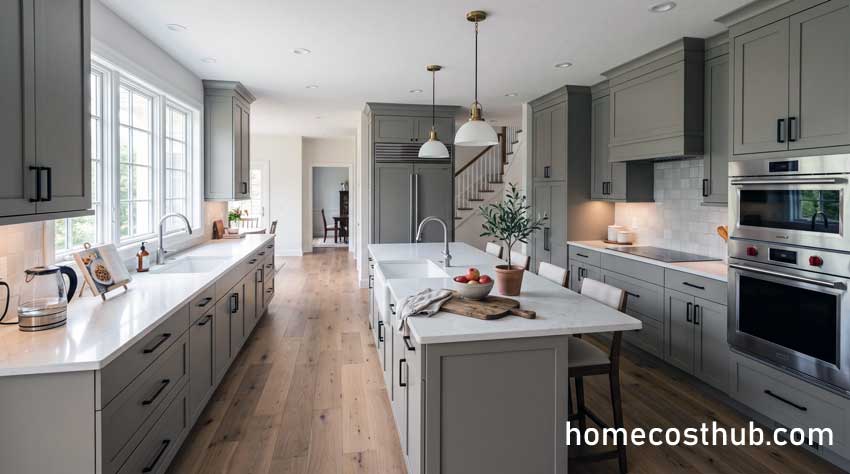
Trim Painting Calculator

Trim Painting Calculator Cost Guide
A Trim Painting Calculator helps homeowners estimate the likely cost of painting baseboards, door casings, window trim, moulding, and other decorative woodwork before requesting professional quotes.
Trim painting often costs more per square foot than painting broad walls because the work requires greater precision, careful masking, detailed preparation, and more brush or fine-finish work. This cost calculator supports both USA cost and UK cost estimates and allows the project size to be entered in square feet or square meters.
The result separates material cost, labour cost, installation cost, additional preparation expenses, and removal cost. Whether you are refreshing existing baseboards, repainting door and window casings, or restoring detailed decorative moulding, the calculator provides a useful price estimate for budgeting a trim painting project.
Trim Painting Calculator
Estimate trim painting costs for projects in the USA or UK based on paintable trim area, material type, paint quality, trim style, existing condition, application method, labour difficulty, removal work, and optional preparation features.
Enter the approximate total paintable surface area of baseboards, casings, moulding, and other trim.
Please enter a valid value.
Removal Required
Optional Preparation & Finishing
USA Trim Painting Estimate
$0
Trim Painting Size: 0 ft²
Cost Breakdown
Materials $0
Labour $0
Installation $0
Additional $0
Removal $0
This estimate is intended for budgeting purposes. Actual trim painting costs can vary by location, contractor minimum charges, trim profile, number of coats, existing finish condition, access, masking requirements, preparation work, and local labour rates.
FREE PDF ESTIMATE
Get Your Trim Painting Estimate PDF
Enter your details below to receive your trim painting estimate, selected options, and complete cost breakdown as a downloadable PDF.
✓ Your PDF is ready!
Free Trim Painting Calculator
Material / Project Types
Trim painting can involve several different paint and coating types. Acrylic trim paint is a popular choice because it dries relatively quickly, offers good durability, and is easy to maintain.
Enamel paint is commonly used on baseboards, doors, casings, and other trim where a harder and smoother finish is preferred. Its material cost can be higher than standard acrylic paint, but the increased durability can make it suitable for high-contact surfaces.
Urethane-alkyd coatings are another premium option. They can provide a smooth finish similar to traditional oil-based paints while offering modern application and cleanup characteristics.
Specialty or high-durability finishes may be selected for luxury interiors, highly detailed moulding, cabinetry-style trim, or areas that need greater resistance to wear and cleaning.
Project type also affects the price estimate. Painting simple baseboards is generally less expensive than painting baseboards plus door and window casings. Decorative crown moulding, panel moulding, intricate profiles, and full trim packages require more precise work and typically increase labour cost and installation cost.
Also Read:
Main Factors Affecting Cost
Project size has a direct impact on the total Trim Painting Calculator estimate. A larger amount of trim requires more paint, preparation materials, masking, and labour.
Material quality is another important factor. Budget paint can reduce upfront material cost, while standard, premium, and luxury finishes may provide improved durability, levelling, coverage, colour retention, and resistance to wear.
Existing condition can significantly affect replacement cost or repair cost. New trim may only require light preparation and primer, while repainting existing trim may require cleaning, sanding, deglossing, or spot priming. Damaged trim can require filling, caulking, sanding, and other repairs before painting begins.
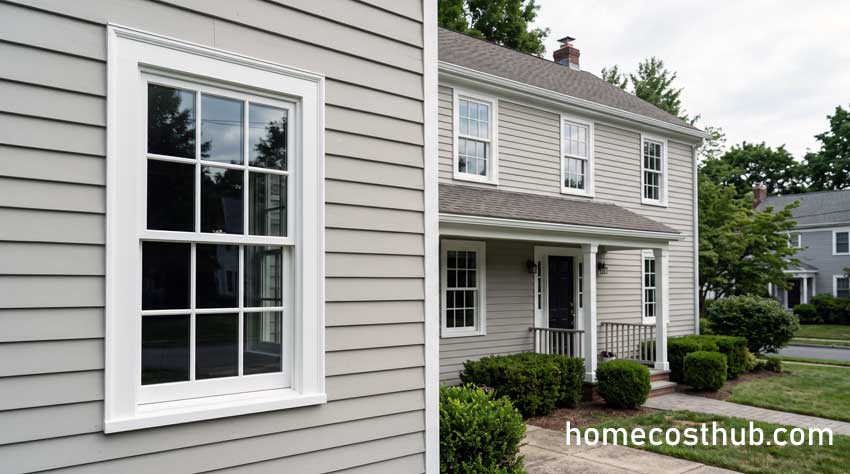
Labour difficulty is especially important for trim because detailed profiles and narrow surfaces take longer to paint than flat walls. Simple baseboards are relatively straightforward, while ornate moulding, stair trim, high windows, or detailed door casings can increase labour cost substantially.
The application method also affects installation cost. Spray application can provide a smooth finish when the area can be properly masked. Brush application is common for occupied homes and smaller projects, while fine-finish spray with brush touch-ups can provide a higher-end result at additional cost.
Cost Breakdown
Material cost includes trim paint, primer, coatings, and related consumable supplies. Paint type and material quality directly affect this portion of the estimate.
Labour cost represents the time required for preparation, masking, painting, detail work, touch-ups, and cleanup. Because trim is narrow and detailed, labour cost can represent a substantial portion of the total project price.
Installation cost reflects the selected application method. Spray application, brush painting, and fine-finish spray with touch-up work each require different levels of preparation, equipment, and working time.
Additional cost may include primer, sanding, surface preparation, caulking, gap filling, and other finishing work. These steps can improve the final appearance and help produce cleaner transitions around walls, floors, windows, and doors.
Removal cost applies when old paint or finish must be stripped before the new coating is applied. Light stripping generally adds a moderate expense, while heavy finish removal can substantially increase replacement cost or repair cost.
Combining these categories provides a more useful price estimate than applying a single generic painting rate.
Why Use This Calculator?
A Trim Painting Calculator can help homeowners estimate a realistic budget before hiring a painter or comparing professional quotations.
Instead of relying on one average rate, the calculator considers material type, paint quality, trim type, existing condition, application method, labour difficulty, removal requirements, and additional preparation features.
Homeowners can compare budget, standard, premium, and luxury finishes or see how primer, sanding, caulking, and paint stripping affect the total. It can also help compare a straightforward repaint with the higher repair cost of restoring worn or damaged trim.
The calculator supports both USA cost and UK cost assumptions, with estimates shown in USD or GBP. Measurement units can be selected independently, allowing project size to be entered in square feet or square meters.
Actual contractor pricing can vary according to location, minimum service charges, trim profile, accessibility, number of coats, paint brand, preparation requirements, and local labour cost. The result should therefore be used as a planning estimate rather than a guaranteed quotation.
Trim Painting Calculator: From Estimate to Painter Quote
Quick Answer
Use your Trim Painting Calculator result as a budgeting benchmark, then compare professional quotes against the same written scope. Check which trim is included, the preparation standard, primer requirements, coat count, finish specification, protection, cleanup, and any exclusions before deciding whether a quote is genuinely higher or lower.
How to Read Your Trim Painting Calculator Result
A calculator estimate and a painter’s quotation answer different questions. The calculator gives you a planning figure based on selected project assumptions. A professional quotation prices the actual surfaces, site conditions, preparation, access, finish expectations, and commercial terms the painter agrees to deliver.
That difference matters when a quote comes back above or below your initial estimate. A higher proposal is not automatically overpriced, and a lower one is not automatically better value. First establish whether both figures represent the same scope.
| Estimate Element | What the Calculator Represents | What to Verify in a Quote |
|---|---|---|
| Materials | Selected coating and quality assumptions | Paint brand, product line, primer, sheen, and supplied materials |
| Labor | Planning allowance for painting work | Preparation time, masking, coat count, touch-ups, and cleanup |
| Preparation | Condition level selected for the estimate | Filling, caulking, sanding, deglossing, repair, and spot priming |
| Removal | Allowance where stripping or removal applies | Exactly which surfaces will be stripped and to what level |
| Finish | General finish-quality assumption | Actual sheen, product specification, application standard, and coat count |
The useful comparison is not simply:
Calculator: X → Painter: Y
It is:
Calculator assumptions → actual project scope → contractor inclusions → contractor exclusions → quoted total
If those four items align, the numbers become much more meaningful.
Expert Tip
Give every painter the same written trim schedule before requesting prices. List each room, baseboards or skirting, door and window trim, crown molding, known repairs, primer requirements, expected coat count, and any surfaces that should be excluded. Comparable scope produces more useful quotes than asking several contractors to price “all the trim.”
Compare Painter Quotes by Scope, Not Headline Price
Two trim-painting quotes are comparable only when they cover substantially the same work. A difference in total price may come from preparation, included surfaces, paint specification, protection, or finish standards rather than the contractor’s basic painting rate.
Before comparing totals, check each proposal for these items:
- Cleaning: Is surface cleaning included before preparation?
- Sanding or deglossing: Is the existing finish being prepared for adhesion?
- Filling: Are dents, nail holes, and minor defects included?
- Caulking: Are gaps at wall-to-trim joints or trim joints included?
- Primer: Does the quote include spot primer, full primer, or neither?
- Coat count: Is the proposal based on one finish coat or two?
- Trim scope: Are window casings, door casings, crown molding, stair trim, and closet trim included?
- Protection: Are floors, walls, furnishings, and adjacent finishes protected?
- Touch-ups: Is final correction work included?
- Cleanup: Does the contractor remove masking materials and job debris?
- Tax or VAT: Is it included in the stated total where applicable?
An itemized quotation can make these differences easier to identify, but itemization is not automatically evidence of a better contractor. A well-written bundled price can still be clear if it defines the included scope and exclusions precisely.
The main goal is to remove ambiguity before comparing totals.
The Trim Homeowners Commonly Leave Out of a Quote
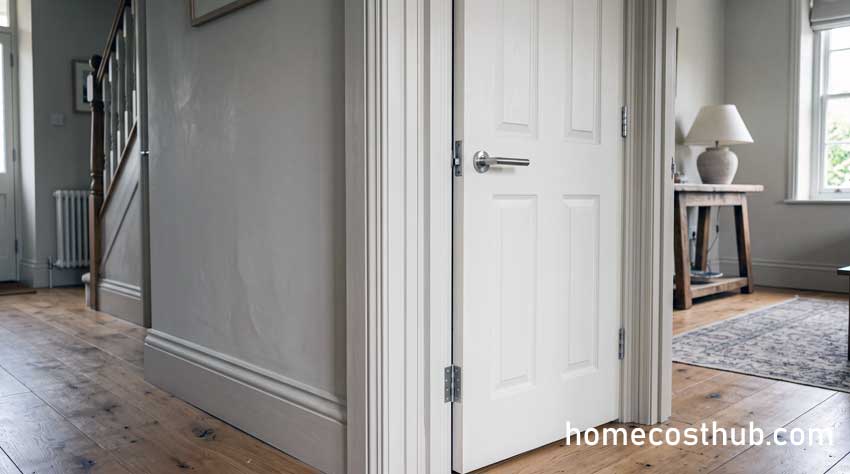
A room can contain more paintable trim than the baseboard around its perimeter. Missing those smaller elements is one reason a site quotation can exceed an early planning estimate.
Commonly overlooked surfaces include:
- the full perimeter of door casing on both sides of an opening;
- window casing and window stools or sills;
- crown molding;
- chair rails and picture rails;
- trim inside closets and alcoves;
- baseboards behind movable furniture;
- stair stringers, newel posts, or painted stair trim;
- utility-room or hallway trim;
- transitions where newly installed trim meets existing trim;
- decorative panel molding.
This is especially important when a homeowner asks for a price to paint “the baseboards and trim.” One painter may interpret that phrase narrowly, while another may include most painted woodwork in the room.
The solution is not to assume either interpretation is correct. Define the surfaces before the quote is finalized.
How Existing Trim Condition Becomes Real Quote Scope
Trim condition affects more than an abstract cost factor. On an actual proposal, it becomes a sequence of specific tasks. Two homes with similar amounts of baseboard can require very different work if one has a sound coating and the other has failing paint, open joints, dents, or damaged wood.
Also Read:
Sound Previously Painted Trim
A relatively stable surface may require a limited preparation sequence such as:
clean → lightly abrade or degloss where appropriate → minor filling → coat
The contractor can spend more time on application and less on corrective work.
Worn or Damaged Trim
A more involved sequence might be:
clean → fill defects → caulk appropriate gaps → sand → spot-prime → paint
The painting itself may cover the same linear footage, but the labor requirement is different because the surface has to be brought to an acceptable condition first.
Failing or Questionable Existing Coatings
Loose, flaking, or incompatible coatings can change the scope further:
assessment → controlled preparation or removal where required → repair → primer → coating
At that point, the quote is no longer pricing only fresh paint on trim. It is pricing corrective preparation before the finish can be applied.
That distinction also explains why a very low quote may not be equivalent to a higher proposal. One contractor may be pricing a basic repaint; another may be pricing the preparation needed to achieve the requested finish.
When Old Paint Changes the Risk, Not Just the Price
Older coatings can require different decisions because disturbing them may create a safety issue, not merely extra labor. This is particularly relevant when sanding, scraping, or stripping is being considered.
For UK work, the Health and Safety Executive identifies regular removal of coatings in properties built before the 1980s, dry sanding old paint, and heat-based stripping among activities that can create lead exposure risk. HSE advises assessing the condition of old paint and using safer methods where lead exposure may be possible. See the HSE guidance on safely working with older paint.
For US homes, the EPA states that homes built before 1978 are more likely to contain lead-based paint and that renovation activities such as sanding can create hazardous lead dust. EPA recommends that homeowners planning renovation, repair, or painting work in pre-1978 housing use appropriate lead-safe practices and, when hiring professionals for covered work, use appropriately certified contractors. See the EPA Renovation, Repair and Painting guidance for homeowners.
This does not mean every old piece of trim needs complete stripping. It means unknown older coatings should not be treated as an ordinary sanding task without considering the age, condition, and applicable safety requirements.
US Trim vs UK Skirting and Architrave: Compare the Same Scope
US and UK homeowners often describe similar painted elements with different terminology. That can create confusion when reading cost information online or comparing project descriptions.
| US Terminology | UK Terminology |
|---|---|
| Baseboard | Skirting board |
| Door casing | Architrave |
| Window casing | Window trim / architrave |
| Linear feet | Linear metres |
| Labor | Labour |
| Painter | Painter and decorator |
| Semi-gloss / satin trim paint | Gloss / satinwood / eggshell, depending on specification |
The terminology difference is not a reason to convert a US cost-per-foot figure into pounds and call it a UK market rate.
Local labor markets, contractor overhead, taxes, VAT treatment, project conventions, and pricing units differ. A currency conversion only converts money; it does not convert market conditions.
For UK context, Checkatrade’s June 2026 skirting-board guide separates hourly painter pricing from a per-linear-metre gloss-painting benchmark that includes repairs and making good. That distinction shows why the scope behind a unit rate matters as much as the unit itself. See the current UK skirting board painting cost benchmarks. Checkatrade describes its figures as ballpark averages rather than guaranteed local prices.
If you are comparing a US estimate with a US quote, stay within US assumptions. For a UK project, use UK evidence and local decorator quotes rather than converting US pricing.
Why Small Trim Jobs May Not Follow a Simple Per-Foot Rate
A small project can produce a relatively high effective cost per linear foot or metre because professional work includes fixed activities that do not shrink in proportion to the amount of trim.
Even a modest job can require:
- travel;
- job setup;
- floor and surface protection;
- tool preparation;
- material handling;
- cleanup;
- administration;
- scheduling time.
For that reason, multiplying a large-project unit rate by 20 or 30 linear feet may not predict the quote for a tiny standalone project.
The reverse can also happen on larger projects. Repeated rooms with similar trim profiles may allow a contractor to organize preparation and painting more efficiently.
This is one reason the Trim Painting Calculator result should be treated as a planning estimate rather than a promise that every contractor will price the work at the same unit rate.
DIY vs Professional Trim Painting: What Are You Actually Trading?
The DIY decision is not simply “paint cost versus painter cost.” It is a trade between cash expense, personal time, preparation skill, disruption, finish expectations, and the risk of needing rework.
| Consideration | DIY | Professional |
|---|---|---|
| Cash outlay | Usually avoids the professional labor invoice | Includes labor, business overhead, and project management |
| Time | Homeowner supplies preparation and painting time | Contractor manages production within the agreed schedule |
| Preparation | Requires correct assessment and execution by the homeowner | Can be included as defined professional scope |
| Detailed profiles | May be slow for an inexperienced painter | More familiar work for an experienced decorator or painter |
| Finish consistency | Depends heavily on skill and patience | Should be defined by the agreed specification and workmanship standard |
| Small project economics | Can be attractive when the trim is simple and accessible | Minimum service economics can influence very small jobs |
| Responsibility for correction | Homeowner handles mistakes and rework | Responsibility should be clarified in the contract or proposal |
DIY tends to make more practical sense when the trim is accessible, structurally sound, straightforward to prepare, and the homeowner is comfortable with detailed brushwork and masking.
Professional work can make more sense when the project contains ornate profiles, extensive repair, stairs, difficult access, a demanding finish standard, occupied-room constraints, or older coatings that require additional assessment.
Neither option is automatically the economical choice in every situation.
Repair, Repaint, or Replace the Trim?
Repainting makes sense when the trim itself remains serviceable and the defects are mainly cosmetic. Replacement becomes a different conversation when the underlying material is damaged, unstable, or no longer worth restoring.
Repainting Is Often the First Option When
- the trim is firmly attached;
- damage is limited to scuffs, small dents, or nail holes;
- minor gaps can be corrected appropriately;
- the existing profile is worth keeping;
- the coating can be safely and suitably prepared.
Repair Deserves Closer Consideration When
- sections are loose;
- joints have opened;
- localized wood damage exists;
- there are deeper dents or impact damage;
- water exposure has affected a limited area;
- historic or decorative profiles would be difficult to replace accurately.
Replacement May Need to Be Compared When
- wood is rotten or materially deteriorated;
- sections are badly swollen or distorted;
- water damage is extensive;
- the trim no longer holds securely;
- the existing profile conflicts with a broader remodeling plan;
- the restoration scope becomes disproportionate to the value of retaining the trim.
A premium paint finish cannot correct structural deterioration underneath it. If the trim itself has failed, compare the scope of repair or replacement before paying for extensive finishing work.
This decision can also arise during larger remodels. For example, trim in a bathroom may need to coordinate with flooring, doors, moisture-resistant finishes, and other work already included in a broader Bathroom Remodel Cost Calculator budget.
Trim Painting Decision Tree
Is the existing trim structurally sound?
→ Yes → Are the defects mainly cosmetic?
→ Yes → Repainting may be reasonable after appropriate preparation.
→ No → Define the repair scope before comparing paint quotes.
→ No → Compare repair and replacement before committing to a premium finish.
Is the existing coating stable and suitable for normal preparation?
→ Yes → Compare quotations based on the same preparation and coating specification.
→ No or uncertain → Obtain appropriate assessment before aggressive preparation, especially where older coatings may be involved.
Is the project small, accessible, and simple?
→ Yes → Compare your DIY time and finish expectations with the economics of a professional minimum-size job.
→ No → Professional painting may provide better control over preparation, sequencing, access, and finish consistency.
Illustrative Scenario — Not a Market Average
Consider a hypothetical homeowner repainting trim across several rooms.
The scope includes:
- existing baseboards or skirting in generally sound condition;
- several door casings;
- two window casings;
- a small number of nail holes;
- localized caulking;
- two finish coats;
- no major stripping.
The homeowner first uses the Trim Painting Calculator to establish a planning estimate.
Two professional proposals then arrive.
Quote A: Lower Headline Price
Quote A includes:
Also Read:
- baseboards or skirting;
- door casing;
- light surface preparation;
- finish coats.
It excludes:
- window casing;
- caulking;
- significant filling;
- preparation beyond light sanding.
Quote B: Higher Headline Price
Quote B includes:
- baseboards or skirting;
- door and window trim;
- localized filling;
- caulking where required;
- spot primer;
- two finish coats;
- surface protection;
- cleanup.
At first glance, Quote A appears cheaper.
That is not yet a valid comparison.
The homeowner needs to normalize the scope. If the missing window trim, repairs, and preparation from Quote A would have to be added later, its lower starting price does not represent the same finished project.
The useful lesson is:
The quotation closest to the calculator estimate is not automatically the most accurate or best-value proposal. Compare the work being purchased before comparing the totals.
How Paint Finish Choice Affects the Decision
The earlier Cost Guide already covers broad coating types, so the useful question at this stage is not simply which paint costs more. It is whether the specified finish matches the home’s use, existing coating, appearance expectations, and maintenance needs.
Consider:
- Durability: Baseboards, door casings, and other high-contact trim may need a coating suited to repeated cleaning and knocks.
- Sheen: Higher-sheen finishes can emphasize surface irregularities, making preparation quality more visible.
- Touch-ups: Some finishes can show localized repairs or touch-up marks more readily than others.
- Compatibility: Existing coatings may affect preparation and primer requirements.
- Appearance: The desired relationship between trim, walls, doors, and cabinetry should be defined before the painter prices the final finish.
For UK homeowners, manufacturer guidance can help clarify common skirting-board preparation and finish considerations. See Dulux guidance for preparing and painting skirting boards.
The specification in the quote should be clear enough that two contractors are not silently pricing different finish standards.
Where Trim Painting Fits Into a Larger Remodel
Trim is usually a finishing trade, but its timing still depends on adjacent work. New flooring, wall repairs, door replacement, cabinetry, and other remodeling tasks can affect when trim should be repaired, installed, caulked, primed, and painted.
Painting too early can lead to damage and touch-ups when later trades work against finished trim. Waiting too long can create its own access or scheduling problems.
For example, during a bathroom renovation, replacing flooring or doors before final trim painting may prevent newly finished baseboards or casings from being damaged by later installation work. That is why trim costs should be considered as part of the finishing sequence, not as an isolated paint purchase.
HomeCostHub’s broader Painting & Finishing resources can help when the trim project forms part of a larger decorating budget.
Common Trim Painting Quote Mistakes
Several budgeting mistakes can make a reasonable quote look expensive—or an incomplete quote look attractive.
Comparing Only the Final Total
A $ or £ total has little meaning without scope. Compare preparation, trim types, coat count, materials, protection, cleanup, and exclusions.
Assuming “Trim” Means Every Painted Wood Surface
A contractor may interpret trim as baseboards and casing only. Crown molding, window stools, stair trim, doors, or decorative panels may be separate.
Assuming Primer Is Automatically Included
Primer may be unnecessary on some suitable existing finishes but essential in other situations. The proposal should state what is included rather than leaving the homeowner to guess.
Ignoring the Number of Finish Coats
A quote for one finish coat and a quote for two coats are not equivalent scopes.
Ignoring Repairs
Painting and repairing are not the same task. Gaps, damaged corners, loose trim, dents, failing coatings, and substrate defects can create separate work.
Treating DIY Time as Free
DIY avoids a professional labor charge, but it still consumes homeowner time and may create rework if preparation or application goes wrong.
Assuming the Lowest Unit Rate Wins
A low cost per linear foot or metre can be misleading if important surfaces or preparation tasks are excluded.
Myth vs Fact: Trim Painting Estimates
Fact
Paint is only one part of the scope. Preparation, masking, detailed application, protection, touch-ups, and cleanup can represent substantial professional labor.
Fact
One contractor may include window casing, crown molding, filling, and caulking while another prices only baseboards and door casing.
Fact
The lower quote may cover less work, use a different preparation standard, specify fewer coats, or exclude surfaces included in the planning estimate.
Fact
Currency conversion does not account for local labour markets, VAT treatment, contractor overhead, trade conventions, or regional pricing. Use local UK evidence for UK projects.
Before You Accept a Trim Painting Quote
Before You Accept a Trim Painting Quote
- Confirm exactly which rooms and trim types are included.
- Confirm whether baseboards/skirting, door casing/architraves, windows, and crown molding are priced separately or together.
- Confirm cleaning, sanding, filling, caulking, and primer requirements.
- Confirm the number of finish coats and the specified paint product or finish standard.
- Identify exclusions and work that would trigger an additional charge.
- Check whether protection, cleanup, tax, or VAT are included where applicable.
- Compare each quote against the same project scope rather than the headline total.
A short written scope attached to the accepted proposal can prevent misunderstandings later, especially when several different trim types are present in the same room.
Trim Painting Calculator FAQs
How should I use a Trim Painting Calculator result?
Use the result as a planning benchmark, then compare it with contractor quotes based on the same scope. Check trim types, preparation, primer, coat count, paint specification, protection, cleanup, taxes or VAT, and exclusions before deciding whether a quote is high or low.
Why is my painter quote higher than the calculator estimate?
A site quotation may include conditions that a planning estimate cannot fully capture, such as extensive filling, failing coatings, difficult access, extra trim, project minimums, protection requirements, or a higher finish specification. Compare the scope before judging the price difference.
How do painters price trim painting?
Professional painters may price trim by measured quantity, time, room, bundled project scope, or a combination of methods. The pricing method matters less than understanding exactly what preparation, surfaces, coats, materials, and finishing work the total includes.
Does a trim painting quote normally include sanding and caulking?
Not necessarily. Some contractors include routine preparation in a bundled price, while others separate repairs or extensive preparation. Ask the painter to state which sanding, filling, caulking, and priming tasks are included.
How much paint do I need for trim?
Paint quantity depends on the amount and width of trim, profile complexity, surface condition, product coverage, primer requirements, and coat count. Use the existing calculator estimate and the selected paint manufacturer’s coverage information rather than assuming a universal quantity per room.
Should trim be sanded before repainting?
Preparation depends on the existing coating and condition. Sound previously painted trim may require cleaning and appropriate abrasion or deglossing, while damaged or failing coatings can require more work. Older coatings may also need safety assessment before sanding or stripping.
Does trim painting include door and window casing?
Only if the scope says so. “Trim” can be interpreted differently by different painters. List baseboards or skirting, door casing or architraves, window trim, crown molding, and other decorative woodwork individually when requesting quotations.
Is it cheaper to paint trim yourself?
DIY can reduce cash labor expense, particularly for small, simple, accessible projects. The real comparison should also consider preparation time, tools, disruption, finish quality, and the possibility of rework.
Should damaged trim be repaired or replaced before painting?
Minor cosmetic defects can often be repaired before repainting. Rot, severe swelling, extensive water damage, loose sections, or substantial material deterioration can justify comparing repair with replacement before paying for a premium finish.
How is UK skirting-board painting different from US baseboard painting?
The physical work can be similar, but terminology, common paint specifications, measurement units, labour markets, tax treatment, and quoting conventions differ. Use linear metres and UK market evidence for UK projects rather than converting a US rate.
Do small trim painting projects have minimum charges?
They can. A professional still has travel, setup, protection, equipment, cleanup, administration, and scheduling costs even when the amount of trim is small. Ask the contractor how a small-job minimum affects the quotation rather than assuming a large-project unit rate applies.
How many coats of paint should trim receive?
The correct coat system depends on the existing color and coating, surface preparation, primer, product specification, coverage, and desired finish. The quote should identify the agreed coating system rather than relying on an unstated assumption.
Use the Estimate to Make a Better Hiring Decision
The Trim Painting Calculator gives you a useful starting point. The next step is to turn that estimate into a clearly defined project.
Write down exactly which trim will be painted, confirm the preparation standard, identify repair work, specify primer and finish expectations, and ask each painter or decorator to price the same scope.
Then compare:
scope + exclusions + finish specification + commercial terms + total price
rather than price alone.
Cost Summary
Treat the calculator result as a planning benchmark, not a guaranteed contractor price. Before hiring, normalize every quote to the same trim scope, preparation level, coat count, finish specification, protection, cleanup, and tax or VAT treatment. A higher quote can represent better value if it includes work that a lower proposal leaves out.
For related estimating and finishing topics, continue through the Painting & Finishing section after reviewing the estimate and contractor scope.
About the Author
Arden Cole Linscott
Expert — Residential Construction & Remodeling Cost Analysis
Also Read:
Arden focuses on residential project costing, remodeling scope analysis, and practical construction budgeting. His editorial work helps homeowners interpret preliminary estimates, understand project scope, and compare professional quotations before making major remodeling decisions.
Scroll to bottom
Remodeling Cost Calculators