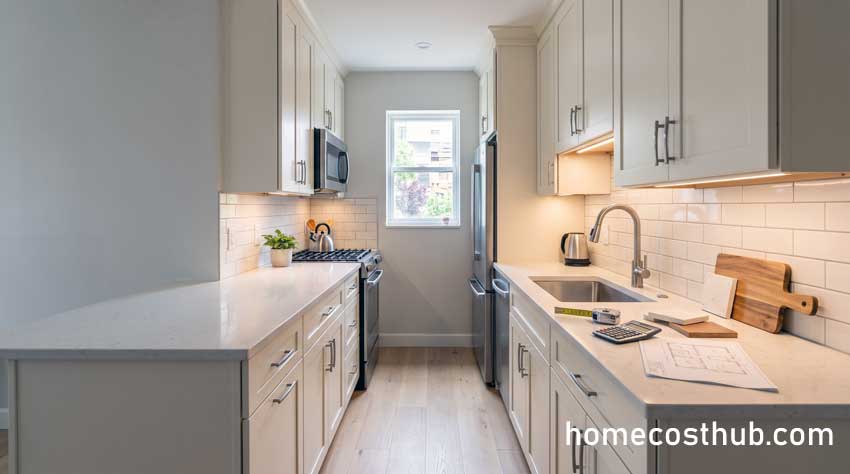
Cabinet Painting Cost Calculator
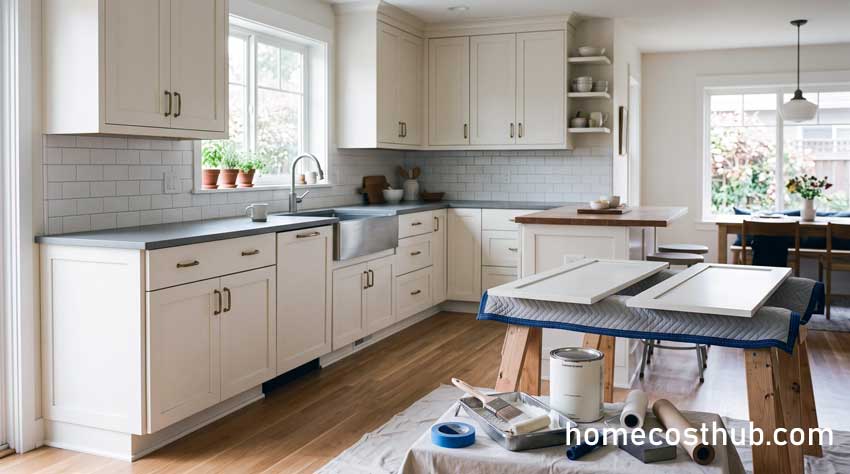
Cabinet Painting Cost Calculator Cost Guide
A Cabinet Painting Cost Calculator helps homeowners estimate the potential cost of repainting kitchen cabinets without completing a full cabinet replacement. Cabinet painting can refresh an outdated kitchen for considerably less than installing new cabinetry, but the final price depends on cabinet size, surface material, paint quality, preparation, existing condition, application method, labour difficulty, and optional finishing work.
This cost calculator supports both USA cost and UK cost estimates, using USD or GBP while allowing project size to be entered in square feet or square meters. It separates material cost, labour cost, application or installation cost, additional preparation, and removal-related expenses so homeowners can create a practical price estimate before requesting professional painting quotations.
Cabinet Painting Cost Calculator
Estimate kitchen cabinet painting costs in the USA or UK based on project size, cabinet material, paint quality, project scope, surface condition, application method, labour difficulty, preparation, and optional upgrades.
Please enter a valid value.
USA Cabinet Painting Estimate
$0
Kitchen Size:
0 ft²
Cost Breakdown
Materials
$0
Labour
$0
Installation
$0
Additional
$0
Removal
$0
This estimate is intended for preliminary budgeting. Actual cabinet painting prices may vary based on the number of doors and drawers, cabinet design, paint system, surface preparation, local labour rates, access, masking requirements, repairs, and contractor pricing.
Free Cabinet Painting Cost Calculator
Also Read: Concrete Removal Calculator
Material / Project Types
Cabinet material affects how much preparation is required and how well paint adheres to the existing surface. Solid wood cabinets are generally suitable for painting after proper cleaning, sanding, and priming. MDF and engineered wood can also provide a smooth painted finish, although damaged edges or moisture exposure may require additional repair work.
Laminate and thermofoil surfaces often need specialist preparation and bonding primers because conventional paint may not adhere properly. Wood veneer cabinets can usually be painted, but careful sanding is important to avoid damaging the thin veneer layer. Metal cabinets may require cleaning, abrasion, and primers specifically designed for metal surfaces.
Project scope also affects the price. Painting only doors and drawer fronts is generally less expensive than painting all visible exterior cabinet surfaces. A full cabinet painting project may include doors, drawers, frames, end panels, trim, and other exposed sections.
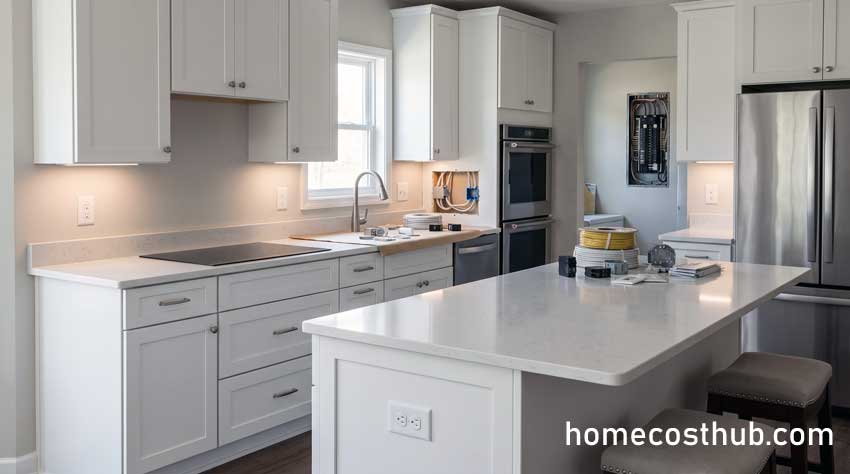
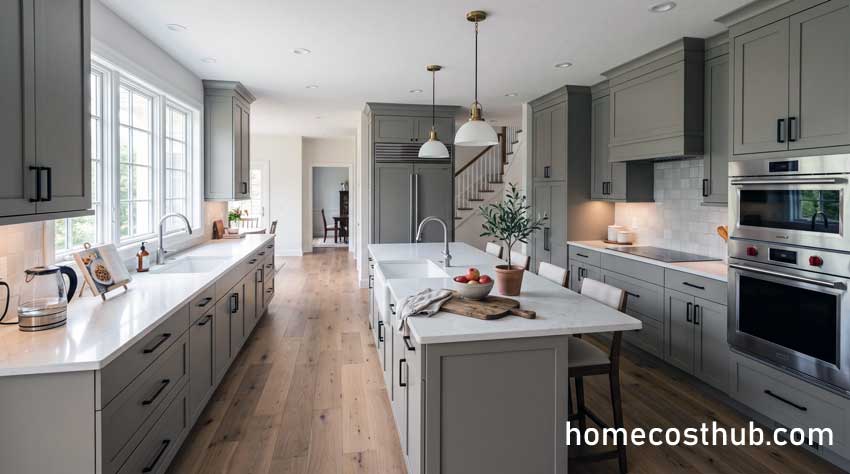
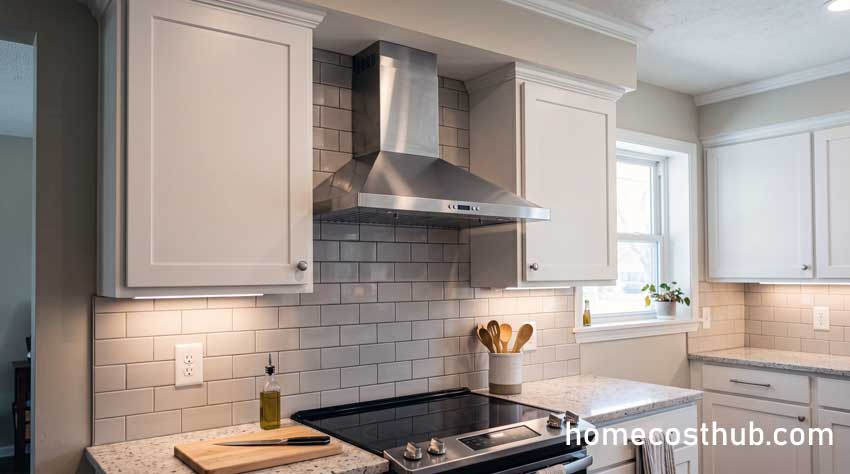
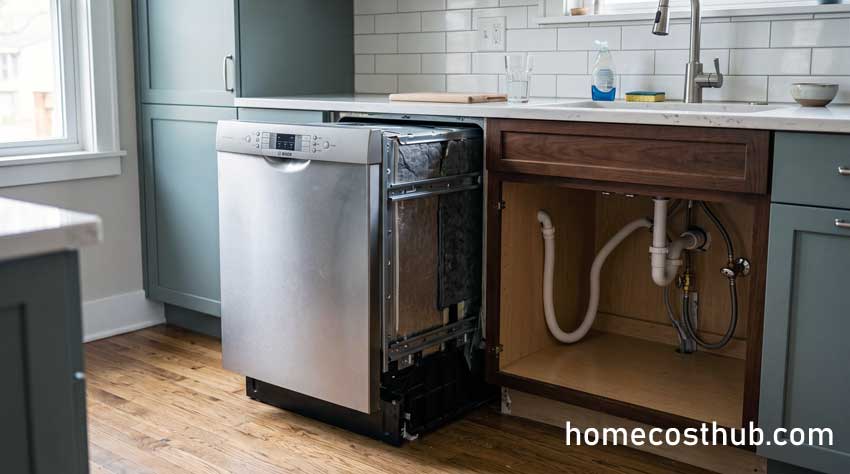
Also Read: Backsplash Cost Calculator
A major color change or specialty finish can increase material cost and labour cost because additional primer, coats, masking, sanding, or finishing work may be necessary.
Main Factors Affecting Cost
Project size is one of the main factors affecting cabinet painting cost. A larger kitchen typically has more doors, drawers, cabinet frames, end panels, and decorative elements that need preparation and coating.
Also Read: Kitchen Cabinet Replacement Calculator
Paint quality also affects the estimate. Budget products may reduce material cost, while Premium and Luxury coatings can offer improved durability, leveling, stain resistance, or finish quality.
Existing condition is particularly important for cabinet painting. New or unfinished surfaces may require relatively straightforward preparation. Previously painted cabinets usually need cleaning and sanding, while damaged surfaces may require filling, repair, stripping, or more intensive preparation.
Application method can also influence installation cost. Brush and roller application is typically less expensive but may leave a different finish than professional spray application. Spray finishing can provide a smooth, factory-style appearance but often requires extensive masking, equipment setup, ventilation, and controlled application.
Also Read: Kitchen Flooring Calculator
Labour difficulty increases when cabinets include intricate doors, detailed molding, difficult corners, extensive glass panels, integrated appliances, or complicated layouts.
Optional preparation and finishing services can further affect the price estimate. Heavy degreasing, additional sanding, specialty primer, hardware removal, painting cabinet interiors, and protective clear coats all add time and materials.
Also Read: Kitchen Electrical Upgrade Calculator
Cost Breakdown
Material Cost: Material cost includes paint, primers, fillers, abrasives, masking products, solvents, and other consumable materials. The estimate changes according to cabinet material, paint quality, project scope, and surface condition.
Labour Cost: Labour cost represents the preparation and painting work required to complete the project. Cleaning, sanding, filling, masking, priming, coating, and finishing can account for a substantial portion of professional cabinet painting costs.
Installation Cost: For this calculator, installation cost represents the painting application and finishing process. Brush and roller application is generally less expensive, while professional spraying and custom specialty finishes can cost more because of additional setup and finishing requirements.
Additional Cost: Additional expenses may include heavy degreasing, extra sanding, specialty bonding primer, hardware removal and reinstallation, painting cabinet interiors, or adding a protective clear coat. Basic, Standard, and Advanced feature levels adjust these allowances.
Removal Cost: Removal cost covers the work involved when cabinet doors, drawer fronts, hardware, or other removable components must be taken off before painting. The expense can increase for complex cabinetry or projects requiring more extensive disassembly.
The total estimate combines material cost, labour cost, installation cost, additional cost, and removal cost into one preliminary project budget.
Why Use This Calculator?
The Cabinet Painting Cost Calculator provides homeowners with a convenient way to estimate expenses before contacting painters, decorators, cabinet refinishers, or remodeling contractors.
It allows different project specifications to be compared quickly. Homeowners can evaluate the difference between painting only cabinet doors and completing a full cabinet repaint, compare Budget paint with Premium or Luxury finishes, or determine how professional spray application affects the overall price estimate.
The calculator can also help identify costs that are easy to overlook. Proper cabinet painting often requires much more than applying a new coat of paint. Cleaning grease and contaminants, sanding glossy finishes, repairing damaged surfaces, using bonding primer, removing hardware, masking the kitchen, and applying several finish coats can significantly affect the final labour cost.
Users can select either USA cost or UK cost independently from the measurement system. USA estimates are displayed in dollars and UK estimates in pounds. Square feet or square meters can be selected separately. When square meters are selected, the calculator converts the area internally using 1 square meter = 10.7639 square feet while continuing to display the entered kitchen size in square meters.
The result is designed for preliminary budgeting rather than as a guaranteed contractor quotation, but it provides a useful starting point when comparing painting, refinishing, repair cost, or full cabinet replacement cost.
Cabinet Painting Cost Calculator
Quick Answer
A Cabinet Painting Cost Calculator gives you a preliminary budget range based on the amount of cabinetry, expected preparation, finish standard, and local labor conditions. Use the result as a planning benchmark for US or UK projects, then compare contractor quotes using the same project scope.
Two cabinet painting quotes can describe what appears to be the same kitchen and still land far apart. The difference may have little to do with paint itself. One contractor may remove and label every door, repair damaged areas, spray the fronts off-site, finish the frames in place, and reinstall everything. Another may quote a simpler on-site process with fewer finishing steps.
That is where a Cabinet Painting Cost Calculator is most useful. The estimate gives you a reference point, but the real value comes from understanding what sits behind the number. A £1,500 quote and a £2,300 quote, or a $3,500 quote and a $5,000 quote, cannot be compared fairly until you know whether the contractors are pricing the same work.
Cabinet Painting Cost at a Glance
- A Cabinet Painting Cost Calculator should be treated as a budgeting range, not a guaranteed contractor bid.
- Cabinet count matters, but door design, handling, repair work, and finish expectations can make two similar-size kitchens very different jobs.
- A low contractor quote may simply include less work.
- DIY cabinet painting usually reduces cash spent on labor, but the homeowner takes on preparation, equipment, workspace, and rework risk.
- Professional spray finishing can produce a very uniform appearance, but setup and masking requirements may make it uneconomical for some small projects.
- Painting makes the strongest financial case when cabinet boxes are still sound and the existing layout works.
- If the real problem is failing cabinetry or a poor kitchen layout, painting can become money spent on something that still needs replacing.
How to Read Your Cabinet Painting Cost Estimate
The number produced by a Cabinet Painting Cost Calculator is best viewed as a budgeting benchmark. A calculator works from defined assumptions; a professional quote can reflect details that are difficult to capture until someone sees the kitchen, checks the existing finish, and confirms exactly what is included.
This distinction matters because cabinet work is rarely priced like painting four plain walls. Doors may need to be numbered and removed. Hinges and pulls may be taken off. A painter may need to protect counters, flooring, appliances, walls, and cabinet interiors. A worn door may require repair before it is ready for a new finish.
A useful estimate therefore gives you a range rather than pretending the project can be predicted to the dollar or pound.
Low, Typical, and High Estimates
A lower-range estimate generally assumes a straightforward project with limited complications. A typical range assumes normal preparation and a conventional professional finish. The higher side is more likely to reflect demanding prep, detailed doors, extra handling, repairs, or a finish standard that requires more labor.
The Cabinet Painting Cost Calculator does not mean that every contractor near you should quote exactly inside the displayed range. Labor markets vary. Business overhead varies. Workshop-based spraying may be priced differently from a crew performing most of the work inside the home.
A Practical Quote Comparison
Imagine a homeowner receives these two proposals:
Contractor A offers the lower total. Doors remain at the property, preparation is basic, and the work is completed largely in place.
Contractor B charges more. Doors and drawer fronts are removed, numbered, transported to a controlled work area, repaired where needed, sprayed, returned, aligned, and reinstalled.
Calling Contractor B “expensive” based on the headline price misses the scope difference.
Run the project through the Cabinet Painting Cost Calculator, then compare each contractor against a written list of what the estimate assumes. That gives the calculator result context rather than treating it as a price ceiling.
How Professional Cabinet Painters Price a Job
There is no single estimating method used by every cabinet painter. Current US cost data shows contractors may quote by door, drawer, linear foot, square foot, or the complete project. HomeGuide, for example, currently publishes cabinet painting benchmarks using several of these methods rather than one universal unit.
That is one reason a Cabinet Painting Cost Calculator is more useful when you understand how contractor pricing is structured.
Per Door and Drawer Front
Per-piece pricing is easy for homeowners to understand. Count the doors, count the drawer fronts, and apply the contractor’s rate.
The problem is that two doors can require very different amounts of work. A flat slab door has broad, simple surfaces. A detailed raised-panel door creates more edges, profiles, corners, and places where sanding and finish quality matter.
Per-door pricing is therefore most meaningful when the contractor also states what door types, preparation, and finishing process are included.
Per Linear Foot
Linear-foot pricing gives contractors a fast way to size a run of cabinetry. It is useful for early budgeting because kitchen layouts are often described in cabinet runs.
Its weakness is density.
Ten linear feet could contain a relatively simple run of wide doors. Another ten-foot run might contain numerous narrow doors, drawers, trim pieces, end panels, and decorative details. The measured length is the same, but the handling workload is not.
Per Square Foot
A surface-area quote attempts to connect price more closely to the actual area being coated.
This can work well for professional estimating, yet most homeowners do not know the paintable square footage of their cabinet doors, frames, end panels, and drawer fronts. Measuring only the kitchen floor area will not give the same answer.
For that reason, a homeowner using a Cabinet Painting Cost Calculator may find piece counts easier to verify than a contractor’s surface-area calculation.
Flat Project Quote
Many professional painters eventually convert their calculations into one project price.
A flat quote can be convenient because you know the expected total before work begins. It also makes scope documentation more important. Ask what the flat amount includes rather than trying to reverse-engineer the contractor’s internal hourly or per-piece rate.
Hourly or Day Rate
Hourly or day-rate pricing can appear on small jobs, repair-heavy work, touch-ups, or projects where the preparation effort is difficult to predict.
This arrangement shifts more uncertainty to the homeowner because the final amount may depend on how long the work takes. A written allowance or defined scope can reduce that uncertainty.
| Pricing Method | Useful For | Main Limitation |
|---|---|---|
| Per door/drawer | Standardized cabinet fronts | May not capture box or detail complexity |
| Linear foot | Fast kitchen-size estimate | Equal lengths can contain very different workloads |
| Square foot | Surface-based estimation | Harder for homeowners to measure accurately |
| Flat project | Full professional scope | Inclusions must be compared carefully |
| Hourly/day rate | Repairs or variable prep | Final cost can be less predictable |
Is Your Cabinet Painting Quote Reasonable?
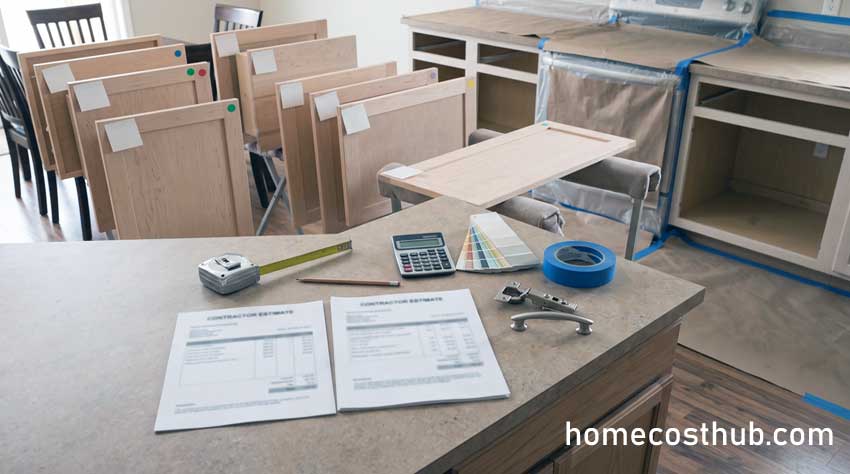
“Am I being overcharged?” is often the wrong first question.
A better question is:
“Are these contractors quoting the same finished result?”
A Cabinet Painting Cost Calculator can flag a quote that appears unusually low or high compared with your project assumptions, but only the written scope explains why.
Cabinet Painting Quote Checklist
- Confirm how many doors and drawer fronts are included.
- Check whether frames, end panels, trim, and the island are included.
- Confirm the preparation process.
- Check whether primer and finish coats are specified.
- Confirm whether doors will be removed and where they will be painted.
- Check whether hardware removal and reinstallation are included.
- Confirm whether repairs or grain filling cost extra.
- Compare the finish method rather than comparing price alone.
Suppose one bid includes cabinet interiors and another covers exterior faces only. The cheaper quote may still represent the higher unit price once you compare equal scopes.
The same problem occurs with repairs. A proposal that includes filling dents, correcting damaged edges, and addressing obvious surface defects cannot be compared directly with a proposal that says repairs will be charged separately.
Ask every painter to price the same written scope. Give each one the same photographs, door and drawer counts, finish expectations, and list of optional work. Then compare the contractor quote with the Cabinet Painting Cost Calculator result.
Cabinet Painting Cost Examples
The examples below are illustrative scenarios, not national price averages. They show how the same Cabinet Painting Cost Calculator result can be interpreted differently depending on the project.
Small Kitchen With Simple Cabinet Doors
Consider a compact kitchen with 12 flat cabinet doors and four drawer fronts. The boxes are sound, the current coating is in reasonable condition, and the homeowner wants a conventional painted finish without cabinet interiors being coated.
This project has few separate pieces to handle and little corrective work. If the Cabinet Painting Cost Calculator places it toward the lower side of its range, that result makes sense in context.
A contractor quote that is much higher is not automatically wrong, but the homeowner should ask what additional work explains the difference.
Medium Kitchen With Shaker Cabinets
Now consider a kitchen with 22 doors, eight drawer fronts, and a painted island. The homeowner expects the removable pieces to be professionally sprayed.
A Shaker profile introduces more edges and recessed areas than a slab front. The island creates another visible finish area, and moving doors between the kitchen and a spray workspace adds handling.
A Cabinet Painting Cost Calculator should place this type of project above the simple small-kitchen example even when both kitchens are in generally good condition.
Large Kitchen With Worn, Detailed Cabinets
A third homeowner has 36 doors, 12 drawer fronts, decorative panels, visible grain, and several worn areas. The desired finish is smooth and refined rather than intentionally rustic.
The decision is no longer simply “paint these cabinets.” The homeowner needs to know how much correction work is included before the finish goes on.
If the Cabinet Painting Cost Calculator produces a high-range estimate, the homeowner should compare that number not only with painter quotes but also with the economic case for refacing or replacement.
DIY vs Professional Cabinet Painting
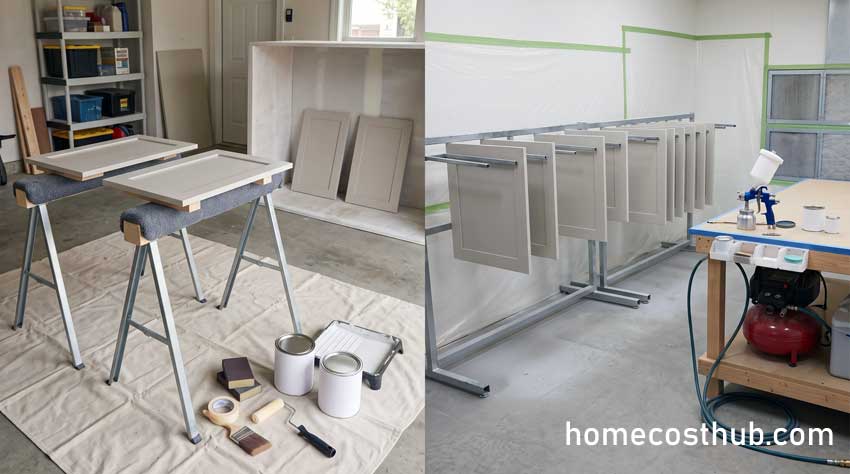
DIY can make sense, and professional painting can make sense. The better option depends on the value you place on time, finish quality, equipment, disruption, and risk.
DIY Pros
DIY eliminates most paid painting labor. For a small kitchen, especially one with simple doors and a homeowner who already owns suitable tools, that can create meaningful cash savings.
You also control the pace. Doors can be completed in batches instead of working around a contractor’s schedule.
DIY Cons
The labor does not disappear; it moves to you.
Doors must still be removed or protected, cleaned, prepared, coated, stored, and reinstalled. Dust and wet paint need controlled space. Each additional coating stage adds handling time.
Sherwin-Williams’ cabinet guidance emphasizes door and hardware removal, cleaning, sanding, primer, and adequate drying as part of the process rather than treating repainting as a simple coat-over exercise.
A DIY Cabinet Painting Cost Calculator result should therefore be read as a cash estimate, not as proof that the project has almost no labor cost.
Professional Painting Pros
A cabinet specialist brings an established workflow. That may include dedicated spray equipment, racks, controlled finishing areas, dust management, labeling systems, and a repeatable preparation process.
For homeowners expecting a uniform, furniture-like appearance, this production system can be a major part of what they are paying for.
Professional Painting Cons
Professional cabinet painting requires more cash upfront, and a high price does not guarantee excellent workmanship.
Two painters may also use very different workflows. One may spray doors and roll frames. Another may spray every exposed component. A third may use a hand-finished system.
This is why the Cabinet Painting Cost Calculator should support your quote comparison rather than replace contractor due diligence.
| Factor | DIY | Professional |
|---|---|---|
| Upfront cash cost | Lower | Higher |
| Homeowner labor | High | Low |
| Equipment needs | Homeowner provides | Usually included |
| Finish consistency | Skill dependent | Contractor dependent |
| Project duration | Often longer | Usually more predictable |
| Best fit | Simple projects + capable DIYer | Higher finish expectations or complex projects |
What DIY Cabinet Painting Really Costs
Homeowners often calculate DIY savings as:
professional quote minus paint price.
That misses much of the actual DIY budget.
Brushes, rollers, abrasives, masking products, cleaners, primer, fillers, stands or racks, protective materials, and possibly spray equipment all add up. You also need somewhere to keep doors while each side is being worked on.
HomeGuide currently estimates DIY cabinet painting supplies at roughly $200–$600 for a typical US project and notes that a 200-square-foot cabinet project may consume dozens of hours of homeowner labor. Treat those figures as market context rather than a guaranteed project budget.
DIY Cost Formula
Professional cabinet painting quote − DIY supplies and equipment − expected rework costs = estimated DIY cash savings.
The formula deliberately excludes your time.
If you want a fuller economic comparison, assign a personal hourly value to the work. Fifty hours of evenings and weekends may be acceptable to one homeowner and a poor trade to another.
A Cabinet Painting Cost Calculator can help quantify the cash side. Your own schedule determines whether the time side is worthwhile.
Spray vs Brush and Roller: Which Is Worth Paying For?
Spray, brush, and roller application can all produce acceptable cabinet finishes when matched to the right product, preparation, skill, and project.
The difference is not simply “spray equals good, brush equals bad.”
Brush
A skilled brush application can suit detailed trim, smaller areas, and projects where the homeowner accepts a subtle hand-finished character.
Brushes are easy to control and practical for touch-ups. They also leave more visible application texture if technique or product choice is poor.
Roller
A fine-finish roller can cover flat sections efficiently and is accessible to DIY homeowners.
Roller choice matters. A rough or heavily loaded roller can leave texture that becomes obvious under side lighting on doors and drawer fronts.
Spray
Spraying can produce a very even, fine finish and can work well around profiles and details. The trade-off is setup.
Masking must control overspray. Equipment needs to be prepared and cleaned. On-site spraying may require isolating a substantial part of the kitchen.
Current UK cost guidance from Checkatrade lists professional kitchen respraying from around £80 per standard wooden cabinet, with larger pantry or larder cabinets priced higher. Those are indicative market figures, not fixed national rates.
| Method | Finish Character | Setup | Typical Best Use |
|---|---|---|---|
| Brush | Hand-finished | Lower | Smaller jobs and detail work |
| Roller | Smooth when applied well | Moderate | Flat areas and DIY projects |
| Spray | Uniform, fine finish | Highest setup requirement | Full professional cabinet refinishing |
Use the Cabinet Painting Cost Calculator to compare the effect of finish level, but choose the method based on the result you actually want rather than the method name alone.
When Painting Cabinets Makes Financial Sense
Painting is strongest as a value decision when the cabinetry still works.
If the boxes are rigid, doors function correctly, storage suits the household, and the layout still makes sense, changing the finish can update the kitchen without replacing a large amount of usable cabinetry.
The decision becomes weaker when appearance is not the real problem.
Water-damaged boxes, widespread swelling, loose cabinet structures, failed hardware fixing points, or a layout that frustrates daily use will still exist after repainting.
A Cabinet Painting Cost Calculator can estimate repainting, but it cannot make failing cabinetry structurally sound.
The same applies to layout. Spending several thousand dollars or pounds refinishing cabinets may be poor value if you already intend to move the sink, relocate appliances, add a peninsula, remove a wall, or substantially expand the kitchen.
Homeowners considering broader changes can compare related project costs through HomeCostHub’s Kitchen Remodeling resources before committing money to the existing cabinets.
Paint, Reface, or Replace the Cabinets?
Painting, refacing, and replacement solve different problems.
| Option | Relative Cost | What Changes | Best When | Main Limitation |
|---|---|---|---|---|
| Paint | Lower | Finish/color | Cabinets are sound | Existing door style and layout remain |
| Reface | Medium | Visible faces/doors | Boxes are sound but style needs updating | Existing layout generally remains |
| Replace | Highest | Entire cabinetry | Boxes or layout need major changes | Highest cost and disruption |
Paint
Painting retains most of the existing cabinetry. It is a logical choice when color and finish are the main complaints.
Run this option through the Cabinet Painting Cost Calculator first because it establishes a budget benchmark for the least invasive choice.
Reface
Refacing generally keeps the cabinet boxes while replacing or covering major visible components.
It makes more sense when the boxes are useful but the door style itself is outdated. Painting cannot turn a raised-panel door into a slab door.
Replace
Replacement removes the existing cabinet system and allows changes to dimensions, storage, layout, door style, and configuration.
That flexibility comes with a larger project scope. If replacement is already likely, spending heavily to paint the old cabinetry first rarely makes sense.
HomeGuide’s current US cost data places full replacement and refacing above typical painting costs for many projects, though local quotes and cabinet specifications can change the relationship significantly.
Cabinet Painting Decision Tree
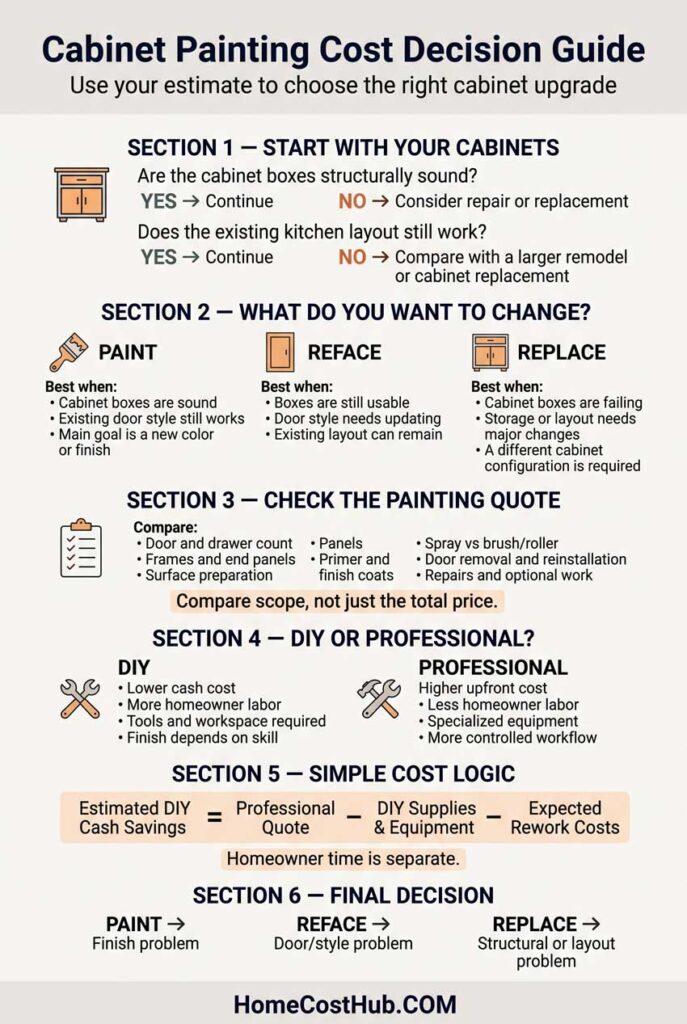
Are the cabinet boxes structurally sound?
- No: Repair or replacement deserves consideration before painting.
- Yes: Continue.
Does the existing kitchen layout work for your household?
- No: Compare repainting with a larger remodel or cabinet replacement.
- Yes: Continue.
Are the cabinet surfaces reasonably suitable for repainting?
- No or unsure: Ask a cabinet painter or coating specialist to assess the substrate and existing finish.
- Yes: Continue.
Do you want to keep the existing door style?
- Yes: Painting remains a strong candidate.
- No: Refacing or replacement may better match the design goal.
Are you comfortable taking on intensive preparation and several days of disruption?
- Yes: Compare the DIY result in the Cabinet Painting Cost Calculator with professional bids.
- No: Request like-for-like professional quotes.
Are professional painting bids approaching what you would willingly spend on refacing or replacement?
- Yes: Compare all three options before signing.
- No: Painting may remain the most economical route.
Myth vs Fact About Cabinet Painting Costs
Fact
Preparation, door handling, masking, repairs, priming, application, and reinstallation can account for much of the project cost.
Fact
Door size, profiles, glass, condition, grain, and finish expectations can change the amount of work required for each piece.
Fact
Spraying can create a very uniform finish, but preparation, coating selection, technique, and curing still determine the result.
Fact
DIY removes much of the paid labor, but tools, supplies, workspace, homeowner time, and rework can reduce the savings.
Fact
A new coating can improve appearance but cannot correct structural failure, swelling, major water damage, or a poor cabinet layout.
Fact
A lower quote may exclude door removal, repairs, primer, interior surfaces, reinstallation, or finishing work included in a higher bid.
Common Cabinet Painting Budget Mistakes
1. Comparing Totals Without Comparing Scope
A $3,000 quote is not automatically better than a $4,000 quote.
If the second includes more components and a different finishing process, the two prices represent different products. Use the Cabinet Painting Cost Calculator as a benchmark, then normalize each proposal before comparing totals.
2. Counting Cabinets but Not Doors and Drawers
Homeowners often say, “I have 15 cabinets,” when the job contains far more individual fronts.
Count every hinged door and every drawer face. Those are separate pieces that may need to be handled, finished, dried, stored, and reinstalled.
3. Assuming Every Project Needs the Same Prep
A neighbour’s price is useful only if their cabinetry required similar work.
A smooth, sound finish and a worn, contaminated, peeling finish may demand very different preparation. Budget comparisons based on kitchen size alone can mislead.
4. Forgetting End Panels and Decorative Pieces
Island panels, crown molding, valances, exposed sides, trim, and decorative legs are easy to leave out when requesting a quick quote.
They become obvious only after work starts, which is a poor time to discover the quoted scope was incomplete.
5. Assuming Cabinet Interiors Are Included
Many cabinet repainting projects cover exterior surfaces only.
If you want shelves, interior walls, or the inside face of cabinet boxes coated, confirm that before comparing the Cabinet Painting Cost Calculator result with a professional proposal.
6. Forgetting Removal and Reinstallation
A detached door does not remove itself.
Labeling, hardware handling, transport, alignment, and reinstallation consume labor. A quote that excludes those tasks may look artificially low.
7. Treating DIY Labor as Free
DIY labor has no contractor invoice, but it still consumes time.
If the kitchen needs evenings and weekends of cleaning, sanding, coating, and curing space, that commitment belongs in the decision.
8. Buying Paint Before Confirming Compatibility
Different surfaces and existing finishes may need different preparation or primers.
Dulux specifically recommends careful cleaning before painting kitchen cupboards and notes that difficult surfaces such as melamine may require specialist primer.
Buying materials first can leave you with products that are unsuitable for the cabinet surface.
9. Reinstalling Too Soon
Dry paint is not always fully hardened paint.
Sherwin-Williams’ cabinet instructions include defined drying stages between primer and paint. Follow the coating manufacturer’s current label and technical guidance rather than assuming a door is ready for hard use because the surface feels dry.
10. Replacing Cabinets Before Checking Their Condition
Old-looking cabinets are not necessarily worn-out cabinets.
If the boxes are sturdy and the layout works, repainting or refacing may preserve a large portion of the existing kitchen.
11. Painting When the Layout Is the Real Problem
A perfect finish cannot create more storage, widen a walkway, relocate an appliance, or fix an awkward corner.
If those are the actual goals, compare the Cabinet Painting Cost Calculator with a broader remodeling budget before spending on cosmetic work.
Expert Tips for Controlling Cabinet Painting Costs
The easiest cost reductions usually come from defining the project before work starts rather than trying to negotiate down each individual labor item.
Photograph the kitchen from several angles. Count doors and drawers. Mark obvious defects. Decide if interiors are included. Decide whether handles and hinges are staying.
That information makes estimates more comparable.
Expert Tip
Give every cabinet painter the same door count, drawer count, photographs, finish expectation, and written scope. A quote comparison becomes far more useful when each contractor is pricing the same finished result.
If doors are being removed, ask how they are labeled and tracked. Even identical-looking doors can fit slightly differently after years of adjustment.
Confirm touch-up procedures as well. Some spray-finished systems are harder to repair invisibly on site than hand-applied systems.
Avoid changing the color, sheen, hardware plan, or included surfaces once production has started. Scope changes often create disproportionate cost because they interrupt sequencing.
For a larger DIY renovation where cabinet painting is only one part of the work, a DIY Kitchen Remodel Calculator can help place cabinet labor and materials in the wider project budget rather than treating the cabinetry as an isolated expense.
Real-World Case Study
Illustrative Case Study
A homeowner has a 15-year-old oak kitchen with 24 doors, nine drawer fronts, and a small island. The cabinet boxes are solid. Hinges still align correctly. Storage works well, but the dark finish makes the room feel dated.
The homeowner first runs the project through the Cabinet Painting Cost Calculator and receives a preliminary range.
They then collect two professional bids.
The first contractor offers a lower price. Doors will be cleaned and painted at the property. Grain filling is not included, and the homeowner will remove and reinstall the handles.
The second contractor’s price is higher. Doors and drawer fronts will be removed, labeled, repaired, prepared, and sprayed off-site. The quote includes additional work to reduce the visible oak grain plus hardware removal and reinstallation.
The homeowner also prices DIY.
At first glance, DIY wins because the supply bill is much lower than either contractor quote. Once the homeowner considers temporary drying space for more than 30 removable pieces, preparation time, several coating cycles, and the possibility of correcting visible grain or application marks, the difference becomes less simple.
Refacing is considered next. It would change the visible door style as well as the finish, but the homeowner actually likes the existing door profile.
Full replacement offers the greatest freedom, yet the homeowner would be paying to discard boxes and a layout that already work.
The decision is professional painting—not because it is the cheapest line item, but because it matches the actual goal: keep the cabinetry and layout while obtaining a finish the homeowner does not want to produce personally.
The lesson from the Cabinet Painting Cost Calculator is not “choose the lowest number.” The useful comparison is the cost of achieving the outcome you actually want.
Cabinet Painting Cost Checklist Before You Hire
Cabinet Painting Planning Checklist
- Count every cabinet door and drawer front.
- Photograph the cabinet layout and any damaged areas.
- Decide whether cabinet interiors are part of the project.
- Choose the finish quality and application method you expect.
- Confirm whether existing hardware will be reused or replaced.
- Ask each contractor to quote the same written scope.
- Separate optional upgrades from required preparation.
- Check drying and curing requirements before planning reinstallation.
- Compare painting with refacing or replacement if the cabinets have structural problems.
One final check before signing is to compare the written quote with the inputs you used in the Cabinet Painting Cost Calculator. If the calculator assumes exterior painting only but the contractor includes cabinet interiors, the difference is expected. If the scopes appear identical and the prices are still far apart, ask each contractor what explains the gap.
Frequently Asked Questions
How much does it cost to paint kitchen cabinets?
Current US market data from HomeGuide places professional kitchen cabinet painting around $2,000–$6,500 for an average kitchen, with large variation by project size, number of doors, painting method, and location. Use a Cabinet Painting Cost Calculator for a project-specific budgeting range rather than applying one national average to every kitchen.
How much does cabinet painting cost per door?
HomeGuide currently cites roughly $70–$125 per door as a US market benchmark. Per-door pricing is useful for comparison, but it may not fully capture frames, end panels, repair work, detailed profiles, or cabinet boxes.
How do painters calculate cabinet painting prices?
Professional painters may estimate by door, drawer, linear foot, square foot, labor time, or a flat project price. A Cabinet Painting Cost Calculator can help translate those different estimating methods into one overall budget comparison.
Why are cabinet painting quotes so different?
Quotes can include different levels of preparation, repair, door handling, masking, spraying, transport, interiors, hardware work, cleanup, and reinstallation. Compare scope before deciding that a higher quote is overpriced.
How much does professional cabinet painting cost?
In the US, HomeGuide currently reports $2,000–$6,500 for an average kitchen, while actual bids can fall outside that range. UK pricing uses a different market structure, so enter the correct country in the Cabinet Painting Cost Calculator rather than converting US prices directly into pounds.
Is it cheaper to paint or replace kitchen cabinets?
Painting is generally less expensive when the existing cabinet boxes are still usable. Replacement becomes more logical when cabinetry is structurally failing or when the homeowner wants to change the layout, dimensions, or storage configuration.
Is professional cabinet painting worth it?
Professional painting can be worth the premium when finish consistency, efficient production, reduced homeowner labor, and controlled spraying matter to you. DIY can offer better value when the project is simple and you are comfortable doing detailed preparation.
How much does DIY cabinet painting cost?
HomeGuide currently places typical US DIY paint and supply spending around $200–$600, excluding the value of homeowner labor. A DIY Cabinet Painting Cost Calculator estimate should also consider tools you do not own and potential rework.
Does spraying cabinets cost more than brushing?
It can. Spraying may require more masking, equipment, controlled work space, and setup. The final price depends on the contractor’s workflow and project size rather than the spray gun alone.
Is spraying better than brushing kitchen cabinets?
Not automatically. Spraying is well suited to a smooth, uniform finish, while skilled brushing can suit detail work and smaller projects. Preparation, coating selection, application quality, and curing matter with either method.
Do cabinets need to be sanded before painting?
Many cabinet systems benefit from sanding or abrasion to improve the prepared surface, but the correct process depends on the substrate and existing coating. Sherwin-Williams provides cabinet-specific sanding guidance and recommends surface preparation before recoating.
Do kitchen cabinets need primer?
Primer needs depend on the surface, existing coating, color change, and product system. Follow the paint manufacturer’s instructions rather than assuming every cabinet needs the same primer. Dulux specifically recommends a difficult-surface primer for challenging substrates such as melamine.
Can MDF cabinets be painted?
Yes, sound MDF can be painted with suitable preparation and a compatible coating system. Damaged or swollen MDF edges should be assessed before painting because a new finish will not restore structurally degraded material.
Can laminate or melamine cabinets be painted?
Some laminate and melamine surfaces can be repainted, but adhesion is the main concern. Specialist cleaning, surface preparation, and a suitable bonding or difficult-surface primer may be required. Dulux specifically identifies melamine as a surface that may need specialist primer.
How many coats of paint do kitchen cabinets need?
There is no safe universal number for every product and substrate. Use the specific coating manufacturer’s instructions. Sherwin-Williams’ cabinet process includes primer followed by finish coats with drying between stages.
How long does cabinet paint take to cure?
Dry-to-touch, recoat time, and full cure are different stages. The exact timing depends on the product, temperature, humidity, film thickness, and application method. Follow the product’s current technical instructions before reinstalling hardware or exposing newly painted cabinets to heavy use.
Should I paint, reface, or replace kitchen cabinets?
Paint when the boxes and layout work and you mainly want a new finish. Reface when the boxes are sound but you want a different visible door style. Replace when the cabinetry is failing or the kitchen configuration needs substantial change.
How much does kitchen cupboard painting cost in the UK?
UK costs vary by cabinet count, location, finish, and scope. Checkatrade currently cites professional spray painting of a standard kitchen at roughly £800–£1,600 in one of its UK guidance pages, while local market results can vary. Use the UK setting in the Cabinet Painting Cost Calculator instead of relying on one national figure.
How much does it cost to spray kitchen cabinets in the UK?
Checkatrade’s respray cost guidance currently starts at around £80 per standard wooden cabinet and around £100 for larger larder or pantry cabinets. These are indicative figures rather than fixed prices, so compare them with the Cabinet Painting Cost Calculator and written local quotes.
Is old cabinet paint safe to sand?
Older coatings can require extra caution. The UK Health and Safety Executive warns that lead may be present in older paint and identifies dry sanding or removal of old coatings as potential exposure routes. See the HSE guidance on lead in old paint before disturbing suspect older coatings.
About the Author
About the Author
Arden Cole Linscott
(Expert — Residential Construction & Remodeling Cost Analysis)
Arden Cole Linscott focuses on residential construction and remodeling cost analysis, translating project scope, labor, materials, and regional pricing considerations into practical budgeting guidance for homeowners. The goal is to help readers compare options on equal terms, understand the limits of preliminary estimates, and make cost decisions based on the condition and scope of the real project rather than a headline price alone.
Make the Estimate Work for Your Project
A Cabinet Painting Cost Calculator is most useful before a contractor quote becomes a commitment. Run the project with an accurate door and drawer count, choose a realistic finish expectation, and treat the result as a budgeting range rather than a promise of what every painter should charge.
Then compare the range against written proposals that describe the same scope.
If one quote includes repairs, off-site spraying, hardware handling, and reinstallation while another does not, the higher number has a clear explanation. If the cabinets are structurally sound and the layout still works, painting may preserve a large part of the existing kitchen at a lower cost than changing the cabinetry itself.
If the boxes are failing or the layout already needs major work, the Cabinet Painting Cost Calculator may serve a different purpose: showing you how much money would otherwise be spent improving cabinets that may soon be removed.
That distinction turns an estimate into a useful remodeling decision rather than just another number.