Appliance Replacement Calculator

Appliance Replacement Calculator Cost Guide
An Appliance Replacement Calculator helps homeowners estimate the cost of replacing outdated, damaged, or inefficient kitchen appliances before requesting quotations from retailers, installers, electricians, plumbers, or remodeling contractors.
Appliance replacement cost can vary considerably depending on the number of appliances, product quality, appliance type, kitchen size, existing condition, installation requirements, labour difficulty, old-appliance removal, and utility modifications.
This cost calculator supports both USA cost and UK cost estimates, displaying results in USD or GBP while allowing kitchen size to be entered in square feet or square meters.
It separates material cost, labour cost, installation cost, additional work, and removal expenses to provide a practical price estimate for basic, standard, premium, professional-style, and integrated kitchen appliance replacement projects.
Appliance Replacement Calculator
Estimate kitchen appliance replacement costs in the USA or UK based on kitchen size, appliance type, material quality, replacement scope, existing condition, installation complexity, labour difficulty, removal, and optional upgrades.
Please enter a valid value.
USA Appliance Replacement Estimate
$0
Kitchen Size: 0 ft²
Cost Breakdown
Materials$0
Labour$0
Installation$0
Additional$0
Removal$0
FREE PDF ESTIMATE
Get Your Appliance Replacement Cost PDF
Enter your details below to receive your appliance replacement estimate, selected options, and complete cost breakdown as a downloadable PDF.
✓ Your PDF is ready!
This estimate is intended for preliminary budgeting. Actual appliance replacement costs may vary based on appliance brand, model, dimensions, delivery, disposal, cabinetry modifications, ventilation, electrical service, plumbing connections, gas work, local labour rates, taxes, and installer pricing.
Free Appliance Replacement Calculator
Material / Project Types
Kitchen appliance replacement projects can range from replacing one refrigerator or dishwasher to replacing every major appliance in the kitchen.
Basic appliance packages generally include entry-level refrigerators, cooking appliances, dishwashers, and ventilation products. They are suitable for Budget projects where controlling replacement cost is the main priority.
Standard stainless appliances are commonly selected for mid-range kitchen remodeling projects. They typically offer modern styling, improved efficiency, practical features, and broad availability.
Premium appliances can include larger refrigerators, induction cooking, quieter dishwashers, advanced ovens, better finishes, and enhanced controls. Their material cost is typically higher than standard products.
Also Read:
Professional-style appliances include commercial-inspired ranges, larger cooktops, powerful ventilation, premium refrigeration, and other high-capacity equipment. These appliances may require stronger electrical circuits, larger gas supplies, or enhanced ventilation.
Integrated or built-in appliances are designed to fit closely into cabinetry. Built-in refrigeration, panel-ready dishwashers, wall ovens, and concealed appliances can require detailed cabinet modifications and precise installation.
Project scope also affects cost. Replacing a single appliance in the same location is generally less expensive than replacing a full kitchen package. Converting from freestanding appliances to integrated models can require significant cabinetry, electrical, plumbing, and ventilation work.
Main Factors Affecting Cost
The number and type of appliances being replaced are major factors affecting the overall price estimate. A single dishwasher replacement costs far less than replacing a refrigerator, range, oven, dishwasher, and ventilation system together.
Material quality also has a significant effect. Budget appliances provide essential functionality, while Premium and Luxury models may include advanced controls, improved efficiency, larger capacities, premium finishes, smart technology, and specialist features.
Existing condition can influence replacement cost and repair cost. A kitchen with functioning outlets, water connections, ventilation, and appropriate appliance openings may require straightforward replacement. Damaged wiring, leaking plumbing, unsuitable ventilation, or incorrect cabinet dimensions can require extra work.
Installation type is another important factor. A basic swap may involve disconnecting the old unit and installing a similarly sized replacement. Built-in or integrated appliances may require precise cabinet fitting, trim kits, panel installation, electrical modifications, or plumbing adjustments.
Labour difficulty rises when appliances are heavy, oversized, located on upper floors, difficult to access, or tightly integrated into cabinetry.
Additional costs can also arise from refrigerator replacement, cooking appliance replacement, wall ovens, dishwashers, range hoods, and electrical or plumbing connection changes.
Cost Breakdown
Material Cost: Material cost represents the estimated purchase price of the replacement appliances and related components. It varies according to appliance type, quality level, project size, replacement scope, and existing condition.
Labour Cost: Labour cost covers appliance handling, disconnection, preparation, positioning, adjustments, fitting, and other professional work associated with the replacement project.
Installation Cost: Installation cost represents the complexity of installing the new appliances. A basic swap is generally less expensive than a built-in installation requiring cabinetry changes, trim work, specialized connections, or exact alignment.
Additional Cost: Additional expenses can include refrigerator replacement, range or cooktop replacement, wall ovens, microwaves, dishwashers, ventilation equipment, and electrical or plumbing connection modifications. Basic, Standard, and Advanced feature levels adjust these allowances.
Removal Cost: Removal cost applies when existing appliances must be disconnected, removed, transported, recycled, or disposed of before new equipment can be installed. Built-in, oversized, or professional-style appliances can require more labour to remove.
The calculator combines material cost, labour cost, installation cost, additional cost, and removal cost to create the estimated total appliance replacement price.
Why Use This Calculator?
The Appliance Replacement Calculator provides homeowners with a practical starting point for budgeting before purchasing appliances or arranging professional installation.
It allows different replacement strategies to be compared quickly. Homeowners can compare a single appliance replacement with a complete kitchen package, evaluate Standard appliances against Premium or Luxury products, or see how integrated installation affects the overall price estimate.
The calculator also helps identify expenses beyond the appliance purchase price. A replacement project can involve delivery, disconnection, removal, disposal, cabinet modifications, electrical upgrades, water connections, gas work, ventilation changes, mounting hardware, trim kits, and professional installation.
USA and UK pricing are selected independently from measurement units. USA estimates are displayed in dollars, while UK estimates are shown in pounds. Users may select square feet or square meters regardless of country. When square meters are entered, the calculator converts the area internally using 1 square meter = 10.7639 square feet while continuing to display the original kitchen size in square meters.
The result is intended as a preliminary budgeting tool rather than a guaranteed retailer or installer quotation, but it provides a useful starting point for comparing appliance installation cost, replacement cost, repair cost, material cost, labour cost, USA cost, UK cost, and overall appliance price estimates.
Appliance Replacement Calculator: Repair, Replace, or Plan Ahead?
Quick Answer
An Appliance Replacement Calculator gives you a practical starting estimate, but the decision should go beyond the price of a new appliance. Compare the existing unit’s condition, repair cost, remaining usefulness, installation requirements, fit, and expected operating cost before deciding whether to repair or replace it.
A dishwasher that stops draining may need one service visit and a modest repair. A built-in wall oven with a major failure can create a very different decision if the replacement does not match the existing cabinet opening, electrical supply, or trim arrangement.
That is why an Appliance Replacement Calculator is most useful when you treat the result as a planning figure rather than the entire decision. The estimate helps establish the financial scale of replacement. Your next task is deciding whether that expense makes sense now, later, or not at all.
For a homeowner already planning Kitchen Remodeling, the decision can also affect cabinetry, countertops, electrical work, ventilation, and project sequencing. A replacement that looks simple on a retailer’s product page may interact with several other parts of the room once installation begins.
At a Glance
- The sticker price is only one part of an appliance replacement decision.
- A like-for-like replacement usually carries fewer fit and connection risks than changing appliance type or size.
- Age matters, but repair history, condition, part availability, and failure type often matter just as much.
- A cheaper appliance can become the more expensive project if cabinetry or utility changes are required.
- Energy efficiency should be considered over the expected ownership period, not used as an automatic reason to replace a working appliance.
- Several aging appliances can be easier to manage when their future replacement costs are planned in advance.
- Complex gas, electrical, plumbing, ventilation, and built-in work may require qualified professional help.
How to Use an Appliance Replacement Estimate
An Appliance Replacement Calculator gives you a working budget range before you commit to a purchase. That range is useful for comparing options, setting aside funds, and deciding whether a repair quote still looks reasonable. It is not the same thing as a retailer’s final invoice or an installer’s site-specific quotation.
Two households can buy nearly identical appliances and still finish with different project totals.
Consider two homeowners replacing similar dishwashers. In the first kitchen, the existing opening is suitable, the water shutoff works properly, the drain arrangement is compatible, and the electrical connection matches the replacement. The job is close to a straightforward swap.
In the second kitchen, the shutoff valve is deteriorated, the connection arrangement needs attention, and the opening is slightly constrained by flooring or cabinetry. The appliance itself may cost the same, but the installation consequences do not.
That difference is why an appliance replacement estimate should answer a planning question:
“What budget should I prepare for this replacement?”
It should not be read as:
“What exact amount will every installer charge me?”
Use the Appliance Replacement Calculator to establish a sensible financial range, then compare that range with the condition of the existing appliance and any known installation complications. If the replacement affects cabinets, panels, trim, or countertop work, a separate Kitchen Material Cost Calculator can help you understand the material side of those changes without mixing them into the appliance decision itself.
Repair or Replace? Start With More Than the Repair Bill
A repair quote and a replacement price are not enough on their own.
Also Read:
A sound repair-versus-replace decision looks at the condition of the appliance as a whole. The most useful questions are:
- How old is the appliance?
- Is this the first meaningful repair or one of several?
- What component has failed?
- Is the appliance still under warranty?
- Are replacement parts reasonably available?
- How much useful service might remain after the repair?
- What would a replacement cost after installation implications are considered?
- Would the new model require changes to cabinets, plumbing, electrical service, gas, or ventilation?
- How does the old unit’s energy use compare with realistic replacement options?
- How disruptive would another failure be?
When should you repair or replace an appliance?
Repair may make sense when the appliance is otherwise in good condition, the failure is limited, parts are available, and the repair restores useful service at a reasonable cost. Replacement deserves stronger consideration when major failures repeat, repair costs keep accumulating, parts are difficult to obtain, or the appliance no longer suits the home.
The frequently repeated “50% rule”—the idea that a repair costing more than half the price of replacement should automatically trigger replacement—is better treated as a rough screening tool than a professional rule. It ignores installation consequences, remaining life, product condition, warranty coverage, and the possibility that a low-cost replacement may require expensive changes elsewhere.
An Appliance Replacement Calculator improves that comparison by giving the replacement side a more realistic budget context.
Appliance Repair or Replace Decision Tree
Is the appliance still under warranty?
→ Yes: Check what repair or replacement coverage applies before paying out of pocket.
→ No: Continue.
Is the failure limited and the rest of the appliance in good condition?
→ Yes: Repair may still offer good value.
→ No: Continue.
Has the appliance needed repeated major repairs?
→ Yes: Replacement deserves stronger consideration.
→ No: Continue.
Are needed replacement parts readily available?
→ Yes: Repair may remain practical.
→ No: Replacement may become more attractive.
Would the new appliance require cabinetry, electrical, plumbing, gas, or ventilation changes?
→ Yes: Compare the total installed replacement consequence, not only the appliance price.
→ No: Replacement may be easier to justify.
Would another failure create serious disruption?
→ Yes: Planned replacement may be worth considering before the next breakdown.
→ No: Continuing to use the appliance may remain reasonable.
No single decision rule works for every refrigerator, dishwasher, oven, washer, dryer, cooker, or integrated appliance. The Appliance Replacement Calculator should support the decision, not replace judgment.
Costs People Commonly Miss When Comparing Repair With Replacement
| Cost Consideration | Repair | Replacement | Why It Matters |
|---|---|---|---|
| Service or diagnostic fee | Possible | Usually not part of the purchase | A repair can involve cost before any part is replaced. |
| Parts and repair labor | Yes | No repair work on old unit | The repair quote should be considered against likely remaining usefulness. |
| New appliance purchase | No | Yes | The sticker price is the obvious replacement expense, but not always the only one. |
| Fit or connection changes | Usually limited | Possible | A replacement can expose incompatibilities that did not affect the old appliance. |
| Delivery and old-unit removal | Usually not applicable | Possible | These can affect the real replacement budget. |
| Future energy use | Existing appliance continues | New model may use more or less | Operating cost matters over the ownership period. |
| Repeat failure risk | Remains | Reduced but not eliminated | A successful repair does not guarantee another component will not fail later. |
Appliance Age Matters—but Age Alone Is Not the Decision
An appliance does not reach a fixed date and suddenly become uneconomical.
Expected service life is useful for planning, but it should be treated as a range rather than an expiration date. Usage frequency, maintenance, environment, design, component quality, previous repairs, and operating conditions can all influence how long a particular unit remains useful.
A well-functioning older refrigerator is not automatically a poor candidate to keep. A relatively young dishwasher that has already experienced several major failures is not automatically a good candidate to repair again.
The Appliance Replacement Calculator becomes more useful when age is considered alongside condition and repair history.
| Appliance | Questions to Ask Before Replacing |
|---|---|
| Refrigerator / Fridge Freezer | Is cooling stable? Have compressor, control, ice-making, or sealing problems become frequent? How does its energy use compare with current alternatives? |
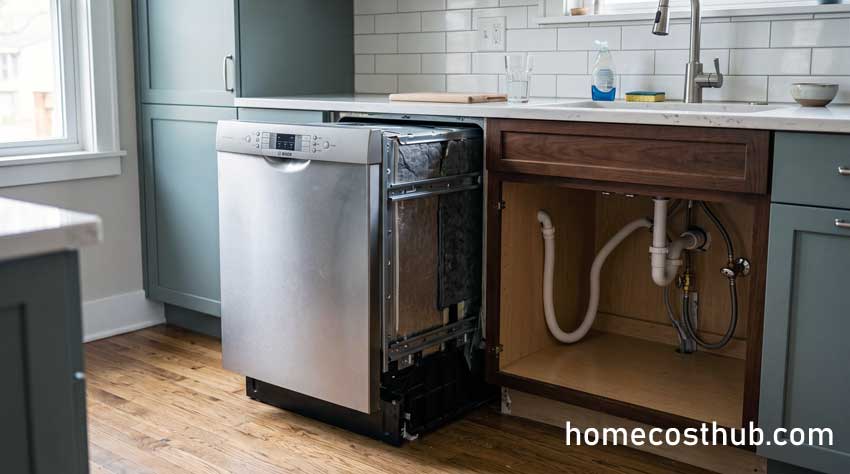
| Dishwasher | Are leaks, drainage problems, heating issues, or repeated component failures occurring? Are the existing water, drain, and electrical connections suitable for the replacement? |
| Range / Cooker | Are the cooking functions reliable? Would switching fuel type or appliance format require significant utility or ventilation changes? |
| Wall Oven | Does a realistic replacement fit the existing cabinet opening? Are trim, electrical supply, and ventilation requirements compatible? |
| Washer / Washing Machine | Are leaks, bearing noise, drainage problems, or repeated electronic failures becoming common? Does the replacement fit the space and connection arrangement? |
| Dryer / Tumble Dryer | Is drying performance declining? Are venting, electrical, or gas requirements compatible with the model being considered? |
A homeowner looking at a ten-year-old appliance should therefore ask a better question than “Is this too old?”
Ask:
“What am I likely to gain by replacing it now, and what am I giving up by replacing it before it actually fails?”
That framing avoids two opposite mistakes: keeping a troublesome appliance indefinitely because it still runs, or discarding a functioning appliance simply because it has reached a certain age.
When a Simple Appliance Swap Stops Being Simple
A replacement becomes more complicated when the new appliance does not match the physical or utility conditions of the old one.
Size and Fit
The advertised width is not enough.
Check:
- actual cabinet opening width
- opening height
- available depth
- door and drawer swing
- handles and nearby walls
- ventilation clearances
- countertop overhang
- baseboards and flooring
- access through doors, hallways, and stairs
A refrigerator that technically fits between cabinets may still have a door that cannot open fully beside a wall. A dishwasher opening can become tighter when new flooring has been installed in front of the old machine. A replacement wall oven may share a nominal size with the existing unit yet require a different cutout.
Electrical Compatibility
Replacement appliances can differ in voltage, circuit requirements, connection type, and whether they are hardwired or plug-connected.
Homeowners should verify the manufacturer’s requirements and the condition of the existing supply before purchase. Electrical modifications are not a suitable place for guesswork, and work that affects circuits or fixed wiring may require a qualified professional depending on the location and project.
Plumbing Compatibility
Dishwashers, refrigerators with water dispensers, and washing machines rely on existing plumbing that may not be in the same condition as the appliance.
A valve that has not been operated for years may not behave as expected when the old appliance is disconnected. Drain arrangements, hose connections, and available clearances can also differ between models.
Gas Connections
Gas ranges, cookers, and some dryers introduce a different level of installation risk.
The safe approach is to treat gas connection work as professional work where required by local regulations and the appliance manufacturer’s instructions. The Appliance Replacement Calculator can help with budgeting, but it is not a substitute for determining whether a qualified installer is required.
Ventilation
Changing cooking equipment can affect the ventilation system around it. Range hoods may need different clearances or duct arrangements, while some dryers require particular venting conditions.
A replacement should be checked as part of the complete system rather than treated as an isolated box that only needs to fit into an opening.
Built-In and Integrated Appliances
Built-in refrigerators, panel-ready dishwashers, wall ovens, and integrated appliances common in UK kitchens create tighter tolerances than many freestanding products.
Cabinet doors, decorative panels, hinges, trim kits, plinths, ventilation openings, and cutout dimensions can all matter. This is one area where the cheapest appliance on paper may not produce the cheapest finished replacement.
Expert Tip
Before ordering, compare the old and new appliance specifications side by side. Check dimensions, opening requirements, connection type, electrical demand, water or gas needs, ventilation clearances, and door movement. A five-minute specification check can reveal problems that are expensive to solve after delivery.
Replacement Cost vs. Lifetime Cost
The Appliance Replacement Calculator focuses attention on the cost of replacing an appliance, but the lowest upfront figure is not always the lowest ownership cost.
There are two separate questions:
1. What will replacement cost now?
and
2. What is this appliance likely to cost me over the period I own it?
Lifetime cost can include the purchase and installation expense, expected energy use, routine maintenance, and future repairs.
Lifetime Cost Formula
Lifetime ownership cost = purchase and installation cost + expected energy cost + expected maintenance and repair cost over the ownership period.
This formula is a planning framework, not a prediction. Nobody can know exactly when a control board, compressor, pump, heating element, motor, bearing, or seal will fail.
Its value is that it prevents a narrow comparison between two sticker prices.
Also Read:
Imagine Appliance A costs less to buy but uses more energy and has limited service support in your area. Appliance B costs more initially but better matches your household usage, has lower expected energy consumption, and is easier to service locally.
The correct choice cannot be determined by purchase price alone.
The same principle applies when deciding whether to keep an existing appliance. A working unit with low operating cost and no repair history may justify continued use. An appliance that is consuming more energy and requiring repeated repairs deserves a different calculation.
Can a More Efficient Appliance Pay for Itself?
Sometimes, but not automatically.
The financial value of higher efficiency depends on the appliance, how much energy the old unit uses, the new model’s consumption, local utility prices, household usage, the price difference between models, and how long you expect to keep the replacement.
In the United States, ENERGY STAR can provide a useful comparison point. ENERGY STAR states that certified refrigerators are about 9% more energy efficient than models that only meet the federal minimum efficiency standard. The official ENERGY STAR certified refrigerators resource also provides product-selection guidance.
For an older refrigerator or freezer, the ENERGY STAR Flip Your Fridge Calculator estimates potential savings from replacing or removing an older unit. ENERGY STAR explicitly notes that actual savings vary with use, upkeep, and other factors, which is exactly why energy savings should be treated as an estimate rather than a guarantee.
The wider federal efficiency framework is managed through the U.S. Department of Energy appliance efficiency standards program, which covers a broad range of residential and commercial products.
For UK households, energy labels offer a similar comparison tool. The Energy Saving Trust home appliance energy ratings guidance explains that many household appliance categories use the A-to-G scale, with A representing the most efficient end of the scale. It also stresses that appliance size matters because a larger appliance can use more energy even when its efficiency rating looks attractive.
Official UK energy labelling rules explain how regulated products are labelled and note that several product categories have moved to the rescaled A-to-G system. Not every appliance category uses identical labelling, so compare the actual label for the product type you are buying rather than assuming all appliances use the same scale.
Can energy savings alone justify replacement?
They can contribute to the case for replacement, but a working appliance should not automatically be discarded because a newer model uses less energy. Compare the added purchase and installation cost with realistic operating savings over the period you expect to own the new unit.
That is a stronger use of the Appliance Replacement Calculator: start with the replacement budget, then evaluate whether the expected financial and practical benefits justify spending that money now.
Should You Replace Several Appliances at Once?
Replacing several appliances together can be sensible when the project is being driven by a kitchen renovation, a layout change, or a group of similarly aged appliances that are already showing signs of decline.
It can also be unnecessary.
Scenario A: Kitchen Renovation
A homeowner is replacing cabinets and changing the kitchen layout. The refrigerator opening will change, the dishwasher will move, and the old range is being replaced by a different cooking arrangement.
In that situation, coordinating appliances during the renovation can prevent new cabinetry from being designed around equipment that will soon be replaced. Appliance dimensions can be confirmed before cabinets and counters are finalized.
This is also where broader Kitchen Remodeling planning becomes more useful than treating each appliance as an independent purchase.
Scenario B: Several Older Appliances Still Work
Another homeowner has an older refrigerator, dishwasher, and range. All three function normally, repair history is limited, and no kitchen renovation is planned.
Replacing every unit simply to make the finishes match may create a large immediate expense while discarding usable service life.
In that case, the Appliance Replacement Calculator can be used to estimate future exposure and help build a reserve rather than forcing an immediate package replacement.
Replacing Appliances Before They Fail: Pros and Cons
| Pros | Cons |
|---|---|
| More time to compare models and specifications | You spend money before the old appliance actually fails |
| Delivery and installation can be scheduled instead of handled as an emergency | Remaining useful life may be lost |
| Useful for coordinating a remodeling schedule | Energy savings may not recover the cost of premature replacement |
| Allows better comparison of fit and efficiency | Disposal occurs earlier than necessary |
| May reduce disruption from sudden failure | Several replacements at once increase immediate cash demand |
DIY Appliance Replacement: Where the Line Changes
Some appliance replacement tasks are reasonable for a capable homeowner. Others cross quickly into work where the consequences of a poor connection are far greater than the labor saved.
DIY Pros
- Potential labor savings. Simple preparation and handling tasks may reduce the amount of paid labor required.
- Scheduling flexibility. You are less dependent on an installer’s calendar for non-specialist work.
- Control over preparation. A homeowner can clear access, protect floors, inspect the opening, and organize removal before delivery.
- Suitable for genuinely simple replacements. Some experienced homeowners may be comfortable with basic non-hazardous swaps where the manufacturer’s requirements and local rules allow it.
DIY Cons
- Heavy handling. Refrigerators, ranges, washers, and other large appliances can damage floors, cabinets, walls, or the appliance itself during movement.
- Leaks. Poorly handled water connections can create damage that costs far more than the installation fee.
- Electrical risk. A replacement may not match the existing circuit, outlet, wiring, or connection method.
- Gas risk. Gas connection work should not be improvised.
- Ventilation mistakes. Dryers and cooking appliances may depend on correct ventilation conditions.
- Fit problems. Built-in appliances can require precise leveling, alignment, panel fitting, and cabinetry coordination.
- Warranty or compliance issues. Manufacturer instructions, local codes, and professional requirements can affect who should perform particular work.
A useful dividing line is to separate preparation from technical connection work.
Moving loose items, clearing access, measuring an opening, protecting floors, or unpacking a unit are different from altering wiring, changing a gas connection, modifying fixed plumbing, or adapting cabinetry around an integrated appliance.
If appliance work forms part of a larger homeowner-managed renovation, the DIY Kitchen Remodel Calculator can help put the appliance portion into the broader DIY project budget.
The Appliance Replacement Calculator should help you understand the financial choice. It should not encourage you to take on technical work beyond your experience or local requirements.
United States vs. United Kingdom: What Changes?
The underlying decision is similar in both markets: compare the condition and usefulness of the existing appliance with the real consequences of replacement.
Terminology, energy information, product formats, and regulatory context can differ.
| Topic | United States | United Kingdom |
|---|---|---|
| Currency | USD ($) | GBP (£) |
| Refrigeration terminology | Refrigerator, freezer | Fridge, fridge freezer, freezer |
| Cooking terminology | Range, cooktop, wall oven | Cooker, hob, oven |
| Laundry terminology | Washer, dryer | Washing machine, tumble dryer |
| Energy information | ENERGY STAR and federal efficiency information where applicable | Energy labels, including the A-to-G scale for applicable product categories |
| Installation context | Electrical, plumbing, gas, ventilation, and local code requirements vary by location | Electrical, gas, building, and product requirements depend on the appliance and location |
Repairability also deserves attention in the UK. Government measures introduced requirements around energy performance and access to spare parts for covered appliance categories. The original UK appliance repair and spare-parts rules announcement specifically discussed products including refrigerators and washing machines. The rules should not be interpreted as meaning every part for every appliance must be available indefinitely.
For a UK homeowner using an Appliance Replacement Calculator, this matters because part availability can change the repair-versus-replace calculation. A repair becomes less practical when the necessary component cannot be sourced reasonably, even when the appliance itself might otherwise justify repair.
Plan for Appliance Replacement Before It Becomes an Emergency
A failed appliance is more difficult to budget for when the entire cost arrives unexpectedly.
A replacement reserve—sometimes called a sinking fund—turns a future lump-sum expense into a manageable monthly planning figure.
Suppose a US household believes it may need around $1,800 for one or more appliance replacements within five years.
Five years equals 60 months.
$1,800 ÷ 60 = $30 per month.
Replacement Reserve Formula
Monthly appliance reserve = estimated future replacement budget ÷ number of months until the planned replacement window.
This does not mean the appliance will fail exactly five years from now. It simply gives the household a way to prepare.
A UK household might use the same approach. If the expected replacement budget is £1,200 over four years:
£1,200 ÷ 48 months = £25 per month.
The Appliance Replacement Calculator can provide the planning figure used at the start of this calculation.
This approach becomes especially useful when several appliances are aging at the same time. Instead of creating a separate savings pot for a dishwasher, washer, refrigerator, and oven, the homeowner can estimate the likely combined exposure and build one household appliance reserve.
A reserve does not eliminate the need to compare repair with replacement. It simply means a sudden breakdown is less likely to force a rushed purchasing decision.
Repair, Replace Now, or Plan for Later?
| Option | Makes More Sense When | Main Advantage | Main Risk |
|---|---|---|---|
| Repair | The appliance is otherwise sound, the failure is limited, parts are available, and the repair can restore useful service. | Lower immediate spending and continued use of the existing appliance. | Another component may fail later, especially if repair history is already growing. |
| Replace Now | Failures are significant or repeated, repair support is weak, or the appliance no longer suits the household. | Resets the ownership cycle and may improve reliability, suitability, or efficiency. | The real replacement project may cost more than expected if fit or utility changes are needed. |
| Plan Replacement | The appliance still works but age, condition, repair history, or remodeling plans suggest replacement is approaching. | Provides time to compare products, budget, measure, and schedule. | The appliance may fail before the planned replacement date. |
An Appliance Replacement Calculator is particularly useful in the third situation. You do not need to buy anything today to benefit from knowing what future replacement may cost.
Appliance Replacement Myths That Can Distort Your Budget
Fact
Age is only one signal. Condition, repair history, operating cost, part availability, replacement cost, and expected remaining usefulness also matter.
Fact
A percentage rule cannot account for repeated failures, installation complications, warranty coverage, remaining service life, or the condition of the appliance as a whole.
Fact
Efficiency can reduce operating costs, but the financial payback depends on purchase price, energy use, utility rates, household usage, and how long the new appliance remains in service.
Fact
Actual fit can depend on cabinet opening dimensions, depth, height, handles, door swing, ventilation clearance, flooring, trim, and manufacturer-specific installation requirements.
Fact
Coordinated replacement can simplify a remodel, but it can also mean discarding appliances that still have useful life. Compare timing, condition, installation needs, and cash flow before replacing a full group.
Also Read:
Common Appliance Replacement Mistakes
1. Ordering Before Measuring the Actual Opening
Product width is only one dimension. Measure the opening itself and compare it with the manufacturer’s installation requirements.
2. Forgetting Door and Drawer Clearance
A refrigerator can fit between cabinets but still be frustrating to use if doors strike a wall, island, counter, or adjacent handle.
3. Assuming Existing Connections Will Be Fine
Connections that have worked for years can show problems only after the old appliance is removed. Water valves, outlets, wiring, drains, and venting deserve inspection before installation day.
4. Comparing Only Repair Cost With Sticker Price
A $300 repair and a $700 appliance do not automatically create a $400 difference. Replacement may involve delivery, removal, fit changes, connection work, or other project consequences.
5. Treating Age as an Automatic Replacement Trigger
A functioning older appliance with limited repair history can still offer useful service. Age is evidence, not a verdict.
6. Ignoring Cumulative Repair History
A single modest repair may be sensible. Several repairs over a short period can change the calculation even if each individual invoice looks manageable.
7. Assuming Efficiency Savings Will Cover Any Price Premium
Energy savings should be evaluated using actual product consumption, realistic usage, utility prices, and expected ownership time.
8. Scheduling Delivery Before the Space Is Ready
During a remodel, flooring, cabinetry, countertops, electrical work, or plumbing may still be incomplete. A premature delivery can create storage problems, damage risk, and installation delays.
9. Failing to Check Built-In Compatibility
Wall ovens, integrated refrigerators, panel-ready dishwashers, and similar appliances can depend on exact openings and manufacturer-specific details.
10. Treating Old Refrigerator Disposal Like Ordinary Waste
Refrigerators and freezers contain refrigerants that require proper handling in the United States. The EPA appliance disposal guidance explains federal requirements surrounding refrigerant recovery and disposal of covered equipment.
The Appliance Replacement Calculator can estimate the project, but a good replacement plan also includes a legitimate route for the old unit to leave the property.
Appliance Replacement Planning Checklist
Appliance Replacement Planning Checklist
- Record the appliance model, age, condition, and recent repair history.
- Compare the repair cost with the total installed replacement estimate.
- Measure the appliance opening, access route, and required clearances.
- Confirm electrical, plumbing, gas, and ventilation compatibility where applicable.
- Check whether the existing appliance remains under warranty.
- Compare energy consumption when long-term operating cost materially affects the decision.
- Check parts availability before assuming another repair is practical.
- Plan appropriate removal, recycling, or disposal of the old appliance.
- Allow contingency for hidden fit or connection problems.
- Coordinate appliance specifications with cabinetry or remodeling work before final dimensions are fixed.
Case Study: When the Cheapest Replacement Wasn’t the Cheapest Project
Illustrative Case Study
A homeowner has an older built-in wall oven that has developed a control problem.
A technician provides an illustrative repair quote of $420. The homeowner also finds a replacement oven advertised for $950 and initially assumes replacement is the obvious long-term choice.
The Appliance Replacement Calculator provides a broader planning estimate, but the homeowner checks the installation specifications before placing the order.
That check changes the decision.
1. Existing Appliance Condition
The oven has experienced one significant failure, but the cabinet surrounding it is in good condition and the homeowner is not planning a kitchen renovation.
2. Repair Quote
The illustrative repair quote is $420.
The repair part is available, and the technician believes the failure can be addressed without changing the cabinet or electrical arrangement.
3. Replacement Purchase Option
The new oven costs $950 before installation-related considerations.
On purchase price alone, the homeowner sees a $530 difference between repair and replacement.
4. Installation Complication
The new oven requires a different cabinet cutout. The existing trim arrangement does not conceal the difference, and the electrical requirements also need to be verified.
The replacement is no longer a simple $950 purchase.
It is potentially:
- a new appliance
- delivery
- removal of the old unit
- cabinet modification
- trim work
- electrical verification or modification
- installation
5. Decision
The homeowner chooses the repair for now and begins setting aside money for a planned replacement later.
6. Reasoning
The decision is not based on the repair being “cheap.” It is based on the condition of the appliance, the fact that this is not one of several repeated major failures, the availability of the repair part, and the installation complications attached to the replacement.
7. Lesson for Homeowners
The cheapest appliance is not always the cheapest project.
An Appliance Replacement Calculator becomes more valuable when the homeowner looks beyond the product price and evaluates the entire consequence of replacing the existing unit.
Expert Tips for a Better Appliance Replacement Decision
Measure the Space, Then Check the Manufacturer’s Cutout Requirements
Do not rely only on the dimensions printed in a retailer’s product title. Built-in and integrated appliances deserve special attention.
Photograph Existing Connections Before Shopping
Clear photographs can help you remember how the current water, drain, electrical, gas, or vent arrangement relates to the appliance. They are also useful when discussing the project with an installer.
Record the Model and Serial Information
This can make repair diagnosis, parts research, warranty checks, and replacement comparison easier.
Ask What the Installation Price Excludes
“Installation included” does not always mean every condition in the home is included. Ask how fit problems, utility changes, old-unit removal, stairs, integrated panels, and similar complications are handled.
Compare Total Ownership Cost, Not Only Purchase Price
A low purchase price can be attractive, but expected energy use, repair support, installation complexity, and suitability matter over time.
Separate Emergency Decisions From Planned Decisions
When a refrigerator fails unexpectedly, speed may matter. When an older dishwasher still works, you have more time to compare options. The Appliance Replacement Calculator is useful in both cases, but the decision process should reflect the urgency.
Finalize Appliance Specifications Before Cabinets Are Built
If the replacement is part of a kitchen remodel, confirm appliance dimensions and installation requirements before cabinet openings and panels are finalized.
Frequently Asked Questions
How does an Appliance Replacement Calculator work?
An Appliance Replacement Calculator estimates the likely budget for replacing one or more appliances based on the project conditions entered into the calculator. Use the result as a planning range, then compare it with retailer pricing, installation requirements, the condition of the existing appliance, and any fit or utility changes that may affect the actual project.
How much should I budget to replace a home appliance?
Budget for more than the appliance’s advertised price. The practical replacement budget may also need to account for delivery, installation, old-unit removal, accessories, fit problems, or changes to electrical, plumbing, gas, ventilation, or cabinetry. An Appliance Replacement Calculator helps organize those variables into a more useful planning estimate.
Is it cheaper to repair or replace an appliance?
Repair is often financially attractive when the appliance is in good condition, the failure is limited, and the repair can provide meaningful additional service. Replacement becomes more compelling when failures repeat, parts are difficult to obtain, the appliance no longer performs well, or continued repairs approach the practical value of keeping it.
Is a 10-year-old appliance worth repairing?
It can be. Age alone does not determine whether a repair is worthwhile. Look at the type of failure, repair history, part availability, appliance condition, expected remaining usefulness, replacement cost, and installation consequences. A dependable older appliance with one repair issue may justify a different choice than a younger unit with repeated major failures.
What is the 50% rule for appliance repair?
The 50% rule is a consumer rule of thumb suggesting replacement should be considered when a repair approaches half the replacement cost. It is not a universal professional standard. It can overlook installation expenses, appliance condition, warranty coverage, remaining service life, parts availability, and the cost of modifying a kitchen for the replacement.
Should I replace an appliance before it breaks?
Planned replacement can make sense when failure would create serious disruption, several warning signs are developing, or the appliance needs to coordinate with an upcoming remodel. Replacing too early also sacrifices remaining useful life. An Appliance Replacement Calculator can help you prepare the budget without forcing an immediate purchase.
Can a more energy-efficient appliance save enough to justify replacement?
Sometimes, but the savings should be calculated rather than assumed. Compare the old appliance’s energy use, the replacement model’s consumption, local utility rates, purchase and installation cost, and expected ownership period. Energy efficiency can strengthen a replacement decision, but it does not automatically make early replacement financially worthwhile.
What should I measure before buying a replacement appliance?
Measure the actual opening width, height, and depth, then check door or drawer clearance, access routes, countertop overhangs, flooring, ventilation space, and the manufacturer’s installation dimensions. For built-in appliances, compare cutout requirements carefully rather than assuming the advertised product size matches your existing opening.
Can I replace an appliance myself?
Basic non-hazardous preparation may be manageable for experienced homeowners, but the level of difficulty changes when electrical, plumbing, gas, ventilation, or integrated cabinetry work is involved. Follow manufacturer instructions and local requirements. Complex or regulated work may require a qualified professional even when the physical appliance swap appears simple.
Should I replace all kitchen appliances at the same time?
Not automatically. Replacing several appliances together can make sense during a remodel, when openings are changing, or when several units are reaching the end of useful service. If the existing appliances are working reliably, replacing them solely for matching finishes may create unnecessary expense and discard usable life.
How can I budget for appliances that may fail in the next few years?
Use an Appliance Replacement Calculator to estimate the likely future budget, choose a reasonable planning horizon, and divide the amount by the number of months available. The resulting monthly reserve will not predict when failure occurs, but it can reduce the financial pressure of an unexpected replacement.
Also Read:
What happens to an old refrigerator after replacement?
The old refrigerator should be handled through an appropriate recycling or disposal route. In the United States, refrigerant-containing appliances are subject to EPA requirements intended to prevent refrigerant release during disposal. Retailers, recyclers, waste programs, or qualified disposal services may offer suitable removal options depending on the location.
Are appliance replacement decisions different in the US and UK?
The financial logic is similar, but terminology, energy labels, appliance formats, installation practices, and regulatory context can differ. US buyers may use ENERGY STAR information, while UK buyers often compare energy labels for applicable products. Currency and typical kitchen configurations also differ, so the Appliance Replacement Calculator should be interpreted within the selected market.
What hidden problems can make appliance replacement more expensive?
Common surprises include an appliance that does not fit the existing opening, worn water valves, incompatible drains, unsuitable electrical connections, ventilation changes, cabinet modifications, restricted access, damaged flooring, or integrated panels that do not transfer to the new model. Checking these conditions before ordering provides a more reliable replacement plan.
About the Author
Arden Cole Linscott
Expert — Residential Construction & Remodeling Cost Analysis
Arden Cole Linscott writes about residential project cost analysis, remodeling budgets, appliance replacement planning, and installation-related cost factors for homeowners. His work focuses on turning broad estimates into practical planning decisions by considering project scope, existing conditions, compatibility, and the hidden work that can change a seemingly simple replacement. The goal is to help readers interpret cost estimates realistically without presenting preliminary calculator results as guaranteed contractor, retailer, or installer quotations.
Use the Estimate to Make a Better Replacement Decision
An Appliance Replacement Calculator is most valuable before money has been committed. It gives you a reference point for comparing repair, replacement, and future planning without reducing the decision to the appliance’s sticker price.
Compare the estimate with the condition of the existing unit. Look at repair history, part availability, expected usefulness, energy consumption, and how disruptive another failure would be. Then check the practical side of the replacement: dimensions, clearances, utility connections, ventilation, access, and any cabinetry or built-in details.
A straightforward like-for-like swap can remain straightforward. A change in size, appliance type, fuel source, or installation format can turn the same purchase into a wider remodeling project.
Where electrical, plumbing, gas, ventilation, or built-in work becomes complicated, a professional assessment may be more useful than trying to estimate every unknown from the product price alone.
Use the Appliance Replacement Calculator as the starting number, then make the decision around the real condition of your home and the appliance you already own.






Scroll to bottom
Remodeling Cost Calculators