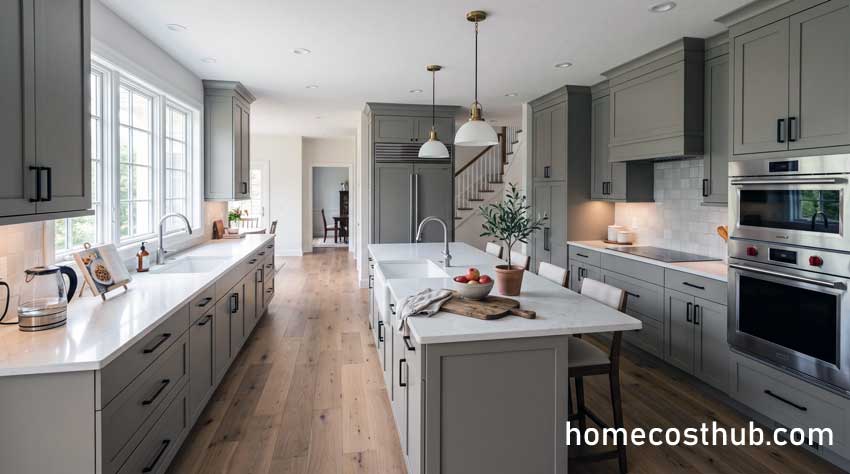
House Painting Cost Calculator

House Painting Cost Calculator Cost Guide
A House Painting Cost Calculator helps homeowners estimate the potential cost of painting a home before requesting professional quotes.
Painting prices can vary considerably depending on the size of the paintable area, whether the project is interior, exterior, or both, the type and quality of paint, existing surface condition, preparation requirements, and local labour rates. This cost calculator provides estimates for both the USA and UK and supports measurements in square feet or square meters.
The estimate separates material cost, labour cost, installation cost, additional preparation expenses, and removal cost to make budgeting easier. Whether you are planning a simple repaint, a replacement coating, or a more extensive repair project, the calculator provides a useful preliminary price estimate before hiring a professional painter.
House Painting Cost Calculator
Estimate house painting costs in the USA or UK based on painting area, paint type, material quality, project scope, existing condition, application method, labour difficulty, removal work, and additional finishing features.
Enter the approximate paintable surface area of the project.
Please enter a valid value.
Removal Required
Optional Preparation & Finishing
USA House Painting Estimate
$0
House Painting Size: 0 ft²
Cost Breakdown
Materials $0
Labour $0
Installation $0
Additional $0
Removal $0
This calculator provides a planning estimate only. Actual house painting prices can vary by location, contractor rates, surface preparation, number of coats, paint brand, accessibility, building height, room layout, weather conditions, and local market demand.
FREE PDF ESTIMATE
Get Your House Painting Cost PDF
Enter your details below to receive your house painting estimate, selected options, and complete cost breakdown as a downloadable PDF.
✓ Your PDF is ready!
Free House Painting Cost Calculator
Material / Project Types
House painting projects can use several types of paint depending on the surface, location, durability requirements, and desired finish.
Latex and acrylic paints are widely used for residential painting because they dry relatively quickly, are easy to maintain, and are available in a broad range of finishes. They are commonly used on both interior and exterior surfaces.
Enamel paint is often selected where a harder and more durable finish is required, including doors, trim, cabinets, and other frequently touched surfaces.
Low-VOC premium paints can be particularly attractive for interior projects because they reduce volatile organic compound emissions while still providing strong coverage and durability. Their material cost is usually higher than standard paint.
Specialty and high-durability paints can be used in demanding environments or where stain resistance, moisture resistance, enhanced exterior protection, or specialty finishes are required.
Also Read:
Project type also affects the final price estimate. Interior painting is generally easier to access, while exterior painting may require ladders, scaffolding, weather-resistant coatings, and additional surface preparation. Painting both the interior and exterior creates a larger project with higher material and labour requirements.
Main Factors Affecting Cost
Project size is one of the most important factors in a House Painting Cost Calculator. A larger paintable area requires more paint, supplies, preparation work, and labour hours.
Material quality can also produce a significant difference in total cost. Budget paints offer a lower initial material cost, while standard, premium, and luxury products may provide improved coverage, durability, washability, colour retention, or resistance to weather.
Existing condition affects both replacement cost and repair cost. A new or well-maintained surface generally needs less preparation. A normal repaint may require cleaning and minor preparation, while damaged surfaces can require patching, sanding, filling, scraping, or other repairs before painting begins.
Labour difficulty is another major factor. Simple open walls are faster to paint than rooms with detailed trim, high ceilings, stairwells, complex architecture, or difficult exterior access. Complex projects therefore have a higher labour cost.
The application method can also affect installation cost. Spray painting may be efficient for large open areas, while rollers and brushes offer control for smaller areas and detailed finishes. A hybrid approach combines spraying with brush or roller finishing.
Additional features such as primer, surface repairs, doors, trim, and detailed finishing can further increase USA cost or UK cost.
Cost Breakdown
Material cost includes paint, coatings, primers, and related consumable supplies. The type and quality of paint selected have a direct impact on this part of the estimate.
Labour cost represents the professional work required to prepare and paint the selected surfaces. Labour costs are generally higher when surfaces are damaged, access is difficult, or the project contains extensive detail work.
Installation cost reflects the selected painting and application method. Spray, roller-and-brush, and hybrid application methods each involve different amounts of time, masking, equipment, and finishing work.
Additional cost covers optional preparation and finishing requirements. This may include primer coats, minor wall or surface repairs, doors, trim, and other detailed painting work.
Removal cost applies when old or failing paint must be removed before new coatings can be installed. Light paint removal typically adds a moderate amount to the estimate, while heavy removal can substantially increase replacement cost because it requires more labour and preparation.
The final estimate combines all of these cost categories to provide a practical budget range for the selected house painting project.
Why Use This Calculator?
A House Painting Cost Calculator can help homeowners understand potential project costs before contacting painters or comparing contractor quotes.
Instead of using a single generic price per square foot, the calculator considers paint type, material quality, project type, surface condition, installation method, labour difficulty, removal requirements, and additional features. This provides a more useful price estimate for different project scenarios.
Homeowners can compare budget, standard, premium, and luxury material choices or see how additional preparation changes the estimated total. The calculator also supports both USA cost and UK cost assumptions, displaying results in USD or GBP without forcing a particular measurement system.
It can also help with early planning for replacement cost or repair cost when an existing paint finish is deteriorated.
Actual contractor prices may differ because local labour rates, paint brands, building access, project complexity, property location, seasonal demand, and surface conditions vary. The estimate is therefore best used as a budgeting and comparison tool rather than a guaranteed quotation.
House Painting Cost Calculator: From Estimate to Painter Quote
Quick Answer
Use your House Painting Cost Calculator result as a budgeting benchmark, not a price that every painter must match. Before comparing it with a professional quote, confirm that both cover the same surfaces, preparation, coating specification, access requirements, protection, cleanup, and exclusions.
How to Read Your House Painting Cost Calculator Result
A calculator estimate becomes most useful when you treat it as a defined planning scenario rather than a prediction of one exact contractor price. The number tells you what a project could cost under the assumptions selected; a painter’s quotation describes the work that contractor is prepared to perform at your property.
The first comparison should therefore be scope against scope, not estimate against quote total.
Suppose your estimate assumes walls, ceilings, trim, normal preparation, primer where required, and standard access. A professional proposal covering walls only is not directly comparable, even if its total sits close to the calculator result. The reverse is also true: a higher quotation may include substantial work that was not part of your original assumptions.
When reviewing the estimate, separate it mentally into three layers:
- Painted surfaces: walls, ceilings, doors, trim, exterior elevations, fascia, soffits, or other areas included in the project.
- Work specification: preparation, repairs, primer, coating products, finish, and number of coats.
- Site and commercial conditions: protection, access, scaffolding where required, cleanup, disposal, exclusions, tax treatment, and possible change-order items.
A professional quotation becomes easier to assess when those same three layers are visible in writing.
Expert Tip
Before comparing totals, make a one-page scope list and mark each item as Included, Excluded, Allowance, or Unclear for every proposal. Differences that look like pricing gaps often turn out to be scope gaps.
Why a Painter Quote Can Be Higher or Lower Than Your Estimate
A contractor prices the house after seeing actual surfaces, access, defects, occupied areas, and finishing details. The calculator works from planning assumptions. A quote may therefore move above or below the estimate because the contractor is pricing a different amount of work, not simply charging a different rate.
A higher proposal might include items such as:
- ceilings that were not included in the original estimate;
- baseboards, skirting boards, casings, architraves, or decorative moulding;
- doors and window trim;
- greater preparation than expected;
- spot priming or a broader primer requirement;
- additional finish coats;
- furniture or flooring protection;
- high stairwells or difficult exterior access;
- setup and cleanup in an occupied property;
- repair work identified during inspection.
A lower quote deserves the same level of scrutiny. It may represent excellent value, but the lower total can also reflect narrower scope.
For example, “paint first floor” could mean walls only in one proposal and walls, ceilings, baseboards, doors, masking, preparation, and cleanup in another. Those are not competing prices for the same job.
A quote that differs from the estimate is therefore not automatically wrong. The useful question is:
What difference in scope, specification, access, or commercial terms explains the difference in price?
If the written proposal does not answer that question, ask the painter to clarify it before choosing between bids.
Compare Painting Quotes by Scope, Not Headline Price
Two house painting quotes should be compared only after the work has been normalized. Start with what will be painted, then compare how it will be prepared and coated, and finally check what the contractor has excluded or left open.
| Quote Item | Calculator Assumption | Quote A | Quote B | What to Check |
|---|---|---|---|---|
| Walls | Included if selected | Included | Included | Same rooms and areas? |
| Ceilings | Included if selected | Excluded | Included | All ceilings or selected rooms? |
| Trim | Included if selected | Limited | Included | Baseboards, skirting, casings, moulding? |
| Preparation | Based on selected condition | “Prep as needed” | Tasks defined | What does preparation actually include? |
| Primer | If required or selected | Spot primer | Specified by surface | When will primer be applied? |
| Finish coats | Based on project assumptions | Unclear | Number stated | Is the coating specification written? |
| Protection | May vary by scenario | Limited | Included | Floors, furniture, landscaping, fixtures? |
| Cleanup | May not match contractor terms | Unclear | Included | Who handles final cleanup and debris? |
| Access | Based on selected difficulty | Standard access | Access equipment included | Are high areas or scaffolding separate? |
An itemized quotation can make comparison easier because individual tasks are visible. A bundled quotation is not inherently inferior, but you may need clarification before you can tell whether the scope matches another proposal.
Quick Answer
Comparable quote = same surfaces + same preparation standard + same coating specification + same access assumptions + same exclusions.
Price becomes meaningful only after those elements are reasonably aligned.
Also Read:
Paintable Surfaces That Are Easy to Leave Out
Whole-house estimates can appear surprisingly low when smaller, labor-intensive surfaces have been overlooked. Broad walls attract most of the attention, yet trim, ceilings, doors, stair areas, and exterior details can represent meaningful additional work.
Ceilings
A walls-only repaint should not be compared with a quotation that includes every ceiling. If ceilings are a separate part of your project, a Ceiling Painting Calculator can help isolate that scope rather than hiding it inside a whole-house figure.
Baseboards, Skirting Boards, and Other Trim
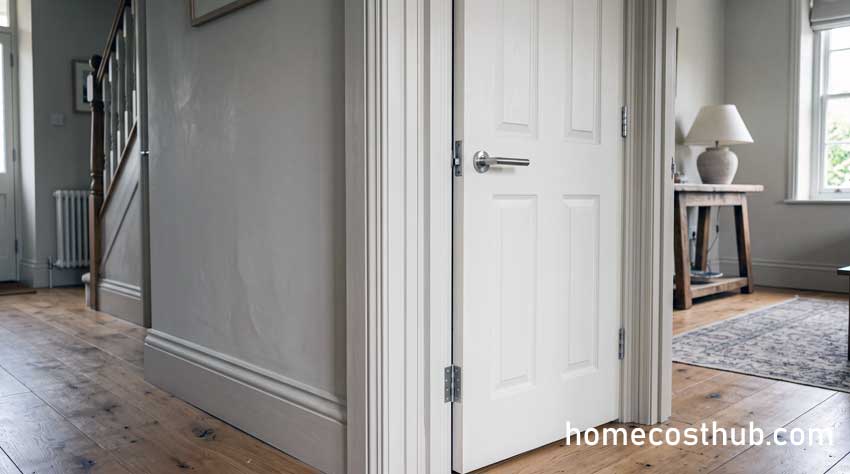
US proposals may refer to baseboards, door casing, window casing, or crown molding. UK painters and decorators may use terms such as skirting boards, architraves, and mouldings.
These surfaces have relatively small areas but require detailed preparation and careful application. When trim forms a substantial part of the project, the Trim Painting Calculator can help separate it from broad wall painting.
Doors and Door Frames
“Paint the room” does not always mean the doors are included. Confirm whether the proposal covers:
- the door slab;
- one side or both sides;
- door casing or architrave;
- frames;
- preparation of existing finishes.
Closets, Alcoves, and Stairwells
Closets may be excluded, included only on visible surfaces, or priced separately. Stairwells can add access and protection work even when their wall area is not especially large.
If you are evaluating only one room rather than the whole property, use the Room Painting Calculator to keep the estimate aligned with that smaller scope.
Exterior Details
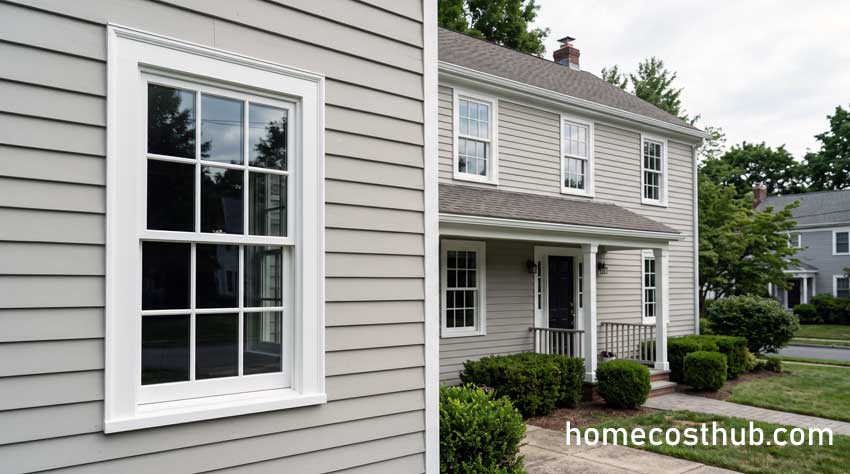
Exterior proposals may or may not include fascia, soffits, porch elements, doors, trim, railings, or outbuildings. A quotation for exterior walls alone should not be treated as equivalent to a full exterior repaint.
For a project where exterior scope needs to be separated from the interior, the Exterior Painting Calculator provides a more focused planning reference.
How Preparation Becomes Contract Scope
“Preparation included” sounds reassuring, but it is not a precise specification. One painter may mean light sanding and filling nail holes. Another may include scraping loose coatings, caulking selected gaps, repairing minor surface defects, spot priming, and more extensive masking.
Preparation should be translated into observable tasks wherever the condition of the house makes those tasks important.
Useful questions include:
- Will loose or peeling paint be scraped?
- Which surfaces will be sanded or deglossed?
- Are cracks, nail holes, or minor defects filled?
- Is caulking included, and where?
- Will repaired areas receive spot primer?
- Is full priming required on any specific surfaces?
- Who handles repairs that exceed the quoted allowance?
This distinction matters because two contractors can both write “prep included” while pricing very different levels of work.
Separate Painting Preparation From Building Repair
Not every defect is a painting task.
A painter can fill minor holes or prepare sound surfaces, but deteriorated drywall, loose plaster, rotten timber, failed render, moisture damage, active leaks, or significant substrate failure may require repair before coating work starts.
A proposal that excludes those repairs is not necessarily incomplete. It should, however, make the boundary clear so the homeowner knows which work must be resolved separately.
Watch for Open-Ended Allowances
Terms such as “repairs as required” or “additional preparation charged separately” deserve clarification.
Ask:
- What preparation is already included?
- What would trigger extra work?
- How will additional work be approved?
- Will the painter provide a price before proceeding?
That conversation can prevent a low initial quote from turning into an unexpectedly larger final invoice.
When Existing Paint Changes Risk as Well as Cost
Older coatings can change more than the preparation budget. Sanding, scraping, cutting, or stripping can create exposure risks when hazardous materials are present, so old paint should not automatically be treated as an ordinary surface-preparation problem.
United States: Pre-1978 Housing
In the United States, the EPA states that renovation, repair, and painting work that disturbs painted surfaces in many pre-1978 homes can create hazardous lead dust. Paid contractors performing covered work are subject to requirements under the EPA Lead Renovation, Repair and Painting Program.
The rule does not apply in exactly the same way to every homeowner performing work on their own home. Homeowners considering DIY work can review EPA lead-safe renovation guidance for DIY homeowners before disturbing potentially hazardous coatings.
For quote comparison, the practical point is simple: a proposal involving significant sanding, scraping, or coating disturbance in an older home may require a different work method and risk assessment from a routine repaint.
United Kingdom: Older Coatings
The UK Health and Safety Executive identifies removal of older paint coatings, dry sanding, and certain stripping methods as potential lead-exposure situations. Its HSE guidance on working safely with old lead paint gives safety information for work where lead exposure may occur.
That guidance is occupational in focus, so it should not be read as saying every household painting job falls under the same workplace duties. It does show why aggressive preparation of questionable older coatings deserves more care than an ordinary repaint.
US and UK Painting Quotes Are Not Directly Interchangeable
US and UK painting estimates can describe similar work using different units, terminology, building materials, and commercial conventions. Dollar prices should not be converted into pounds and presented as UK market prices, or vice versa.
| Project Detail | United States | United Kingdom |
|---|---|---|
| Common measurement | Square feet | Square metres |
| Trim terminology | Baseboards, casing, crown molding | Skirting boards, architraves, mouldings |
| Common exterior terms | Siding, stucco, trim | Render, masonry, timber, trim |
| Building height | Stories | Storeys |
| Access consideration | Ladders, lifts, staging as required | Ladders, towers, scaffolding as required |
| Commercial detail to confirm | Sales tax treatment where applicable | VAT treatment where applicable |
These are contextual differences, not universal rules. Some US homes are masonry. Some UK properties have timber elements. Scaffolding is not automatically required on every UK exterior job.
The homeowner’s task is to confirm what applies to the specific property rather than relying on a generic country stereotype.
Tax and VAT Should Be Clear in the Comparison
A quotation that includes applicable tax should not be compared directly with another total that excludes it.
For UK proposals, ask whether VAT is included where relevant. In the US, applicable sales-tax treatment varies by jurisdiction and by what is being supplied, so rely on the contractor’s written proposal and local requirements rather than assuming every quote handles tax the same way.
DIY vs Professional House Painting: What Are You Actually Comparing?
DIY can reduce direct labor spending, but labor cost is only one side of the comparison. The practical decision also involves time, equipment, surface preparation, access, disruption, finish quality, and responsibility if something goes wrong.
DIY Advantages
- Lower direct expenditure on professional labor.
- Control over work sequence and timing.
- Practical for accessible rooms with sound surfaces.
- Ability to split the project into smaller stages.
DIY Trade-Offs
- Preparation and masking may take longer than expected.
- Ladders, access equipment, drop cloths, tools, and protection still have a cost.
- Occupied rooms can remain disrupted for longer.
- Detailed trim and cutting-in require patience and consistency.
- Exterior heights introduce substantially different access risks.
- Older questionable coatings may require safety precautions before disturbance.
Professional Advantages
- A crew can usually complete large scopes more efficiently.
- Preparation, protection, and coating application can be organized as one workflow.
- Professional contractors may already have access and application equipment.
- A written proposal can define responsibility for the finished work.
Professional Trade-Offs
- Direct project cost is higher than doing all labor yourself.
- Scheduling may need to fit contractor availability.
- Quote quality varies, so scope still needs careful review.
- Changes outside the written proposal may increase the final invoice.
DIY tends to make more sense when surfaces are accessible, preparation is modest, the homeowner has enough time, and finish expectations are realistic.
Professional painting becomes more attractive as the project gains height, detailed trim, extensive repairs, occupied-space coordination, exterior access issues, or older coatings that need careful handling.
Illustrative Scenario — Not a Market Average
The following example is hypothetical. The figures are used only to show how quote comparison works and are not market averages.
A US homeowner is planning a multi-room interior repaint.
The calculator produces an illustrative planning estimate of $7,400 based on:
- walls and selected ceilings;
- baseboards and door casing;
- minor surface preparation;
- primer where required;
- the planned coating specification;
- normal access.
The homeowner then receives two fictional proposals.
Quote A — $6,650
The lower quotation includes:
- walls;
- light filling;
- standard paint application;
- basic cleanup.
But it excludes:
- ceilings;
- six interior doors;
- several areas of trim;
- repairs beyond minor nail holes.
Quote B — $8,050
The higher quotation includes:
- walls and selected ceilings;
- baseboards and casings;
- six interior doors;
- defined sanding and filling;
- spot primer where preparation exposes substrate;
- floor and furniture protection;
- cleanup.
At first glance, Quote A is below the calculator result and Quote B is above it. That does not show which proposal represents better value.
The homeowner first needs to price or clarify the missing ceilings, doors, trim, and repair scope in Quote A. Only then can the two proposals be compared on reasonably equivalent terms.
The useful decision is not:
“Which quote is closest to $7,400?”
Also Read:
It is:
“What would each contractor charge for the same written scope?”
The homeowner might still choose Quote A after clarification. Quote B might prove more convenient because more work is already defined. The calculator is acting as a comparison benchmark rather than choosing a contractor.
A Practical Decision Tree Before Accepting a Painting Quote
1. Does the proposal cover the same rooms, exterior elevations, and paintable surfaces as your estimate?
→ No: List the missing or extra surfaces and normalize the scope before comparing prices.
→ Yes: Continue.
2. Are preparation requirements clear?
→ No: Ask what sanding, scraping, filling, caulking, cleaning, and priming are included.
→ Yes: Continue.
3. Is the coating specification clear enough to compare?
→ No: Clarify paint product or performance level, finish, primer conditions, and finish-coat expectations.
→ Yes: Continue.
4. Are access, repairs, protection, cleanup, and exclusions identified?
→ No: Clarify which items are included and which could become extras.
→ Yes: Continue.
5. Could significant preparation disturb questionable older coatings?
→ Yes: Confirm appropriate assessment and safe work practices before aggressive preparation begins.
→ No: Continue.
6. Are the remaining proposals now substantially equivalent in scope?
→ No: Do not select a bid based on headline price alone.
→ Yes: Compare price, specification, schedule, written terms, contractor suitability, and project priorities.
Before You Accept a House Painting Quote
Before You Accept a House Painting Quote
- Confirm every room or exterior elevation included in the proposal.
- Confirm which walls, ceilings, doors, trim, fascia, soffits, or other surfaces are included.
- Check exactly what surface preparation is included.
- Confirm when primer or spot primer will be used.
- Check the paint product, finish, or coating specification where stated.
- Clarify finish-coat requirements instead of assuming all proposals use the same coating sequence.
- Confirm floor, furniture, fixture, landscaping, or adjacent-surface protection where relevant.
- Identify who provides difficult-access equipment or scaffolding if required.
- Confirm cleanup and disposal responsibilities.
- Read exclusions and allowances before comparing totals.
- Ask what conditions could trigger extra work or a change order.
- Confirm whether quoted totals include applicable sales tax or VAT where relevant.
A quote does not need to be lengthy to be useful. It needs to be specific enough that both homeowner and contractor have a similar understanding of the work being purchased.
Myth vs Fact: House Painting Estimates
Fact
A close total means little if the contractor is pricing a different scope. Compare surfaces, preparation, coating specification, access, and exclusions before comparing price.
Fact
One proposal may include ceilings, trim, repairs, protection, or additional coats that another proposal excludes. Written scope determines whether the bids are genuinely comparable.
Fact
Floor area can help describe property size, but painted surfaces also depend on room layout, wall height, ceilings, openings, trim, architectural details, and exterior geometry.
Fact
Currency conversion does not account for local labor markets, building types, access practices, taxes, contractor overhead, or local pricing structures. US and UK estimates need separate market assumptions.
House Painting Cost Calculator FAQs
How should I use a House Painting Cost Calculator result?
Use it as an early budget benchmark and scope reference. When contractor quotes arrive, compare them with the assumptions behind the estimate rather than expecting every painter to match the same total. A professional quote should reflect the actual surfaces, preparation, access, coating specification, and commercial terms for your property.
Why is my painter’s quote higher than the calculator estimate?
The painter may be including work that was not represented fully in your planning assumptions, such as additional preparation, ceilings, trim, doors, difficult access, protection, repairs, or a different coating specification. Compare the written scope line by line before deciding that the quote is expensive.
Can a contractor quote below the estimate still be realistic?
Yes. The contractor may have lower operating costs, efficient working conditions, or a narrower scope. A lower price can also exclude items included in your estimate. Confirm what is being painted, how it will be prepared, the coating specification, protection, cleanup, and exclusions before treating the difference as savings.
Should ceilings and trim be included in a house painting quote?
Only if they are part of the agreed scope. Do not assume “interior painting” automatically includes ceilings, doors, baseboards, skirting boards, casings, or decorative moulding. Those surfaces should be clearly identified in the proposal when they are part of the project.
Should the number of coats be written into the quotation?
The proposal should make the expected coating result clear enough for both parties to understand what is being purchased. A stated coat specification can make comparisons easier, but substrate condition, color changes, product requirements, and coverage can also affect the coating process. Clarify vague phrases before accepting the quote.
Does a painter’s quote normally include paint?
Contractor practices vary. Some proposals include labor and materials together, while others separate them or allow the homeowner to supply certain products. Check the written proposal rather than assuming. If paint is included, confirm what product or performance level has been allowed for where that matters to your decision.
Is DIY whole-house painting always cheaper?
DIY usually reduces direct professional labor spending, but the comparison should also include your time, tools, protection materials, access equipment, preparation workload, project disruption, and finish expectations. Large exterior areas, high spaces, extensive repairs, and questionable older coatings can make professional work more practical.
Do UK exterior painting quotes always include scaffolding?
No. Scaffolding is project-specific. Some properties can be accessed safely by other appropriate means, while others may require scaffolding or another access system. If access equipment is expected, confirm whether its cost is included in the painter’s proposal or will be arranged and charged separately.
Why can two painting quotes for the same house be far apart?
The proposals may differ in surfaces, preparation, coating products, finish coats, repair allowances, protection, access, cleanup, taxes, overhead, scheduling, and exclusions. Before focusing on the price gap, rewrite both proposals into the same scope and identify which differences remain.
Does an older home need extra precautions before sanding or stripping paint?
Potentially. In the US, pre-1978 housing can involve lead-based paint concerns covered by EPA guidance. UK HSE guidance also identifies risks from disturbing some older lead-containing paint. The appropriate response depends on the coating, property, work method, and applicable rules, so avoid treating aggressive paint removal as routine preparation without assessing the risk.
Use the Estimate to Make a Better Hiring Decision
A House Painting Cost Calculator is most valuable when it gives you a reference point for asking better questions.
If the contractor’s price differs from the estimate, find the scope difference. If two painters disagree sharply on price, normalize their proposals. If ceilings or trim need separate attention, isolate those surfaces rather than burying them in a whole-house total. If preparation wording is vague, turn it into specific tasks before work begins.
Homeowners planning related painting work can also review the broader Painting & Finishing section for more focused cost-planning tools.
Cost Summary
Treat the calculator result as a planning benchmark and the contractor quote as a site-specific commercial proposal. Compare like-for-like surfaces, preparation, coatings, access, protection, and exclusions before judging price. US and UK projects should also be evaluated using their own local terminology, building conditions, and commercial context.
About the Author
Arden Cole Linscott
Expert — Residential Construction & Remodeling Cost Analysis
Arden Cole Linscott focuses on residential construction and remodeling cost analysis, helping homeowners interpret project estimates, understand scope differences, and make better-informed budgeting and contractor-comparison decisions.
Scroll to bottom
Remodeling Cost Calculators