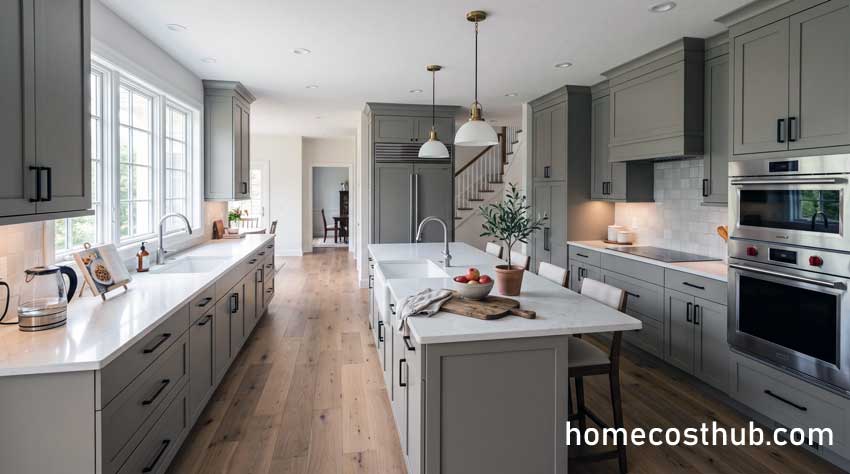
Room Painting Calculator

Room Painting Calculator Cost Guide
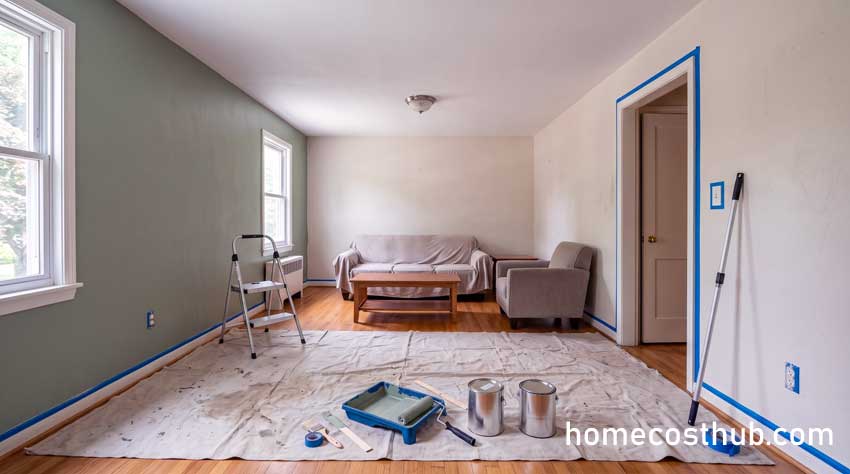
A Room Painting Calculator helps homeowners estimate the potential cost of professionally painting an individual room before requesting contractor quotes. The final price can vary according to the amount of paintable surface, paint type, material quality, existing wall condition, project scope, application method, preparation requirements, and local labour rates.
This cost calculator supports both USA cost and UK cost estimates and allows the user to enter project size in either square feet or square meters. It also separates the total into material cost, labour cost, installation cost, additional finishing expenses, and removal cost.
Whether you are repainting a bedroom, living room, home office, dining room, or another interior space, the calculator can provide a practical early price estimate for budgeting and project comparison.
Room Painting Calculator
Estimate the cost of painting a room in the USA or UK based on paintable area, paint type, material quality, project scope, surface condition, application method, labour difficulty, removal work, and optional finishing features.
Enter the approximate paintable wall and ceiling area for the room.
Please enter a valid value.
Removal Required
Optional Preparation & Finishing
USA Room Painting Estimate
$0
Room Painting Size: 0 ft²
Cost Breakdown
Materials $0
Labour $0
Installation $0
Additional $0
Removal $0
This estimate is intended for budgeting purposes. Actual room painting costs can vary according to local contractor rates, paint brand, surface preparation, room height, number of coats, furniture protection, trim details, access, and regional market conditions.
FREE PDF ESTIMATE
Get Your Room Painting Estimate PDF
Enter your details below to receive your room painting estimate, selected options, and complete cost breakdown as a downloadable PDF.
✓ Your PDF is ready!
Free Room Painting Calculator
Material / Project Types
Room painting projects can use several types of interior paint. Latex and acrylic paints are common choices for bedrooms, living areas, and general-purpose interior walls because they dry quickly and are easy to maintain.
Washable interior paint may be more appropriate for kitchens, hallways, children’s rooms, and other high-traffic areas where walls need frequent cleaning.
Low-VOC paints are popular for homeowners who want to reduce indoor volatile organic compound emissions. These products can have a higher material cost than basic paint but may be preferred for bedrooms, nurseries, and frequently occupied spaces.
Specialty and designer finishes generally cost more because they may require higher-priced materials or additional application time.
Project scope also affects the estimate. Painting walls only is typically the least expensive option. Adding the ceiling increases both material and labour requirements, while a complete room project that includes trim, doors, and other details can raise the overall installation cost.
Also Read:
Main Factors Affecting Cost
Project size is one of the most important factors in a Room Painting Calculator. A larger paintable area requires more paint, supplies, preparation work, and labour.
Material quality also has a significant effect on the price estimate. Budget paint can reduce initial costs, while standard, premium, and luxury products may provide better coverage, colour depth, durability, and washability.
Existing wall condition is another major factor. New or well-prepared surfaces usually require less labour. A normal replacement or repaint project may require cleaning and light preparation, while damaged walls can increase repair cost because cracks, holes, dents, stains, or peeling coatings may need to be fixed first.
Labour difficulty can increase when a room has high ceilings, stair sections, built-in cabinetry, extensive trim, multiple windows, awkward corners, or detailed architectural features.
The selected application method also changes installation cost. Spray application may be efficient in empty rooms, while roller-and-brush painting is commonly used for occupied residential spaces. Detailed brush finishing requires more labour and is generally more expensive.
Cost Breakdown
Material cost includes paint, coatings, primer, and related consumable supplies. Paint type and quality are major influences on this portion of the total.
Labour cost represents the time required to prepare surfaces and complete the painting work. Complex rooms and surfaces requiring repair generally have a higher labour cost.
Installation cost reflects the selected application technique. Spray painting, roller-and-brush application, and detailed brush finishing require different amounts of equipment, masking, preparation, and working time.
Additional cost can include primer, minor wall repairs, doors, trim, baseboards, and advanced finishing work. Selecting additional features can therefore increase the final price estimate.
Removal cost applies when existing paint, wallpaper, or other coatings need to be stripped before the new finish is applied. Light removal usually adds a moderate amount, while extensive stripping can substantially increase replacement cost or repair cost.
The calculator combines these categories to provide an estimated total for the selected room painting project.
Why Use This Calculator?
A Room Painting Calculator can make early project planning easier by showing how different choices may influence the overall painting budget.
Instead of relying on a single generic price per square foot, this calculator considers material type, paint quality, project scope, existing condition, installation method, labour difficulty, removal requirements, and additional features.
Homeowners can compare budget, standard, premium, and luxury paint options or see how wall repairs, primer, trim work, and paint removal affect the estimate. It can also be useful when comparing a straightforward repaint with a more complicated repair or replacement project.
The calculator supports both USA cost and UK cost assumptions and displays estimates in USD or GBP. Measurement units can be selected independently, allowing users to work in either square feet or square meters.
Actual contractor quotes may differ according to location, paint brand, minimum service charges, room accessibility, number of coats, local labour cost, and the condition of the surfaces. The result is therefore best used as a planning estimate rather than a guaranteed quotation.
Room Painting Calculator, Read Estimates & Painter Quotes
Quick Answer
Use your Room Painting Calculator result as an early budgeting benchmark, not a target every painter must match. Compare it with professional quotes only after confirming the same surfaces, preparation, primer, finish coats, paint specification, protection, cleanup, and exclusions.
How Should You Read a Room Painting Calculator Estimate?
A calculator estimate, a contractor quotation, and a final invoice serve different purposes. The estimate gives you a planning baseline, the quotation defines what a painter agrees to provide, and the invoice reflects the completed work plus any approved changes. Compare scope first, total second.
Start by reviewing the assumptions behind the estimate you already generated. Then place those assumptions beside the written painter or decorator proposal.
A difference in price has little meaning until the two scopes describe the same project.
For example, a calculator scenario based on walls only should not be compared directly with a proposal that also includes the ceiling, baseboards, door casings, crack repairs, primer, and furniture protection. The professional quote may be higher because it is buying more work rather than because the painter is charging more for the same work.
The same principle applies when two contractor quotes appear close in price. One proposal may include two specified finish coats, while another simply says “paint room.” One may include surface preparation and cleanup, while the other leaves those responsibilities unclear.
When reviewing a quote, separate three things:
- Scope: exactly which surfaces and tasks are included.
- Specification: paint product, sheen, primer requirements, and coat count.
- Commercial terms: exclusions, allowances, taxes or VAT, change orders, payment terms, and other conditions.
A quotation becomes easier to judge when all three are clear.
Expert Tip
Before comparing total prices, rewrite each proposal into the same scope. A quote that includes ceiling, trim, crack repairs, primer, furniture protection, and cleanup should not be compared directly with a walls-only proposal.
Why Can a Painter’s Quote Differ From the Calculator?
A professional quote prices the room the contractor actually sees, while an estimate works from selected planning assumptions. Site conditions can introduce work that is difficult to represent precisely before inspection, including repairs, masking, access, furniture handling, stain treatment, setup, cleanup, and contractor minimum charges.
The useful question is not simply, “Why is the quote higher?”
Ask instead, “What additional work or commercial condition explains the difference?”
A painter may discover that several patched areas need sanding and spot priming before the finish coats can begin. A dark existing color may require a different coating sequence than a straightforward same-color repaint. A room that appeared simple on paper may contain built-in shelving, detailed trim, tall walls, or furniture that cannot easily be removed.
Occupied rooms can also require more protection and sequencing than empty spaces. Covering flooring and furniture, maintaining access through the home, moving items between stages, and cleaning the room for use at the end of each work period can affect the contractor’s proposed scope.
Small projects can introduce another issue: minimum service charges. A contractor still has travel, setup, equipment, administration, and cleanup requirements even when the paintable area is modest. This means a single small room does not always price proportionally to a much larger multi-room project.
The opposite situation also occurs. A contractor quote below your calculator estimate is not automatically a bargain. It may omit primer, ceiling work, trim, significant repairs, furniture moving, or other items included in your planning assumptions.
A meaningful difference should be traceable to one or more of these areas:
- different surfaces;
- different preparation standards;
- different coating specifications;
- different coat counts;
- different repair responsibilities;
- different protection and cleanup requirements;
- different exclusions or allowances;
- different tax or VAT treatment;
- different site and access conditions.
If the difference cannot be explained from the written proposal, ask for clarification before deciding which price is more competitive.
What Should a Room Painting Quote Actually Include?
A useful room-painting quote should make the scope specific enough that you can tell what is being painted, how surfaces will be prepared, what coating system will be used, and what remains your responsibility. Vague phrases such as “prep included” or “paint room” leave too much room for different interpretations.
Also Read:
| Scope Item | What to Confirm | Why It Matters |
|---|---|---|
| Walls | Which walls and areas are included | Accent walls, closets, alcoves, or built-ins may be treated separately. |
| Ceiling | Included or excluded | A walls-only proposal is not equivalent to a walls-and-ceiling proposal. |
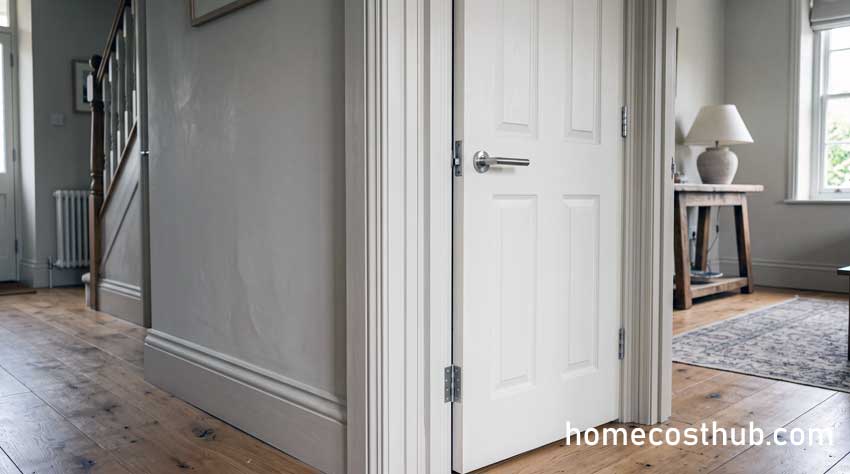
| Baseboards / skirting boards | Whether they are painted and how they are prepared | Trim adds detailed preparation and finishing work. |
| Door and window trim / architraves | Exact pieces included | Some quotes separate these from other trim. |
| Doors | Faces, edges, frames, and number of doors | “Door included” can describe very different scopes. |
| Surface preparation | Cleaning, sanding, filling, caulking, and other prep | Preparation standards strongly affect finish quality and labor. |
| Repairs | What size or type of damage is included | Major drywall or plaster repair may sit outside routine painter preparation. |
| Stain treatment | Whether stains require blocking or investigation | A visible stain may need more than standard finish paint. |
| Primer | Spot primer, full primer, or none | These are not equivalent coating scopes. |
| Finish coats | Number of coats and any conditions affecting them | A proposal should make the expected coating sequence understandable. |
| Paint specification | Manufacturer, product line, color, and sheen where agreed | A brand name alone does not identify the exact product being supplied. |
| Furniture | Who moves and replaces it | Contractor and homeowner responsibilities can differ. |
| Protection | Floors, furniture, fixtures, and adjacent finishes | Occupied rooms may require substantial masking and covering. |
| Cleanup | Daily and final cleanup responsibilities | Cleanup can be included, limited, or excluded. |
| Waste | Who removes painting-related waste | Responsibility should be known before work starts. |
| Tax / VAT | Whether applicable charges are included | Two headline totals may not be directly comparable. |
| Exclusions | Work specifically left out | Exclusions can become later additions or separate projects. |
A tightly written proposal reduces price ambiguity. It also makes later changes easier to identify because the original scope is clear.
Walls Only vs Full-Room Painting: Compare the Same Scope
“Paint one room” is not a standardized scope. One homeowner may mean four walls, while another expects walls, ceiling, doors, baseboards, window trim, crown molding, and built-in details. Separating these surfaces prevents an apparently cheap or expensive quotation from being judged against the wrong benchmark.
For a walls-only project, a dedicated Wall Painting Calculator can help keep the wall scope separate from other painted elements.
Once the ceiling is added, you are buying another surface with its own preparation, protection, access, and coating requirements. Homeowners isolating that part of the project can use the Ceiling Painting Calculator rather than assuming it is automatically part of a room quote.
Trim creates a similar distinction. Baseboards in the US and skirting boards in the UK, along with casings, architraves, and decorative molding, often involve more detailed brushwork and preparation than broad wall surfaces. The Trim Painting Calculator provides a separate estimating context for that work.
If the project grows from one room into several interior spaces, the scope is no longer best understood as a single-room comparison. The Interior Painting Calculator is more relevant when budgeting a broader interior project.
Related estimating tools are also grouped in HomeCostHub’s Painting & Finishing section.
Paint Coverage Is a Planning Specification, Not a Guarantee
Coverage figures help estimate paint quantity, but the figure printed by a manufacturer is more useful than assuming every coating performs the same way. Product formulation, surface texture, porosity, repairs, application method, color change, and coat requirements can all change the amount actually used.
For US planning, Sherwin-Williams paint coverage guidance states that one gallon typically covers about 350–400 square feet. The same guidance also says product requirements vary with factors such as application method and surface type or condition.
That range should not be treated as a universal rule for every paint.
A smooth, previously painted wall can behave differently from fresh drywall, a highly textured surface, repaired areas, or a porous substrate. The exact product also matters.
For UK projects, Dulux paint calculator guidance bases its estimate on product-specific coverage and warns that requirements can vary with the surface, paint type, sheen, color, and selected product. The recommended number of coats can also vary by product.
This distinction matters when a contractor proposes a paint quantity different from the amount suggested by an early estimate. Check:
- the exact paint product;
- manufacturer coverage information;
- substrate condition;
- surface texture;
- primer requirements;
- existing and new colors;
- specified finish coats.
The goal is not to force the contractor’s quantity to equal the calculator result. The goal is to understand why the quantities differ.
US Gallons and UK Litres Should Not Be Treated as the Same Market
US and UK estimates can use equivalent physical measurements without representing equivalent markets. US painting projects commonly use square feet, US gallons, and USD, while UK decorating projects typically use square metres, litres, and GBP. Converting units does not convert labor costs, contractor practices, taxes, or market conditions.
A homeowner can convert an area from square feet to square metres to understand project size. Paint quantity can likewise be expressed in different units when needed.
Pricing requires a different approach.
A professional rate observed in the United States should not be converted from dollars to pounds and presented as a UK market rate. Labour markets, overhead, insurance, contracting practices, taxation, product availability, and local demand are separate.
Terminology can also signal different scope assumptions. A US proposal may refer to baseboards and door casing. A UK decorator may refer to skirting boards and architraves. Those names can describe comparable building elements, but the contractor should still specify exactly what is included.
When comparing quotations, confirm whether any applicable sales tax or VAT is already included in the stated total rather than assuming two headline prices use the same tax treatment.
When Surface Preparation Becomes a Separate Repair Project
Routine painter preparation covers minor defects needed to create a paint-ready surface. Widespread peeling, recurring cracks, loose plaster, damaged board, moisture staining, or substrate failure can cross into a separate repair problem. At that point, identifying and correcting the defect matters more than simply adding another coat.
Small nail holes, light sanding, localized caulking, and minor cosmetic filling often fit within normal preparation when the quote says they are included.
The boundary changes when the surface itself is failing.
Examples that deserve closer investigation include:
- widespread peeling or flaking;
- cracks that repeatedly return;
- loose or hollow plaster;
- substantial drywall or plasterboard damage;
- large failed patches;
- moisture-related stains;
- active leaks or persistent dampness;
- large areas of failed previous coating.
A painter can cover a stain, but paint cannot repair an active plumbing leak, roof leak, or unresolved moisture source. Treating the visible mark without addressing the cause risks paying for a finish that fails again.
Where damaged plaster is substantial enough to become its own work package, a Plaster Repair Calculator can help separate repair budgeting from the later painting scope.
Older Painted Surfaces Need Extra Caution
Older coatings may change the safety requirements of preparation, especially when sanding, scraping, cutting, or stripping will disturb the existing finish.
For US homes built before 1978, the EPA lead-safe renovation guidance for DIY homeowners warns that renovation, repair, or painting work involving lead-based paint can create dangerous lead dust.
EPA guidance also distinguishes homeowners performing work on their own homes from contractors performing covered renovation, repair, and painting work. Professional requirements can apply in circumstances where the federal RRP Rule covers the project.
This does not mean every pre-1978 painted surface contains lead. It means the age of the home and the possibility of disturbing older coatings should be considered before aggressive preparation begins.
For UK properties, do not apply the US 1978 rule as though it were a UK legal cutoff. Older coatings may still justify additional assessment before sanding or stripping, particularly when the existing material is unidentified.
DIY or Professional Room Painting?
DIY is most practical when the room is accessible, surfaces are sound, preparation is limited, and the homeowner has enough time to protect the space and achieve the desired finish. Professional painting becomes more compelling as repairs, access difficulty, detailed trim, old coatings, scheduling pressure, or finish expectations increase.
| Decision Factor | DIY May Fit | Professional May Fit |
|---|---|---|
| Surface condition | Sound walls with minor cosmetic prep | Damaged, stained, peeling, or difficult surfaces |
| Access | Standard-height, easy-to-reach room | High walls, awkward areas, or difficult access |
| Trim | Limited simple trim | Extensive or detailed woodwork |
| Room use | Space can remain out of service as needed | Completion timing is important |
| Protection | Room can be emptied or easily covered | Furniture and finishes require complex protection |
| Finish expectations | Standard repaint expectations | High-detail finish or multiple colors |
| Older coatings | No suspected hazardous coating disturbance | Assessment or controlled preparation may be needed |
DIY Advantages
- Lower direct spending on professional labor.
- Flexible scheduling.
- Practical for simple repainting when the room can be prepared easily.
DIY Trade-Offs
- Your own preparation and cleanup time becomes part of the project.
- Furniture and floor protection remain your responsibility.
- Repairs and difficult surfaces can exceed basic DIY skills.
- Finish consistency may take more time than expected.
Professional Advantages
- The preparation and coating scope can be defined contractually.
- Complex access, repairs, protection, and sequencing can be handled as part of one work package.
- A professional crew may be better suited to rooms that must return to service quickly.
Professional Trade-Offs
- Direct project cost is higher than supplying only your own materials.
- Contractor scopes vary, so proposals still require careful comparison.
- A low headline price can create uncertainty if specifications and exclusions are vague.
The decision is less about choosing the cheapest method and more about deciding which responsibilities you are prepared to carry yourself.
Illustrative Scenario: Same Room, Different Quote Scope
Illustrative Scenario — The figures below are hypothetical examples for scope comparison, not market averages.
Consider a US homeowner who receives a Room Painting Calculator budgeting estimate of $900 for a bedroom project based on the selected assumptions.
Two painters inspect the room.
Quote A — $800
The lower proposal includes:
- walls only;
- minor filling;
- two finish coats;
- basic floor protection;
- standard cleanup.
It excludes:
- ceiling;
- baseboards;
- repair beyond minor filling;
- additional primer if required.
Quote B — $1,150
The higher illustrative proposal includes:
- walls and ceiling;
- localized crack repair;
- spot primer where required;
- two finish coats;
- baseboards;
- furniture and floor protection;
- final cleanup.
Looking only at the numbers creates two misleading conclusions.
Quote A appears cheaper than both the calculator estimate and Quote B. Quote B appears substantially more expensive than the estimate.
Neither comparison is valid yet.
Quote B purchases more work. If the homeowner wants the ceiling, baseboards, localized repairs, and added protection completed, those items would need to be added to Quote A before the two proposals represent the same outcome.
Also Read:
The calculator result also needs the same treatment. If the $900 hypothetical estimate was based on assumptions closer to Quote A, it should not be used as evidence that Quote B is overpriced.
The better decision process is:
define the desired finished scope → align each quotation to that scope → compare exclusions and specifications → compare price.
Decision Tree: What Should You Do After Getting the Estimate?
Does the contractor quote cover the same surfaces as your calculator scenario?
→ No: Normalize the scope before comparing price.
→ Yes: Continue.
Are preparation, primer, finish coats, paint product, and sheen clearly specified?
→ No: Ask the painter to clarify the written proposal before accepting it.
→ Yes: Continue.
Does the room have moisture damage, loose plaster, widespread peeling, recurring cracks, or another unresolved substrate defect?
→ Yes: Investigate or repair the underlying problem before treating the project as a routine repaint.
→ No: Continue.
Will the work disturb older painted surfaces that may require additional safety precautions?
→ Yes or uncertain: Check applicable guidance and assess the coating before aggressive preparation.
→ No: Continue.
Is the room accessible, the surface sound, and the work within your available DIY time and skill?
→ Yes: DIY may be a practical option if the safety conditions are appropriate.
→ No: Compare professional proposals based on equivalent written scope.
Room Painting Myths That Can Distort a Quote Comparison
Fact
A lower quote may exclude preparation, ceiling work, trim, primer, furniture handling, cleanup, or repairs that another proposal includes.
Fact
Coverage varies by product, surface condition, texture, application, colour, and coat requirements. Product-specific manufacturer guidance is more useful than a universal assumption.
Fact
One proposal may cover walls only while another includes the ceiling, trim, doors, repairs, primer, protection, and cleanup.
Fact
Primer requirements depend on the substrate, repairs, stains, adhesion, colour change, and the coating system being specified.
Room Painting Quote Checklist
Room Painting Quote Checklist
- Confirm exactly which walls, ceilings, doors, and trim are included.
- Confirm the required surface preparation and repair scope.
- Ask whether primer is spot-applied, full-surface, or excluded.
- Confirm the paint manufacturer, product line, sheen, and color where relevant.
- Confirm the specified number of finish coats.
- Clarify who moves furniture and protects floors and belongings.
- Confirm masking, cleanup, and waste responsibilities.
- Identify allowances, exclusions, and change-order conditions.
- Confirm whether the stated total includes applicable sales tax or VAT.
Room Painting Calculator FAQs
How accurate is a Room Painting Calculator?
It is most useful as an early budgeting estimate based on the project assumptions entered. A professional quotation may differ after the painter assesses actual surface condition, access, preparation, coating requirements, protection, and other site-specific work.
Why is my painter’s quote higher than the calculator estimate?
First check whether both prices describe the same work. The contractor may have included ceiling or trim painting, repairs, primer, furniture protection, extra preparation, minimum service costs, cleanup, or another item outside the original estimate assumptions.
Should a room painting quote include the ceiling?
Do not assume it does. A walls-only quote and a walls-plus-ceiling quote are different scopes, so the ceiling should be specifically included or excluded in writing.
Are baseboards or skirting boards normally included?
They may be included, separately priced, or excluded. Confirm the trim scope explicitly, including baseboards or skirting boards, casings or architraves, windows, doors, and decorative molding where applicable.
Should doors and windows be considered when estimating paint?
They affect the amount of paintable wall surface, but the appropriate deduction depends on the dimensions and estimating method being used. Large doors or glazing can materially reduce wall area, while small openings may have limited effect on practical purchasing decisions.
Does a second coat change the project cost?
Yes. Another finish coat requires more paint and additional application time. The correct number of coats should be based on the actual product, substrate, existing color, new color, and finish expectations rather than assumed from one universal rule.
Do textured walls require more paint?
They can. A textured surface has more surface profile than a smooth wall and may not achieve the same practical coverage. Check the selected manufacturer’s product guidance and allow the contractor to explain any quantity adjustment in the quote.
When is primer needed before repainting a room?
Primer may be appropriate for bare or repaired areas, stains, adhesion problems, porous substrates, significant color changes, or coating systems that call for it. A previously painted sound surface does not automatically require full-room primer in every case.
Is DIY room painting cheaper than hiring a professional?
DIY removes professional labor from the direct purchase price, but you take responsibility for preparation, tools, protection, painting time, cleanup, and corrections. Compare the full scope of work rather than assuming the material bill represents the entire DIY cost.
How should I compare two painter quotes?
Put both proposals against one written target scope. Confirm the same surfaces, preparation, repairs, primer, paint specification, coat count, protection, cleanup, taxes or VAT, exclusions, and change-order conditions before comparing the totals.
Cost Summary
Treat your Room Painting Calculator result as a planning benchmark. Before hiring, normalize contractor quotes to the same surfaces, preparation, primer, coat count, paint specification, protection, cleanup, and exclusions. Keep US and UK market assumptions separate, and resolve significant moisture or substrate defects before treating the work as a routine repaint.
About the Author
Arden Cole Linscott
Expert — Residential Construction & Remodeling Cost Analysis
Arden Cole Linscott focuses on residential remodeling cost analysis, project-scope interpretation, contractor quote comparison, and practical homeowner budgeting decisions. His editorial approach emphasizes clearly defined assumptions, comparable project scopes, and evidence-based cost planning without presenting planning estimates as guaranteed contractor prices.
Scroll to bottom
Remodeling Cost Calculators