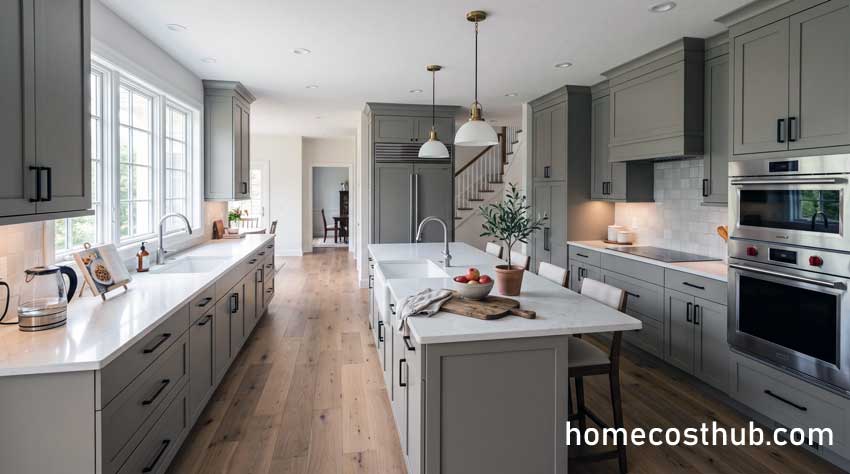
Wall Painting Calculator

Wall Painting Calculator Cost Guide
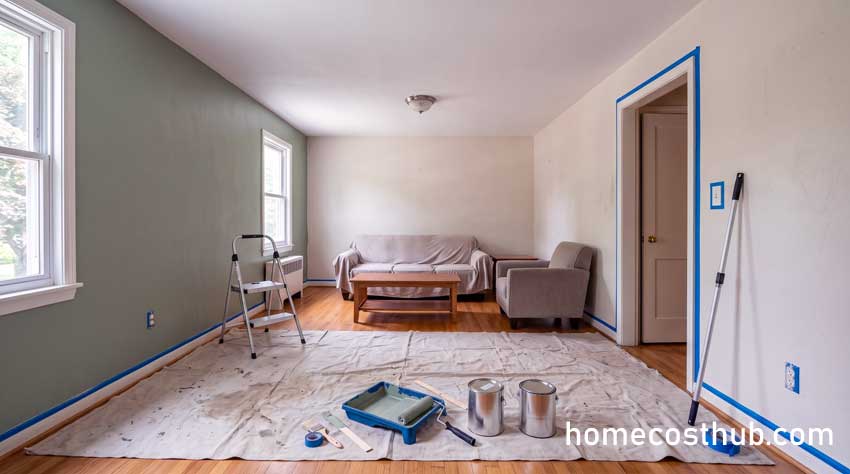
A Wall Painting Calculator helps homeowners estimate the potential cost of painting interior walls before contacting professional painters.
The final price can vary depending on paintable wall area, paint type, material quality, existing surface condition, application method, project complexity, preparation requirements, and local labour rates. This cost calculator supports both USA cost and UK cost estimates and allows measurements in either square feet or square meters.
It separates the estimated total into material cost, labour cost, installation cost, additional preparation expenses, and removal cost. Whether you are repainting a single accent wall, refreshing an entire room, or planning a larger multi-room project, the calculator provides a practical price estimate that can help with early budgeting and contractor quote comparisons.
Wall Painting Calculator
Estimate wall painting costs for projects in the USA or UK based on paintable wall area, paint type, material quality, project scope, existing condition, application method, labour difficulty, removal requirements, and optional preparation work.
Enter the approximate total wall surface area to be painted.
Please enter a valid value.
Removal Required
Optional Preparation & Finishing
USA Wall Painting Estimate
$0
Wall Painting Size: 0 ft²
Cost Breakdown
Materials $0
Labour $0
Installation $0
Additional $0
Removal $0
This calculator provides a budgeting estimate only. Actual wall painting prices may vary according to local contractor rates, paint brand, wall height, surface condition, number of coats, preparation requirements, room accessibility, trim details, and regional market conditions.
FREE PDF ESTIMATE
Get Your Wall Painting Estimate PDF
Enter your details below to receive your wall painting estimate, selected options, and complete cost breakdown as a downloadable PDF.
✓ Your PDF is ready!
Free Wall Painting Calculator
Material / Project Types
Wall painting projects can use several types of interior paint depending on the room, durability requirements, desired finish, and homeowner preferences.
Latex and acrylic paints are among the most common choices for residential walls. They are relatively easy to apply, dry quickly, and are available in a wide variety of colours and finishes.
Washable interior paint can be useful in hallways, children’s rooms, kitchens, and other high-traffic areas where walls may require frequent cleaning. Its material cost may be higher than basic wall paint, but the additional durability can be beneficial over time.
Low-VOC paint is another popular option for homeowners who want to reduce indoor volatile organic compound emissions. Premium low-VOC products may have a higher initial material cost while still providing good coverage and durability.
Specialty or designer paints can include enhanced finishes, decorative coatings, stain-resistant products, or high-end formulations. These products usually increase both material cost and the overall price estimate.
Also Read:
Project type also matters. Painting a single wall is generally simpler than completing every wall in a room. Multiple-room or large-area projects require more materials and labour, although larger projects may sometimes be completed more efficiently.
Main Factors Affecting Cost
Project size is one of the most important factors in a Wall Painting Calculator. The larger the wall surface area, the more paint, preparation materials, and labour are required.
Material quality has a direct effect on material cost. Budget paint can reduce upfront expenses, while standard, premium, and luxury coatings may provide improved coverage, washability, durability, colour depth, and finish quality.
Existing condition is also important. New walls usually require relatively straightforward preparation, while a replacement or repaint project may involve cleaning, sanding, or minor patching. Damaged walls can increase repair cost because cracks, holes, dents, peeling paint, or surface defects may need to be corrected before painting.
Labour difficulty can increase when walls are unusually high, surrounded by detailed trim, located around staircases, or divided by many doors, windows, cabinets, and architectural features.
The application method also affects installation cost. Spray painting can be efficient in empty spaces, while roller-and-brush application is widely used for occupied homes. Detailed brush finishing is more labour-intensive and can increase the final estimate.
Cost Breakdown
Material cost includes wall paint, coatings, primer, and other consumable materials needed for the project. Paint type and quality have the strongest influence on this part of the estimate.
Labour cost represents the professional time required for surface preparation, masking, painting, touch-ups, and cleanup. Complex walls or damaged surfaces generally result in a higher labour cost.
Installation cost reflects the selected method used to apply the paint. Spray, roller-and-brush, and detailed brush application each require different amounts of preparation, equipment, and working time.
Additional cost may include primer, crack and hole repairs, trim detailing, baseboard work, or other optional preparation and finishing tasks.
Removal cost applies when existing paint, wallpaper, or another wall covering must be removed before repainting. Light removal may add only a moderate expense, while extensive stripping can significantly increase replacement cost or repair cost.
Together, these categories create a more detailed price estimate than using a single generic painting rate.
Why Use This Calculator?
A Wall Painting Calculator can help homeowners plan a realistic painting budget before requesting contractor quotes.
Instead of relying only on an average cost per square foot, this calculator considers material type, paint quality, project scope, existing condition, installation method, labour difficulty, removal requirements, and optional features.
Homeowners can compare budget, standard, premium, and luxury paint choices or see how primer, wall repairs, trim work, and wallpaper removal affect the total. It is also useful for comparing the likely replacement cost of repainting an existing wall with the higher repair cost of restoring a damaged surface.
The calculator supports both USA cost and UK cost assumptions, displaying estimates in USD or GBP. Square feet and square meters can be selected independently from the country setting.
Actual contractor prices may vary depending on location, paint brand, minimum service charges, number of coats, wall height, local labour cost, accessibility, and surface condition. The result should therefore be used as a budgeting estimate rather than a guaranteed quotation.
Wall Painting Calculator: Reading Costs and Quotes
Quick Answer
Use your Wall Painting Calculator result as a budgeting baseline, then compare painter quotes against the same wall area, preparation level, paint specification, coats, repairs, access, and exclusions. A higher quote may still offer better value when it includes work that a lower proposal leaves out.
How to Read Your Wall Painting Calculator Estimate
The estimate is most useful as a reference point for a defined scope, not as a target price that every painter should match. Check what you entered for wall condition, project size, paint quality, preparation, application, and optional work before comparing the result with a written quote.
Start with the scope rather than the total.
If your estimate covers walls only but the contractor has priced walls, baseboards, door frames, and a ceiling, the two numbers are describing different projects. The same problem occurs when the calculator assumes relatively sound walls but the painter expects several hours of filling and sanding.
A useful comparison asks:
- Are the same walls included?
- Is the existing condition described in the same way?
- Does the quote include minor repairs or price them separately?
- Are primer and finish coats specified?
- Is the proposed paint product comparable with the quality selected in the estimate?
- Are masking, furniture protection, setup, and cleanup included?
- Are trim, doors, or ceilings outside the wall-painting scope?
For a project that extends beyond the walls, an Interior Painting Calculator is a better companion estimate because whole-room work can include surfaces that should not be hidden inside a wall-only comparison.
Expert Tip
Give competing painters the same written scope before asking for prices. A short scope stating the rooms, walls, visible defects, expected finish, paint specification, and excluded surfaces makes the quotes far easier to compare than relying on each contractor to define the job differently.
Compare Painter Quotes by Scope, Not Just Total Price
Two proposals can have different totals without either contractor being wrong. One may assume paint-ready walls and limited filling; the other may include crack repairs, stain blocking, extensive sanding, protection, and a more detailed finish standard.
Normalize the scope before comparing the bottom line.
| Quote Item | Quote A | Quote B | What the Homeowner Should Check |
|---|---|---|---|
| Walls included | Specified room walls | Specified room walls | Confirm that both cover the same surfaces. |
| Minor hole filling | Included | Included | Ask how much repair work is considered “minor.” |
| Crack repair | Excluded | Allowance | Clarify the repair method and what happens if cracking is more extensive. |
| Sanding | Light sanding | Preparation as required | Ask for a clearer description where wording is vague. |
| Primer | Spot prime | Full prime where required | Ask which conditions trigger additional priming. |
| Finish coats | Two coats | Two coats | Confirm the same surfaces and paint system are being compared. |
| Paint product | Named product | Not specified | Request manufacturer, product line, and sheen. |
| Furniture and floor protection | Included | Included | Confirm who moves furniture and how occupied areas are protected. |
| Trim | Excluded | Included | Separate trim before comparing totals. |
| Cleanup | Included | Included | Clarify debris, masking, and leftover material handling. |
| Tax / VAT | Not specified | Included | Compare totals on the same tax basis. |
Generic phrases deserve extra attention. “Prep as required,” “premium paint,” or “repairs included” sound reassuring, but they do not define a measurable scope.
A better proposal identifies what the contractor expects to do and how work outside that expectation will be handled. That becomes especially important when wall damage cannot be fully assessed until loose material, wallpaper, or failing coating is removed.
Why a Painter’s Quote May Be Higher Than the Calculator Estimate
A painter can inspect conditions that an early estimate cannot fully capture. Repeated patching, stains, deteriorated coating, awkward access, stair walls, built-ins, extensive masking, or hidden wall damage can turn into additional labor and preparation even when the measured paintable area stays unchanged.
Consider an occupied living room with built-in cabinetry. The wall area may be modest, yet protecting flooring and furniture, masking the built-ins, cutting clean edges, repairing old picture holes, and working around limited access can add substantial working time.
High stair walls create a different issue. The quantity of paint may not increase much, but safe access and slower application can change the labor requirement.
Color changes also need context. A major change in color or substrate condition may alter the coating approach. Instead of assuming that every wall will perform the same way, compare the contractor’s proposed system with the actual condition of the surface.
Manufacturer guidance reinforces this point. Sherwin-Williams states that product requirements vary with application method and surface type or condition. Its current paint-calculator guidance lists roughly 350–400 square feet per gallon as typical coverage, not a guarantee for every surface or product.
Expert Tip
When a quote is much higher than your calculator result, ask the painter to explain the difference by scope rather than asking for an immediate discount. Preparation, access, repairs, coating requirements, and excluded work provide a much clearer basis for deciding whether the price difference is justified.
Surface Preparation Can Change the Quote More Than Expected
A sound previously painted wall and a damaged wall can end with a similar visual finish, yet the path to that finish may require very different amounts of work.
Also Read:
A wall with only a few nail holes may need localized filling and light sanding. A wall with repeated cracks, peeling coating, staining, failed patches, or loose plaster needs more investigation before the finish coats begin.
The phrase “prep as required” is too broad for a serious quote comparison.
Ask what the contractor means by preparation. Useful details include:
- cleaning dirt, grease, or residue;
- filling nail and screw holes;
- repairing isolated cracks;
- sanding patched areas;
- removing loose or flaking coating;
- spot priming repairs;
- blocking stains where appropriate;
- dealing with wallpaper adhesive or backing;
- repairing damaged plaster or drywall;
- caulking gaps where that work is included in the painting scope.
If substantial plaster deterioration is present, it may be clearer to estimate that work separately with the Plaster Repair Calculator. Separating repair from decoration prevents a wall-painting price from hiding a much larger substrate problem.
Also ask how unforeseen defects will be handled. A fixed painting quote with an undefined repair allowance can create disagreement if damage becomes visible after preparation begins.
Keep Wall Painting and Trim Painting as Separate Scopes
Walls and trim may share the same room, but they are not necessarily the same painting task. Baseboards or skirting boards, window casings, door frames, crown molding or coving, and doors can require different preparation, primers, paint products, application methods, and detailing time.
That distinction matters when comparing contractor quotes.
A quote labeled “paint bedroom” may include:
- walls only;
- walls and ceiling;
- walls and baseboards;
- all walls, trim, doors, and ceiling.
Those totals should not be compared until the surfaces are separated.
If trim is a meaningful part of the project, use the Trim Painting Calculator to evaluate it independently. For related estimating tools covering other coatings and finishes, the Painting & Finishing section can help separate adjacent scopes rather than grouping everything under one room-painting figure.
US and UK Wall Painting Estimates Should Be Read Differently
US and UK estimates can follow the same budgeting logic, but the units, product terminology, tax treatment, and local labor market are different. Do not convert a US painter rate into pounds and treat the result as a UK market rate, or apply a UK product coverage figure automatically to a US coating.
United States
US projects commonly describe wall area in square feet and paint quantity in gallons or quarts. Manufacturer coverage is often stated as square feet per gallon.
A contractor proposal may separate labor and materials, combine them into a project total, or offer optional upgrades. Sales-tax treatment can also depend on location and the structure of the transaction, so check whether the quoted total is the amount you are expected to pay.
United Kingdom
UK projects normally use square metres for area and litres or tin sizes for paint quantity. The term emulsion is common for interior wall and ceiling paint.
Contractors may describe their service as painting and decorating rather than simply painting. Check whether VAT applies to the quoted business and whether it is already included in the stated figure.
For both markets, the product label or manufacturer technical information is a better reference for expected coverage than a generic international rule.
Paint Coverage Is a Specification, Not a Guarantee
Coverage figures are useful for budgeting paint quantity, but actual consumption changes with the coating, substrate, texture, repairs, porosity, application, and finish requirements. Treat published coverage as a product-specific planning value rather than proof that every wall will require exactly the calculated amount.
Sherwin-Williams currently states that a gallon of paint typically covers about 350–400 square feet, while also warning that requirements vary with application method and surface type or condition. See the Sherwin-Williams paint coverage guidance.
For UK projects, Dulux UK paint coverage guidance is useful when checking paint quantities against the chosen product and project.
Dulux also provides guidance on estimating paint quantity, which is a better basis for product planning than assuming every tin covers the same area.
Practical conditions that can reduce real-world coverage include:
- porous new or repaired surfaces;
- rough or heavily textured walls;
- patches that absorb coating differently from surrounding areas;
- significant color changes;
- uneven previous coatings;
- application losses during the work.
This is also why two contractors may specify different quantities without one necessarily being careless. Compare the specified product and preparation assumptions before judging the quantity alone.
DIY vs Professional Wall Painting
DIY is most attractive when walls are accessible, stable, and need only minor preparation. Professional painting becomes more compelling when repairs, tall walls, stairwells, failing coatings, extensive protection, tight scheduling, or demanding finish expectations make the project less forgiving.
| Option | Advantages | Limitations | Better Fit When |
|---|---|---|---|
| DIY | Reduces paid labor and gives the homeowner control over scheduling. | Requires time, preparation, tools, protection, cleanup, and responsibility for rework. | Walls are accessible, preparation is light, and the finish standard is manageable. |
| Professional painter | Transfers much of the preparation, application, protection, and scheduling burden to the contractor. | Higher cash outlay and quote quality depends on how clearly the scope is written. | Access is difficult, repairs are significant, time is limited, or finish quality is a priority. |
DIY savings should not be judged by labor cost alone. A homeowner still needs to consider preparation materials, masking, applicators, access equipment where appropriate, cleanup, and the possibility of repainting areas that do not meet expectations.
Professional work also needs scrutiny. Paying for a painter does not eliminate the need to compare specifications. A detailed proposal is more valuable than an attractive total with unclear preparation and exclusions.
Be Careful With Older Painted Surfaces
Older coatings can change both the work method and the level of care required when sanding, scraping, or otherwise disturbing paint.
For US housing, the EPA states that the federal government banned the sale of lead-based paint for residential use in 1978. The agency’s Renovation, Repair and Painting requirements apply to many paid contractors who disturb painted surfaces in pre-1978 homes and child-occupied facilities. Homeowners planning work on relevant properties should review the EPA Lead Renovation, Repair and Painting guidance before assuming that ordinary sanding or scraping is appropriate.
This does not mean every older painted wall contains lead. Appearance alone is not a reliable way to make that determination.
In the UK, the Health and Safety Executive advises that old lead paint can be present beneath later coatings in older buildings and identifies activities such as dry sanding, stripping, and other disturbance as potential exposure routes. Its HSE guidance on old lead paint provides practical precautions for work involving older coatings.
A quote that includes special controls for questionable legacy paint is not directly comparable with one that assumes normal sanding throughout. Clarify the condition before treating the difference as a pricing issue.
Illustrative Wall Painting Quote Comparison
Illustrative Scenario — These figures are illustrative only and are not market averages.
Consider an occupied US bedroom where the homeowner enters the wall area, standard paint quality, normal access, and moderate preparation into the calculator. The resulting budgeting estimate is $1,100.
Two hypothetical painters then inspect the room.
Quote A: $1,175
- Walls only
- Minor nail-hole filling
- Light sanding
- Two finish coats
- Basic floor protection
- Crack repairs excluded
- Stain treatment excluded
- Trim excluded
Quote B: $1,525
- Walls only
- Minor filling plus repair of two visible cracks
- Sanding of previous patch areas
- Spot primer where repairs require it
- Two finish coats
- Furniture movement within the room
- Detailed floor and furniture protection
- Cleanup included
- Trim excluded
The calculator result sits closer to Quote A, but that does not prove Quote A is better value.
The extra $350 in Quote B is attached to identifiable work. The homeowner’s decision should be based on whether those repairs and protection measures are actually needed and whether Quote A would charge for them later.
If the cracks are cosmetic and the homeowner plans to repair them before the painter arrives, Quote A may fit the intended scope. If the room must remain occupied and the cracks need professional preparation, Quote B may be the more comparable proposal.
The useful question is not, “Which contractor is closest to the calculator?” It is, “What does each price buy?”
Questions to Ask Before Accepting a Painter’s Quote
Wall Painting Quote Checklist
- Confirm exactly which walls and rooms are included.
- Confirm the specified surface preparation rather than accepting “prep as required” without clarification.
- Confirm the paint manufacturer, product line, sheen, and color where relevant.
- Confirm the expected finish coats and when primer will be used.
- Ask whether trim, doors, ceilings, wallpaper removal, and wall repairs are separate.
- Clarify furniture moving, floor protection, masking, and cleanup responsibilities.
- Confirm how unforeseen wall damage or extra preparation will be priced.
- Confirm whether sales tax or VAT is included in the stated total where applicable.
Wall Painting Decision Tree
Are the walls sound, accessible, and largely repair-free?
→ Yes: Is the project small enough that you are comfortable handling preparation, cutting-in, protection, and cleanup?
→ Yes → DIY may be a practical option.
Also Read:
→ No → Compare the value of your time and equipment needs with an itemized professional quote.
→ No: Are there damaged plaster or drywall areas, peeling coating, significant stains, difficult stair access, or uncertain older paint?
→ Yes → Obtain a professional quote that identifies preparation and repair separately.
→ No → Define the specific extra work before deciding between DIY and professional painting.
Is a contractor quote substantially different from the calculator estimate?
→ Yes → Compare area, preparation, coatings, repairs, access, protection, trim, cleanup, and exclusions line by line.
→ No → Still check exclusions and change-order terms before accepting the proposal.
Are two contractor totals far apart?
→ Yes → Rewrite both quotes into the same scope before comparing price.
→ No → Compare product specification, workmanship scope, schedule, and exclusions rather than choosing from total alone.
Common Mistakes When Comparing Wall Painting Estimates
Comparing Walls With a Whole-Room Quote
A wall-only calculator result should not be compared directly with a proposal that also includes ceilings, doors, and trim.
Assuming Both Painters Included the Same Preparation
One proposal may allow for only minor filling while another includes more extensive sanding and repairs.
Accepting “Premium Paint” as a Specification
Ask for the actual manufacturer, product line, and finish so the coating can be compared on equal terms.
Ignoring the Number of Coats
A proposal for one finish coat is not the same scope as one specifying two coats or a primer-plus-finish system.
Treating Published Coverage as Guaranteed
Manufacturer coverage is a useful planning reference, but surface condition and application still matter.
Forgetting Furniture and Masking Responsibilities
A lower quote may assume the homeowner empties the room or completes some preparation before work begins.
Accepting an Undefined Repair Allowance
Ask what the allowance covers and how additional work will be authorized and priced.
Comparing Pre-Tax and Tax-Inclusive Totals
Confirm the payable total before treating two proposals as equivalent.
Assuming the Cheapest Quote Includes the Same Result
Price becomes meaningful only after scope, preparation, products, and exclusions are aligned.
Myth vs Fact About Wall Painting Estimates
Fact
A lower quote may exclude preparation, primer, repairs, protection, trim, or cleanup that another painter has included. Compare the written scope before judging value.
Fact
The calculator provides an early budgeting reference. A contractor can inspect actual wall damage, access, protection requirements, coating condition, and other site conditions that affect the proposed scope.
Fact
Coverage varies by product and can also be affected by surface texture, porosity, repairs, application, and the coating system. Use the relevant manufacturer specification when planning material quantity.
Fact
Trim can require separate preparation, detailed cutting, different coatings, and more brushwork, so it should be identified separately when comparing estimates.
Wall Painting Cost Summary
Cost Summary
Treat the calculator result as a consistent budgeting baseline, then judge a professional quote against the actual project scope. Preparation, repairs, paint coverage, coats, access, protection, exclusions, and local US or UK pricing can explain why a final proposal differs from the estimate.
Frequently Asked Questions
Why is my painter’s quote higher than the Wall Painting Calculator estimate?
The painter may have included preparation, repairs, masking, difficult access, primer, extra coating work, furniture protection, or other site conditions that were not fully represented in the estimate. Compare the written scope line by line before deciding that the contractor’s price is high.
Should paint and labor be separated in a painting quote?
They do not have to be separate for every contract, but an itemized or clearly described scope makes comparison easier. At minimum, the proposal should identify the paint specification, surfaces, preparation, coats, exclusions, and major optional work so you know what the total includes.
Should doors and windows affect a wall painting estimate?
Openings affect the paintable wall area, but their presence can also create additional cutting-in and masking around edges. A contractor may therefore consider both the reduced wall surface and the detailing required around multiple openings.
Does a second coat significantly change the estimate?
A second coat requires more paint and application labor, although setup and preparation are not necessarily repeated in full. Compare quotes using the same coating specification rather than assuming one-coat and two-coat proposals represent the same finished scope.
Do textured walls require more paint?
They can. Rough or textured surfaces have more effective surface area and may not achieve the same practical coverage as a smooth wall. Check the selected coating’s manufacturer guidance and discuss unusually heavy texture with the painter before finalizing material quantities.
Should primer be included in a painter’s quote?
The quote should state when primer is included or expected. Full-wall priming is not necessary for every repaint, while bare repairs, stains, major substrate changes, or specific coating systems may require targeted or broader priming.
Is it cheaper to paint walls myself?
DIY can reduce paid labor when the walls are accessible and need little repair. The comparison should still include supplies, tools, protection, access equipment where needed, your time, cleanup, and the risk of rework. Difficult access or extensive surface preparation can narrow the practical advantage.
Should trim be included in a wall painting quote?
Only if the written scope says so. Baseboards, skirting boards, frames, molding, and doors should be identified separately because their preparation and application requirements differ from large wall surfaces. Separating them also makes competing quotes easier to compare.
About the Author
Arden Cole Linscott
Expert — Residential Construction & Remodeling Cost Analysis
Arden Cole Linscott focuses on residential construction and remodeling cost analysis, translating project scope, material choices, labor requirements, regional pricing considerations, and contractor proposals into practical budgeting guidance. The focus is helping homeowners compare estimates on equal terms and make project decisions based on the real scope rather than the headline price alone.
Scroll to bottom
Remodeling Cost Calculators