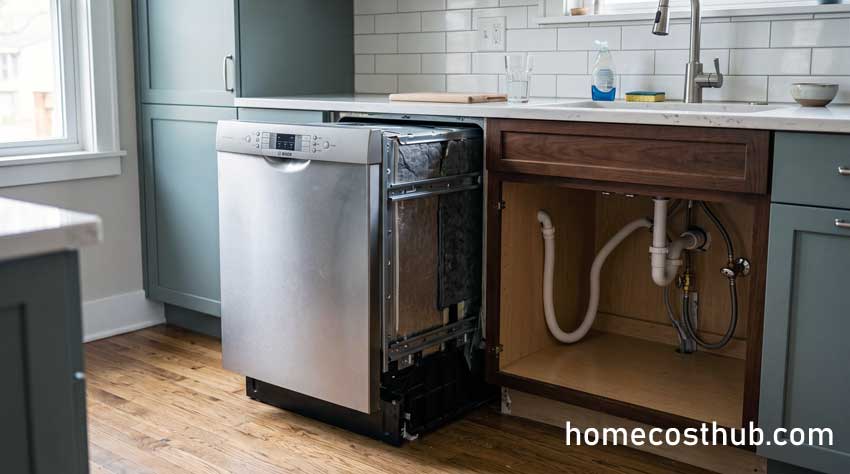
Backsplash Cost Calculator

Backsplash Cost Calculator Cost Guide
A Backsplash Cost Calculator helps homeowners estimate the potential cost of installing or replacing a kitchen backsplash before requesting detailed quotations from tile installers or remodeling contractors.
Backsplash pricing can vary significantly depending on surface area, tile or slab material, material quality, project scope, wall condition, installation pattern, labour difficulty, removal requirements, and finishing details.
This cost calculator supports both USA cost and UK cost estimates, displaying results in USD or GBP while allowing the project size to be entered in square feet or square meters.
It separates material cost, labour cost, installation cost, additional features, and removal expenses so homeowners can create a practical price estimate for ceramic, porcelain, glass, natural stone, and slab-style backsplash projects.
Backsplash Cost Calculator
Estimate kitchen backsplash costs in the USA or UK based on project size, material type, quality, project scope, existing condition, installation complexity, labour difficulty, removal, and optional upgrades.
Please enter a valid value.
USA Backsplash Estimate
$0
Backsplash Size: 0 ft²
Cost Breakdown
Materials$0
Labour$0
Installation$0
Additional$0
Removal$0
FREE PDF ESTIMATE
Get Your Backsplash Cost PDF
Enter your details below to receive your backsplash estimate, selected options, and complete cost breakdown as a downloadable PDF.
✓ Your PDF is ready!
This estimate is intended for preliminary budgeting. Actual backsplash costs may vary based on tile or slab selection, pattern, waste allowance, wall condition, outlet cutouts, trim, grout, substrate preparation, local labour rates, taxes, and contractor pricing.
Free Backsplash Cost Calculator
Material / Project Types
Backsplash materials range from affordable ceramic tile to premium stone and full-height slab installations.
Ceramic tile is typically one of the most economical choices. It is widely available in different colors, sizes, and finishes and works well for Budget backsplash projects.
Porcelain tile is durable, moisture resistant, and available in many styles. It is commonly used for Standard kitchen installations and can imitate stone, concrete, or other finishes.
Glass tile usually costs more than standard ceramic or porcelain because of its material price and the additional care often required during cutting and installation.
Also Read:
Natural stone backsplashes can include marble, travertine, limestone, slate, or other stone products. These materials may require sealing and additional maintenance, while variations in stone quality can significantly affect material cost.
Quartz or stone slab backsplashes create a continuous surface with fewer grout lines. They are often used with matching countertops and typically involve higher fabrication and installation cost.
Project scope also matters. An accent section behind a range costs less than covering the entire counter-to-cabinet area. A full-height backsplash extending to the ceiling requires substantially more material and installation labour.
Main Factors Affecting Cost
Backsplash size is one of the primary factors because most materials and installation services are priced according to surface area.
Material quality can also produce significant differences in the final price estimate. Budget tile can keep costs relatively low, while Premium and Luxury products may include handmade tile, designer collections, specialty finishes, rare stone, or large-format slab material.
Existing condition affects replacement cost and repair cost. Installing backsplash material on a clean, flat, properly prepared wall is generally easier than replacing an existing backsplash. Old tile removal can damage drywall or backer board, creating additional preparation work.
Installation type is another major factor. A basic straight-lay pattern is generally faster than herringbone, diagonal, mosaic, mixed-format, or other custom layouts. More complex patterns increase cutting, layout planning, waste, and labour cost.
Labour difficulty rises when the backsplash includes many outlets, switches, corners, niches, windows, range hoods, uneven walls, or intricate trim details.
Optional features such as specialty patterns, decorative niches, epoxy grout, stone sealing, multiple electrical cutouts, and extra wall preparation can further increase the total project cost.
Cost Breakdown
Material Cost: Material cost represents the tile, stone, glass, slab material, grout, adhesive, trim, and related products required for the backsplash. It varies according to project size, material type, quality, scope, and existing condition.
Labour Cost: Labour cost covers layout, measuring, cutting, fitting, preparation, grouting, finishing, and related professional work. Complex patterns and difficult walls generally require more labour.
Installation Cost: Installation cost represents the fitting process associated with the selected installation type. Basic straight-lay work generally costs less, while custom patterns or complicated layouts can require additional time and precision.
Additional Cost: Additional expenses may include multiple outlet cutouts, decorative niches, herringbone or specialty patterns, premium epoxy grout, stone or grout sealing, and extra wall preparation. Basic, Standard, and Advanced feature levels adjust these allowances.
Removal Cost: Removal cost applies when an existing backsplash must be taken down before the new material is installed. Natural stone, slab materials, difficult substrates, or damaged walls can increase the amount of demolition and repair work required.
The calculator combines material cost, labour cost, installation cost, additional cost, and removal cost to produce the estimated total project price.
Why Use This Calculator?
The Backsplash Cost Calculator provides homeowners with a practical way to create an initial kitchen remodeling budget before contacting tile installers, designers, contractors, or stone fabricators.
It allows different backsplash options to be compared quickly. Homeowners can compare ceramic with porcelain, glass, natural stone, or slab materials, test Budget against Premium specifications, or see how a custom installation pattern affects the overall price estimate.
The calculator also helps account for expenses beyond the visible backsplash material. A professional installation may require wall preparation, demolition, adhesives, grout, trim, outlet cutouts, detailed tile cutting, sealing, cleanup, and other labour.
USA and UK pricing can be selected independently from measurement units. USA estimates are displayed in dollars, while UK estimates are shown in pounds. Users can select square feet or square meters regardless of country. When square meters are selected, the calculator converts the area internally using 1 square meter = 10.7639 square feet while continuing to display the original backsplash size in square meters.
The estimate is intended as a preliminary budgeting tool rather than a guaranteed contractor quotation, but it provides a useful starting point for comparing backsplash installation cost, replacement cost, repair cost, material cost, and labour cost.
Backsplash Cost Calculator: Estimate Tile, Labor & Installation Costs
Quick Answer
A Backsplash Cost Calculator gives you a practical starting estimate for a tile or slab backsplash, but the final contractor price can change with installation complexity, wall condition, location, and minimum job charges. Use the result as a budgeting range, then compare quotations based on the same project scope.
A backsplash estimate can look straightforward until a contractor quote arrives hundreds of dollars—or pounds—above the number you expected. The difference is often not the tile itself. Small-job minimums, awkward cuts, wall repairs, edge finishing, demolition, and detailed layouts can carry a large share of the final price.
That is why the number from a Backsplash Cost Calculator is most useful when you know how to read it. A 20-square-foot kitchen wall with four outlets and a herringbone layout is not the same installation as 20 square feet of straight-laid subway tile on a clean, flat wall.
For a wider renovation, backsplash work should also be viewed alongside countertops, cabinets, appliances, and flooring. Homeowners planning several improvements at once can compare related budgets through Kitchen Remodeling resources rather than treating each finish as an isolated purchase.
How to Read Your Backsplash Cost Calculator Result
The first number to understand is the estimated project total. It is a planning figure, not a promise that a local installer will perform the work for exactly that amount.
A useful way to read a backsplash estimate is as a range with three practical zones:
- Lower-budget outcome: straightforward wall, easy cuts, standard layout, limited preparation, and competitive local labor.
- Middle outcome: normal professional installation with several outlets, edge details, routine preparation, and a typical residential layout.
- Higher-budget outcome: difficult pattern, specialty material, damaged substrate, demolition, many precision cuts, slab fabrication, or a high-cost labor market.
Small projects deserve special attention. Dividing a contractor’s total quote by only 10 or 15 square feet can produce a surprisingly high cost per square foot because the installer still has to travel to the property, protect the countertop, unpack tools, establish a layout, make cuts, grout, clean the area, and sometimes return after curing.
That fixed workload explains why a small backsplash cannot always be priced like a miniature version of a large tiled wall.
Backsplash Budget Formula
Backsplash project budget = installation estimate + preparation/removal allowances + project-specific extras + contingency.
A contingency is particularly useful when replacing existing material because the condition behind the old backsplash may not be visible until demolition begins. The 2026 TCNA Handbook for Ceramic, Glass, and Stone Tile Installation emphasizes that tile installation methods rely on a properly designed, constructed, and prepared supporting surface.
That does not mean every wall needs major reconstruction. It means the visible tile is only one part of a reliable installation.
Typical Backsplash Cost per Square Foot and Square Metre
For US projects, current published consumer cost data from Angi places professional backsplash installation at roughly $15 to $40 per square foot for many projects, with a reported average project around $1,000 and a broader typical project range of $480 to $1,500. Those figures are market benchmarks rather than guaranteed contractor rates.
In the UK, the terminology usually shifts from backsplash to splashback. Checkatrade’s June 2026 tiling guide lists around £110 per m² for standard kitchen wall tiling including standard tiles, materials, and labour, while an average area between the worktop and wall cabinets is listed at about £275. It also specifically notes that a small splashback may be priced job-by-job rather than strictly by the square metre.
| Market | Measurement | Published Cost Context | Cost Basis | What May Change the Price |
|---|---|---|---|---|
| United States | Square foot | $15–$40/ft² | Angi 2026 backsplash benchmark | Material, layout, cuts, wall condition, removal, local labor |
| United States | Project total | $480–$1,500 typical published range | Angi 2026; average cited around $1,000 | Project size and finish level can move the total outside this range |
| United Kingdom | Square metre | About £110/m² | Checkatrade 2026 standard kitchen wall tiling, including standard tiles, materials and labour | Tile choice, region, preparation, cutting, layout, job size |
| United Kingdom | Typical worktop-to-cabinet area | About £275 | Checkatrade 2026 kitchen tiling benchmark | Small splashbacks may be quoted as a fixed job |
These figures should not be mixed blindly with the result from a kitchen backsplash cost calculator. Published cost guides use their own assumptions, while your project may involve a different area, wall condition, material, pattern, or local labor market.
A homeowner in a high-cost US metro area may receive a different quote from someone in a lower-cost region. Checkatrade likewise notes that UK tiler costs vary by location and tend to be higher in London and the South.
Also Read:
Why Small Backsplash Jobs Can Cost More per Square Foot
Per-square-foot pricing works well for quick comparisons, but it can be misleading on small projects.
Consider two hypothetical jobs.
Project A covers 10 square feet. The installer must make several outlet cuts, protect the countertop, mix adhesive, set tile, return to grout if the installation sequence requires it, finish the edges, and clean the work area.
Project B covers 30 square feet with a similar tile and layout.
Project B has three times the surface area, but it does not necessarily require three times the travel, setup, tool preparation, cleanup, or administration. Many of those tasks occur once per project.
This creates a simple economic effect: fixed project costs are spread across fewer square feet on a small backsplash.
That is why a 10-square-foot quote can appear expensive when reduced to a per-square-foot number.
Angi’s 2026 data lists backsplash installation labor around $5–$20 per square foot for many projects and notes that some contractors instead charge hourly rates. Its published data also identifies detailed patterns and numerous obstructions as sources of additional labor.
For UK homeowners, the same principle appears in a different pricing format. Checkatrade states that small splashback jobs may be quoted individually rather than by the metre.
When comparing quotations, ask whether there is a minimum charge rather than assuming the installer simply multiplied the wall area by a unit price.
Three Real-World Backsplash Budget Examples
The following scenarios are illustrative examples. They are not claimed national averages or actual HomeCostHub customer projects.
Example 1: Small US Kitchen With Straight-Lay Tile
Suppose a homeowner has approximately 20 square feet of clean wall between the countertop and upper cabinets. The selected backsplash is a common rectangular ceramic tile installed in a straight running-bond layout.
There are two electrical outlets, no existing tile to remove, and the exposed ends can be finished with readily available trim.
Using the current published US benchmark of $15–$40 per square foot as a broad comparison would imply roughly $300–$800 for 20 square feet, although a real local quote could sit outside that range.
The useful lesson is not the multiplication alone. If a local installer has a minimum job charge, a 20-square-foot installation may land toward the upper end of a simple area-based estimate even though the tile itself is inexpensive.
Example 2: US Herringbone Backsplash With Detailed Cuts
Now take a similar wall area but change the installation to herringbone. Add four receptacles, two exposed edges, a range opening, and several narrow cuts near a cabinet return.
The square footage has barely changed, yet the layout work has.
A herringbone installation requires more attention to the starting line, symmetry, cut sequence, and pattern continuity. Angi reports that complex layouts can attract higher hourly labor charges than simpler work.
The practical budget lesson is that backsplash labor cost does not increase only when the area increases. Complexity can raise labor while the visible surface remains identical.
Example 3: UK Kitchen Splashback
Consider a UK homeowner with 2.5 m² between the worktop and wall cabinets. The walls are sound, the layout is straightforward, and standard tiles are selected.
Checkatrade’s current £110/m² kitchen wall tiling benchmark would suggest about £275 for 2.5 m² under the assumptions behind that published figure—which also matches its separate average of roughly £275 for tiling between a worktop and wall cabinets.
A local tiler may still quote differently. Small jobs can be priced as a complete project, and London or another high-cost area may produce a different labor figure.
The correct comparison is not simply “£X per m².” Compare exactly what the tiler includes.
Straight Lay vs Herringbone vs Mosaic vs Slab
Pattern and format affect how an installer approaches the wall. The table below focuses on installation implications rather than repeating material descriptions already covered by the calculator cost guide.
| Installation | Layout Difficulty | Cutting Demand | Waste Risk | Installer Skill | Budget Effect | Best Suited For |
|---|---|---|---|---|---|---|
| Straight lay | Low | Low to moderate | Usually lower | Standard tile-setting skills | Often the most predictable | Simple, efficient installations |
| Running bond / subway | Low to moderate | Moderate around edges | Low to moderate | Careful alignment required | Usually manageable | Traditional rectangular tile |
| Herringbone | High | High | Higher potential waste | Accurate layout and cutting important | Can increase labor substantially | Feature backsplashes and detailed designs |
| Mosaic sheet | Moderate to high | Can be demanding | Varies | Alignment between sheets is critical | May increase labor | Small-format decorative work |
| Full-height slab | Specialist | Fabrication rather than conventional tile cutting | Offcuts can be costly | Specialist fabrication and handling | Often higher project cost | Continuous surfaces with fewer grout joints |
Slab backsplash work deserves particular attention because it is no longer a niche design choice. The 2026 U.S. Houzz Kitchen Trends Study surveyed 1,780 US homeowners involved in recent or planned kitchen renovations. Houzz’s published analysis reports that tile remained the choice of 72% of renovators, while slab-style backsplashes reached 28%.
That trend matters for budgeting because a slab is normally fabricated, transported, and fitted differently from individual tile.
How Much Extra Tile Should You Order?
Do not order tile based only on the exact measured backsplash area. The installer needs enough material to cover cuts, breakage, layout adjustments, and pieces that may be unsuitable because of color or dimensional variation.
A waste allowance is the extra tile purchased above the calculated net wall area.
There is no single percentage that fits every backsplash. A simple rectangular straight-lay installation can usually be planned more tightly than herringbone, diagonal work, a heavily patterned product, or a wall with many interruptions.
A practical calculation looks like this:
- Measure each backsplash section.
- Calculate its square footage or square metres.
- Add all sections together.
- Review the pattern and number of cuts.
- Add an appropriate waste allowance for that layout and product.
- Round up to full cartons or packages where necessary.
Suppose the net area is 30 square feet. If the tile supplier and installer determine that a 10% allowance is suitable for that specific straight-layout project, the ordering quantity becomes:
Tile Quantity Example
30 sq ft × 1.10 = 33 sq ft of tile to order.
The 10% in this example is an illustrative project allowance, not a universal rule.
Complex patterns may need more. Large-format products can create significant unusable offcuts depending on wall dimensions. Handmade tile may also have greater visual variation, making spare material useful for selection.
Keeping a few matching pieces after installation can be valuable for future repairs, especially when the exact production batch may no longer be available.
DIY vs Professional Backsplash Installation
A simple backsplash can be a realistic DIY project for a homeowner who is comfortable measuring, cutting tile, maintaining consistent joints, and working around electrical faceplates. That does not make every backsplash suitable for DIY.
The largest potential saving is professional labor. The trade-off is that mistakes consume your own time and can waste tile, adhesive, grout, trim, or even the wall surface.
| Criteria | DIY Installation | Professional Installation |
|---|---|---|
| Upfront labor cost | Lower | Higher |
| Tools | May need to buy or rent | Normally supplied by installer |
| Project time | Often longer for a first-time installer | Usually more predictable |
| Outlet cuts | Can be challenging | Routine for experienced tile installers |
| Herringbone / detailed patterns | Higher layout risk | Better suited to experienced installation |
| Wall preparation | Homeowner must identify and correct issues | May be included or separately quoted |
| Finish-quality risk | Depends heavily on skill | Generally lower with a competent installer |
| Slab backsplash | Usually impractical | Specialist fabrication/installation commonly required |
A cheap tile does not automatically make DIY inexpensive. Buying a wet saw, drill bits, spacers, leveling accessories, mixing equipment, blades, and safety equipment can reduce the apparent savings on a one-off project.
Professional work becomes more attractive when expensive materials, irregular walls, many receptacles, stone, complex layouts, or difficult edge conditions are involved.
DIY or Hire a Pro? Use This Decision Tree
Is the wall flat, sound, clean, and suitable for the chosen finish?
→ No: Get professional advice or resolve the substrate before installation.
→ Yes: Continue.
Is the installation a simple straight or running-bond pattern?
→ No: Herringbone, complex mosaic, large-format material, or a slab may justify an experienced installer.
→ Yes: Continue.
Are there many outlets, switches, inside corners, windows, or narrow cuts?
Also Read:
→ Yes: Compare the value of professional installation with the cost and risk of DIY cutting.
→ No: Continue.
Do you already have appropriate tile-cutting and layout tools?
→ No: Add tool purchase or rental to the DIY budget before comparing savings.
→ Yes: Continue.
Can you establish level reference lines, maintain consistent joints, and handle edge details?
→ No: Professional installation is likely the more practical choice.
→ Yes: DIY may be reasonable for a straightforward tile backsplash.
Is the project a stone or engineered slab rather than conventional tile?
→ Yes: Specialist fabrication and installation are generally the appropriate route.
→ No: Make the final decision based on your skill, available time, material value, and tolerance for rework.
What Should Be Included in a Backsplash Installation Quote?
Two quotes with the same total price can represent very different scopes. Before deciding whether a backsplash installation cost is fair, identify what each installer has actually included.
Backsplash Installation Quote Checklist
- Confirm the exact backsplash area and installation boundaries.
- Check whether tile or slab material is included.
- Confirm adhesive, grout, trim, sealant, and consumables.
- Ask whether old backsplash removal is included.
- Confirm responsibility for drywall or substrate repairs.
- Check how outlets, switches, corners, and difficult cuts are priced.
- Confirm whether sealing is included where required.
- Ask about debris removal and cleanup.
- Confirm whether the quotation includes applicable taxes or VAT.
- Check payment schedule and workmanship terms.
Preparation deserves its own line of questioning. Checkatrade advises homeowners to confirm whether surface preparation, leveling, or old-tile removal is actually included because these services are not automatically part of every tiler’s price.
Also check edge treatment. A backsplash that stops at the end of a cabinet run may need bullnose tile, metal profile, stone polishing, caulk, or another deliberate finish. Leaving that detail unresolved until installation day can lead to a change in both appearance and cost.
Is Your Backsplash Quote Reasonable?
A reasonable quote should make sense when you examine the entire scope, not just the final number.
Start with eight checks:
- Verify the measured area. Confirm the installer is pricing the same walls you entered into the backsplash cost estimator.
- Identify who buys the finish material. A labor-only quote should not be compared with another quote that includes tile.
- Separate upgrades from base installation. Specialty grout, decorative profiles, stone sealing, or custom fabrication can distort a simple comparison.
- Ask about minimum charges. This matters most on small jobs.
- Review demolition and preparation. Removing tile without repairing the damaged wall is not the same scope as delivering a tile-ready substrate.
- Account for pattern complexity. Straight lay and herringbone should not automatically carry identical labor assumptions.
- Compare two or three like-for-like quotes. The scope must match before the price comparison means anything.
- Do not judge solely by cost per square foot. Fixed setup costs can make a small project appear expensive on a unit-rate basis.
Suppose Contractor A quotes $900 and Contractor B quotes $700.
The $700 bid is not necessarily cheaper if it excludes demolition, drywall patching, edge trim, grout, and disposal while the $900 bid includes all of them.
The same principle applies to UK tiler quotes. Checkatrade’s hiring guidance specifically recommends comparing detailed quotations rather than selecting solely on the lowest price.
US vs UK Backsplash Pricing: What Changes?
The physical work may be similar, but pricing language changes across the Atlantic.
United States
US homeowners normally use:
- Backsplash
- Square feet (ft²)
- US dollars
- Tile installer, tile contractor, or remodeling contractor
- Per-square-foot or project pricing
Angi’s May 2026 data reports an average labor component of roughly $5–$20 per square foot for backsplash installation, although hourly pricing is also used.
United Kingdom
UK homeowners more often use:
- Kitchen splashback
- Square metres (m²)
- Pounds sterling
- Tiler
- Per-square-metre, day-rate, hourly, or fixed-project pricing
Checkatrade’s June 2026 guide lists an average professional tiler figure around £50/m² and around £40 per hour, while its separate hiring guide provides a broader labor-only indication of about £20–£50/m² or roughly £300 per day. Small splashbacks may still be priced as a complete job.
Taxes, VAT treatment, travel, parking, waste disposal, and regional labor conditions can also affect how a quote is structured. Confirm whether those items are included rather than assuming two quoted totals have the same basis.
Common Backsplash Budgeting Mistakes
1. Comparing Quotes With Different Scopes
A material-and-labor quote is not comparable with labor-only pricing. Normalize the scope first.
2. Buying Exactly the Measured Tile Area
A net wall measurement does not account for cut pieces, damaged tiles, pattern alignment, or future repairs.
3. Ignoring Minimum Job Charges
This mistake makes many small backsplash quotations look unreasonable even when the installer is pricing fixed project overhead.
4. Assuming Every Pattern Has the Same Labor Cost
A straight layout is generally easier to establish than a detailed herringbone design with many cut edges.
5. Forgetting Exposed Edges
Where tile ends can change the required trim, polishing, caulking, or finishing method.
6. Ignoring Outlets and Switches
Every interruption changes tile layout and may require precision cuts.
7. Assuming the Existing Wall Is Ready
Old backsplash removal can expose torn drywall facing, adhesive residue, uneven substrate, or other conditions that need correction before installation.
8. Ordering Specialty Tile Without Spares
Matching material may be difficult to obtain later if a tile breaks during installation or needs replacement years afterward.
9. Comparing DIY Savings Without Tool Costs
A DIY estimate should include tools, blades, accessories, consumables, waste, and your own time.
10. Treating the Calculator Result as a Contractor Guarantee
A Backsplash Cost Calculator cannot inspect your wall or predict every site condition. Use it to establish a sensible budget before obtaining local quotes.
11. Mixing Square Feet and Square Metres
A unit mistake can completely distort a backsplash price comparison. One square metre equals approximately 10.764 square feet.
12. Assuming Expensive Tile Always Means Expensive Labor
Material price and installation difficulty are related only in some cases. A costly product can be straightforward to fit, while an inexpensive small-format tile can require extensive cutting and alignment.
Backsplash Cost Myths vs Facts
Fact
Small jobs can carry a high cost per square foot because installers still have travel, setup, cutting, grouting, cleanup, and minimum service costs.
Fact
Material price and labor difficulty are separate. Tile size, hardness, layout, wall geometry, edge treatment, and required cuts can matter more to installation time than the purchase price alone.
Fact
DIY can reduce labor expense, but tool purchases, wasted tile, rework, wall repairs, and lost time can reduce the savings on difficult installations.
Fact
Herringbone also changes the installation process because it requires careful reference lines, repeated angled cuts, pattern alignment, and often a larger allowance for offcuts.
Fact
The measured wall area is the starting quantity. Ordering must also account for cuts, breakage, pattern requirements, packaging quantities, and suitable spare material.
Fact
Quote scope varies. Materials, demolition, wall repairs, trims, sealing, disposal, taxes, and consumables should be confirmed individually before comparing prices.
Fact
Slabs reduce grout joints, but joints, sealants, material-specific care, edge details, fabrication quality, and the surrounding countertop interface still require attention.
Expert Tips for Keeping Backsplash Costs Under Control
Finalize electrical locations before tile work. Moving outlets or switches after the layout has been established can create rework and awkward patches.
Choose tile dimensions with the wall geometry in mind. A tile that divides neatly across the available height and around cabinets can reduce narrow slivers and unnecessary cuts.
Resolve edge treatment before ordering. Decide whether the installation will use finished tile edges, bullnose pieces, metal profiles, stone polishing, or another transition.
Inspect the wall early. Finding loose drywall, heavy adhesive, major unevenness, or moisture-related damage after expensive material has arrived can interrupt the project sequence.
Compare scope-specific quotes. Ask each installer to price the same work rather than requesting a vague “backsplash price.”
Keep matching spare tile. A few stored pieces may save trouble if a tile needs replacement later.
Coordinate neighboring finishes. Countertop height, cabinet alignment, range hood position, flooring, and electrical placement can all affect the clean execution of the backsplash. If flooring is also part of the renovation, the Kitchen Flooring Calculator can help keep that portion of the project budget separate.
Also Read:
Expert Tip
Before accepting a backsplash quote, compare the installer’s scope line by line rather than comparing only total price. The largest pricing disagreement is often caused by preparation, demolition, trim, difficult cuts, or materials that one quotation includes and another leaves out.
Case Study: When a Small Backsplash Quote Looks Expensive
Illustrative Case Study
Project Situation
A homeowner is replacing approximately 24 square feet of backsplash in a medium-size kitchen. The chosen tile is arranged in herringbone. The wall includes five electrical outlets, one inside corner, an exposed end beside the refrigerator, and a window return.
The existing backsplash must also be removed.
Initial Concern
The homeowner receives a professional quote that looks expensive when divided by 24 square feet. The initial reaction is that such a small wall area should require little labor.
Scope Review
A closer look shows that the quote includes:
- Protection of countertops and nearby cabinetry
- Removal and disposal of existing tile
- Minor drywall repair
- Layout of the herringbone pattern
- Multiple outlet cuts
- Window and corner detailing
- Edge trim
- Tile setting
- Grouting and finishing
- Final cleanup
Cost Drivers
Only part of that work scales with square footage. Protection, setup, demolition, layout planning, mixing materials, tool cleanup, and travel remain necessary even on a relatively small wall.
The herringbone pattern creates more cut pieces than a straightforward horizontal layout, while the outlets interrupt pattern continuity.
The wall repair also changes the job from “install tile on a ready surface” to “remove, prepare, then install.”
What the Homeowner Should Compare
The correct next step is not to accept the price automatically.
The homeowner should request another detailed quote using the same scope:
- same tile pattern
- same demolition
- same substrate repair
- same trim treatment
- same consumables
- same cleanup responsibility
Expert Assessment
The quote may still be high for the local market, but a high apparent price per square foot is not enough evidence on its own.
The more useful question is:
“What portion of this price represents fixed project work, and what portion represents actual tile area?”
If another qualified installer quotes significantly less for an identical scope, the first quote deserves closer scrutiny. If competing quotes cluster near the same total, the original Backsplash Cost Calculator result may simply need adjustment for site-specific complexity.
Backsplash Cost Summary
Backsplash Cost Summary
• Treat a backsplash cost estimate as a planning range, not a guaranteed contractor price.
• Small jobs can have a relatively high cost per square foot because setup, travel, cutting, and cleanup do not disappear when the wall is small.
• Detailed patterns, many outlets, difficult edges, demolition, and wall repairs can increase installation effort.
• Order tile with an allowance for cuts, breakage, layout, and spare pieces rather than buying only the exact wall area.
• US projects are typically discussed in dollars and square feet; UK splashbacks are generally discussed in pounds and square metres.
• Compare contractor or tiler quotations only after confirming that each quote covers the same scope.
Frequently Asked Questions
How much does it cost to install a backsplash?
Angi’s May 2026 data places many professionally installed US backsplash projects around $15–$40 per square foot, with a published typical total range of $480–$1,500. Your actual price can fall outside those figures because area, material, wall preparation, pattern, cutouts, removal, and location affect the job.
How much does backsplash installation cost per square foot?
A current US benchmark from Angi is approximately $15–$40 per square foot including installation, while its published labor component is around $5–$20 per square foot for many projects. Small installations may not follow the unit rate neatly because contractors can apply minimum project charges.
How do you calculate backsplash square footage?
Measure each wall section’s width and height in feet, then multiply width by height. Calculate irregular sections separately and add the results. If dimensions are in inches, convert them to feet before multiplying. The net area measures the wall; tile ordering should then include an appropriate waste allowance.
How much tile do I need for a backsplash?
You need enough tile to cover the net backsplash area plus extra material for cuts, breakage, layout adjustments, and spare pieces. Measure every section separately, total the area, review the chosen pattern, then confirm an appropriate waste allowance with the supplier or installer.
How much extra tile should I order for a backsplash?
The correct allowance depends on the tile and layout. Straight installations can often be planned more efficiently than herringbone, diagonal work, or heavily patterned products. Avoid assuming one waste percentage suits every project; consider cuts, pattern matching, carton quantities, breakage, and future repairs.
How much does backsplash labor cost?
Angi currently lists backsplash installation labor around $5–$20 per square foot for many US jobs and notes that some professionals charge hourly instead. In the UK, Checkatrade lists roughly £50/m² as an average tiler rate in its June 2026 guide, while smaller splashbacks may receive fixed-project pricing.
Why is my backsplash installation quote so high?
A quote can appear high because the visible wall area is only part of the workload. Minimum charges, demolition, drywall repair, detailed patterns, multiple outlet cuts, difficult corners, trim, sealing, travel, setup, and cleanup can all affect the total. Compare the scope before judging the price.
Does herringbone backsplash cost more to install?
It often can. Herringbone requires careful layout, repeated angled cuts, consistent alignment, and more attention around edges and interruptions. Angi specifically identifies complex layouts such as herringbone as installations that can attract higher labor charges than simpler patterns.
Is mosaic tile more expensive to install?
Mosaic installation can require more labor when sheet alignment, irregular pieces, detailed cutting, or visible joint consistency becomes demanding. Mesh-backed sheets can speed installation in some situations, so the tile format and layout should be evaluated rather than assuming every mosaic carries the same premium.
How much does it cost to remove an old backsplash?
Angi’s current US cost guide lists professional backsplash removal around $3–$6 per square foot including disposal. That does not necessarily include significant wall repair after demolition, so confirm how damaged drywall or backer board will be priced.
Can I install a kitchen backsplash myself?
Yes, a capable homeowner may be able to install a simple tile backsplash on a sound, flat wall. DIY becomes less attractive when the project involves difficult tile cutting, many outlets, expensive material, herringbone, significant substrate repair, or specialist slab work.
Is DIY backsplash installation actually cheaper?
DIY can reduce professional labor cost, but compare the full cost rather than labor alone. Include tools, tile waste, blades, adhesive, grout, trim, protective materials, cleanup, and possible rework. On a simple project the saving can be meaningful; on a difficult project, mistakes can erase part of it.
How long does backsplash installation take?
Project time varies with preparation, pattern, size, material, and curing requirements. Checkatrade states that a smaller job such as a kitchen splashback may take about a day, but preparation and adhesive or grout curing can extend the schedule.
How much does a kitchen splashback cost in the UK?
Checkatrade’s June 2026 data lists standard kitchen wall tiling at about £110/m² including standard tiles, materials, and labour, and around £275 on average for tiling between the kitchen worktop and wall cabinets. Small splashbacks may instead receive a fixed-job quotation.
How much does a tiler charge per square metre?
Checkatrade currently gives an average UK tiler figure of around £50 per square metre, with its hiring guide indicating roughly £20–£50/m² for labor-only work in many cases. Actual pricing depends on the job, region, surface condition, cuts, and tile layout.
Is a small backsplash cheaper to install?
The total may be lower than a large installation, but the cost per square foot or square metre can be higher. Travel, setup, protection, layout, mixing, grouting, and cleanup create fixed labor that must still be performed even when the backsplash is small.
Should backsplash quotes include grout and adhesive?
Some do and some do not. Never assume. Ask whether the quote includes adhesive or thinset, grout, sealant, trim, spacers, preparation materials, disposal, and other consumables. A labor-only quote can look cheaper simply because these items are excluded.
How can I tell if a backsplash quote is reasonable?
Check the measured area, material responsibility, demolition, wall preparation, layout, cutouts, edge treatment, consumables, cleanup, taxes, and minimum charges. Then compare two or three quotations using the same scope. A meaningful quote comparison requires more than matching the final totals.
What Is a Backsplash Cost Calculator?
A Backsplash Cost Calculator estimates a kitchen backsplash budget from project information such as area, material, installation requirements, and related costs. Its result is best used as a planning range before comparing local contractor or tiler quotations and confirming site-specific preparation, removal, and finishing requirements.
For measurement, use this simple process:
- Measure each wall section’s width.
- Measure the backsplash height.
- Multiply width by height.
- Calculate separate sections individually.
- Add all sections together.
- Apply an appropriate waste allowance when ordering material.
Use feet consistently when calculating square feet and metres consistently when calculating square metres.
About the Author
About the Author
Arden Cole Linscott (Expert — Residential Construction & Remodeling Cost Analysis) writes about residential construction budgeting, renovation cost planning, contractor pricing, and practical cost comparisons for homeowners. His editorial approach focuses on explaining how project scope, labor requirements, materials, site conditions, and regional pricing can affect remodeling estimates.
From Calculator Estimate to a Real Backsplash Budget
Use the Backsplash Cost Calculator result to establish a sensible planning range, then move from online estimate to site-specific pricing with a clear scope of work. Confirm what stays, what gets removed, who prepares the wall, what materials are supplied, how exposed edges are finished, and how complicated cuts are handled.
When quotations arrive, compare them line by line rather than choosing the lowest total automatically. A quote that includes demolition, wall repair, setting materials, trim, cleanup, and finishing may offer a different value from a lower figure that excludes several of those items.
Backsplash installation is also rarely the only line in a renovation budget. Homeowners coordinating cabinets, countertops, flooring, lighting, and other work can use HomeCostHub’s broader Remodeling Cost Calculators to keep related project estimates organized without blending unrelated costs.
The most useful backsplash budget is not the number that looks cheapest on screen. It is the one that reflects the actual wall, installation scope, finish standard, and local quotation you are preparing to approve.
Scroll to bottom
Remodeling Cost Calculators