Cabinet Refacing Calculator

Cabinet Refacing Calculator Cost Guide
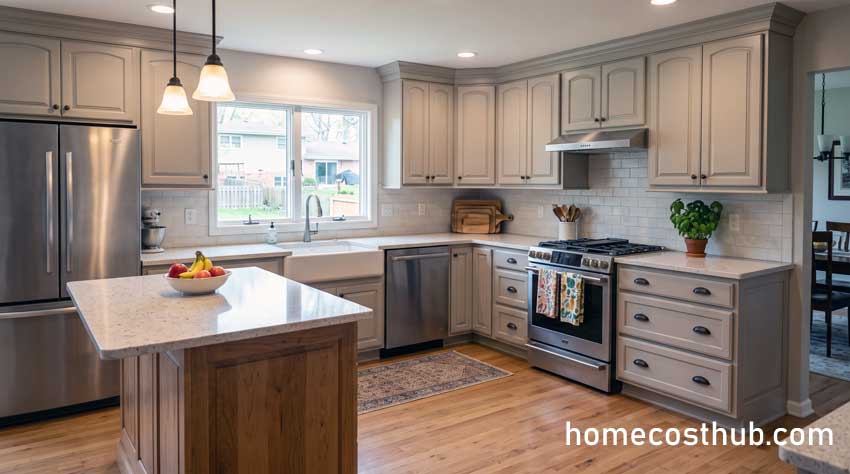
A Cabinet Refacing Calculator helps homeowners estimate the cost of updating existing kitchen cabinets without paying for a complete cabinet replacement. Refacing normally keeps structurally sound cabinet boxes while replacing doors and drawer fronts and covering exposed cabinet surfaces with new laminate, thermofoil, veneer, wood, or another finish.
This cost calculator estimates both USA cost and UK cost, displaying results in USD or GBP while allowing the project size to be entered in square feet or square meters. It considers material quality, refacing scope, existing cabinet condition, installation type, labour difficulty, removal work, and optional upgrades.
The resulting price estimate can help homeowners compare refacing with painting, repair work, or full replacement before contacting contractors or cabinet specialists.
Cabinet Refacing Calculator
Estimate kitchen cabinet refacing costs in the USA or UK based on kitchen size, refacing material, quality, project scope, cabinet condition, installation method, labour difficulty, removal, and optional upgrades.
Please enter a valid value.
USA Cabinet Refacing Estimate
$0
Kitchen Size: 0 ft²
Cost Breakdown
Materials$0
Labour$0
Installation$0
Additional$0
Removal$0
FREE PDF ESTIMATE
Get Your Cabinet Refacing Cost PDF
Enter your details below to receive your cabinet refacing estimate, selected options, and complete cost breakdown as a downloadable PDF.
✓ Your PDF is ready!
This estimate is intended for preliminary budgeting. Actual cabinet refacing costs may vary based on cabinet count, door style, veneer type, hardware, repairs, local labour rates, custom trim, accessibility, taxes, and contractor pricing.
Free Cabinet Refacing Calculator
Material / Project Types
Cabinet refacing can be completed with several different materials, each affecting appearance, durability, and material cost.
Laminate is typically one of the more affordable choices. It offers a wide range of colors and patterns and can provide a practical option for budget-conscious remodeling projects.
Thermofoil uses a vinyl surface bonded to an engineered substrate. It can provide a smooth, consistent finish and is commonly available in contemporary door styles.
Wood veneer provides the appearance of real wood while using thinner natural wood layers over the existing cabinet structure. It is often chosen for Standard and Premium refacing projects.
Solid wood doors and fronts generally cost more but can offer a substantial, traditional appearance and a broad choice of stains, finishes, and door profiles.
Also Read:
Custom or designer finishes may include specialty veneers, custom-made doors, decorative panels, premium finishes, unusual dimensions, or bespoke detailing.
Project scope also matters. Replacing only doors and drawer fronts is normally less expensive than refacing all visible cabinet surfaces. A full refacing project usually includes doors, drawer fronts, cabinet face frames, end panels, exposed sides, and matching trim. More advanced projects may also include custom molding and decorative features.
Main Factors Affecting Cost
Project size is a major factor because larger kitchens usually contain more cabinet doors, drawers, end panels, face frames, and exposed surfaces.
Material quality can significantly change the final price estimate. Budget options use economical finishes and hardware, while Premium and Luxury selections may include higher-quality veneer, solid wood fronts, upgraded hardware, detailed finishes, or custom fabrication.
Existing cabinet condition also matters. Cabinet refacing works best when the existing boxes are structurally sound. Cabinets requiring repair may need reinforcement, surface correction, replacement panels, hinge repairs, or other preparation before new finishes can be installed.
Installation difficulty affects labour cost. Straight cabinet runs are typically easier to reface than kitchens with numerous corners, integrated appliances, uneven surfaces, tall units, decorative panels, or unusual cabinet shapes.
The project type changes how much of the cabinetry is updated. Refacing only doors and drawer fronts requires less material and labour than a full project covering cabinet frames, sides, trim, and other exposed components.
Optional features such as soft-close hinges, new drawer boxes, internal organizers, decorative molding, premium hardware, and under-cabinet lighting can also raise the final cost.
Cost Breakdown
Material Cost: Material cost represents the new doors, drawer fronts, veneers, laminates, panels, adhesives, finishing materials, and related products required for refacing. Material type, quality, project size, and project scope all influence this amount.
Labour Cost: Labour cost covers measuring, preparation, fitting, trimming, surface work, door and drawer alignment, and other tasks required to complete the refacing project. Complex layouts and cabinets requiring repair can increase this expense.
Installation Cost: Installation cost represents the professional fitting of doors, drawer fronts, veneers, panels, trim, and related components. Custom installation may require more detailed cutting, fitting, adjustment, or finishing.
Additional Cost: Optional upgrades may include soft-close hinges, new drawer boxes, internal organizers, premium handles, crown molding, decorative trim, and under-cabinet lighting. The Basic, Standard, and Advanced feature levels adjust these additional allowances.
Removal Cost: Removal cost applies when old cabinet doors, drawer fronts, hardware, surface coverings, or other components must be taken off and disposed of before refacing begins. More difficult projects can require additional removal labour.
The calculator combines material cost, labour cost, installation cost, additional cost, and removal cost to create the estimated total.
Why Use This Calculator?
The Cabinet Refacing Calculator can help homeowners determine whether refacing fits their remodeling budget before contacting kitchen contractors, cabinet installers, or refacing specialists.
Refacing can be a useful alternative to complete replacement when existing cabinet boxes remain structurally sound. It can dramatically change the appearance of a kitchen without requiring all existing cabinetry to be removed. However, the final cost depends on considerably more than kitchen size alone.
Using the calculator makes it easier to compare different specifications. Homeowners can compare laminate with wood veneer or solid wood, evaluate Budget versus Premium materials, or see how custom installation and complex labour requirements affect the price estimate.
The calculator also includes commonly requested upgrades. Adding soft-close hinges, replacement drawer boxes, storage organizers, decorative molding, premium hardware, or lighting can improve functionality but increase both material cost and installation cost.
USA and UK pricing can be selected independently from the measurement system. USA calculations display dollars, while UK calculations display pounds. Users can select square feet or square meters regardless of country. When square meters are entered, the calculator converts the area internally using 1 square meter = 10.7639 square feet while displaying the original project size in square meters.
This estimate is intended as a budgeting tool rather than a guaranteed quotation, but it can help homeowners compare cabinet refacing cost, replacement cost, repair cost, and other kitchen remodeling options.
Cabinet Refacing Calculator: Estimate Your Kitchen Upgrade Cost
Quick Answer
A Cabinet Refacing Calculator estimates the cost of updating cabinet doors, drawer fronts, and visible surfaces while keeping usable cabinet boxes. Refacing usually makes the most sense when the boxes are structurally sound and the existing kitchen layout still works.
Refacing sits in a useful middle ground between repainting old cabinets and tearing out the entire kitchen. Current US cost sources show why a planning range matters: Angi reports professional cabinet resurfacing/refacing projects around $4,483–$10,586, while HomeGuide lists approximately $5,000–$13,000 for an average kitchen and $150–$450 per linear foot. Actual quotes can fall outside those ranges because cabinet count, construction, material, location, repairs, and project scope vary. Angi’s 2026 cabinet refacing cost data and HomeGuide’s cabinet refacing cost research provide useful US benchmarks rather than guaranteed prices.
Is Your Kitchen a Good Candidate for Cabinet Refacing?
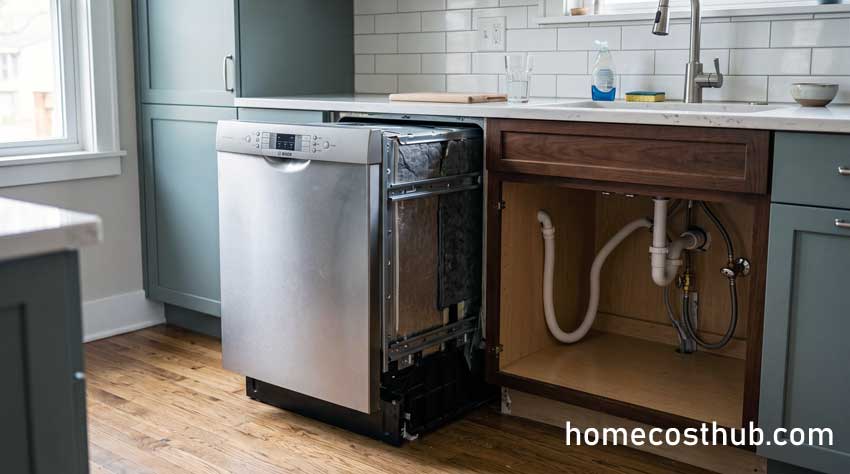
Refacing is best suited to cabinets that are structurally usable. Cosmetic wear, dated colors, scratched doors, and an old-fashioned door profile can often be addressed without removing the boxes. Swelling around a sink base, separating particleboard, badly sagging cabinet bottoms, loose structural joints, or long-term moisture damage are different problems.
A second question is just as important: does the layout work?
Cabinet refacing normally changes the appearance rather than the fundamental cabinet configuration. A homeowner who needs more drawer storage, a wider refrigerator opening, a relocated sink, or a completely different work triangle may gain more from replacement or reconfiguration than from putting premium new fronts on an inconvenient layout.
| Existing Condition | Refacing Suitability | Reason |
|---|---|---|
| Solid boxes with dated doors | Usually a good candidate | The usable structure remains while visible components can be updated. |
| Minor surface damage | Often suitable after repair | Small defects may be corrected during preparation. |
| Minor hinge or hardware issues | Often suitable | Hardware can usually be repaired or replaced separately. |
| Swollen sink-base panels | Needs closer inspection | Moisture damage may extend beyond the visible surface. |
| Badly warped or failing boxes | Usually poor candidate | A new surface does not restore structural integrity. |
| Poor kitchen layout | Replacement may be better | Refacing leaves most cabinet locations unchanged. |
| Need substantially more storage | Compare replacement options | New doors cannot create significant additional cabinet volume. |
This Old House describes refacing as replacing doors and drawer fronts while applying new veneer to the existing framework, which is why the quality of that framework matters before work begins. This Old House’s cabinet refacing process also rates the DIY work as a moderate-skill project rather than a simple cosmetic swap.
Expert Tip
Inspect the sink cabinet, dishwasher-adjacent units, cabinet bottoms, hinge fixing points, and exposed end panels before committing to new doors. Moisture-related swelling in those areas can change a seemingly straightforward refacing project into a repair or replacement decision.
How to Interpret Your Cabinet Refacing Calculator Estimate
A Cabinet Refacing Calculator should be read as a planning range, not as a promise that a contractor will complete the work for the midpoint shown on screen.
Suppose the calculator produces an illustrative range of $6,800–$9,200. A contractor then quotes $9,750. That quote is not automatically overpriced. The contractor may have included custom door sizes, additional exposed island panels, repairs, disposal, premium hinges, local labor rates, or taxes that were not fully represented in the initial inputs.
The reverse can happen as well. A quote below the planning range may use a narrower scope. Perhaps it replaces the doors but does not veneer the cabinet frames, replace drawer fronts, update side panels, or supply hardware.
The most useful question is not:
“Is this quote higher than my Cabinet Refacing Calculator result?”
It is:
“Are the calculator estimate and contractor quote pricing the same work?”
Quick Answer
Estimated Refacing Cost = Doors + Drawer Fronts + Surface Refacing + Hardware + Labor + Repairs + Optional Upgrades.
Contractors may price the job differently, so this formula is a budgeting framework rather than a mandatory trade-pricing method.
Also Read:
For US context, Angi’s August 2026 cost data puts professional cabinet resurfacing at roughly $4,483–$10,586, driven by materials, kitchen size, and labor rates. HomeGuide uses a wider $5,000–$13,000 average range. The difference between reputable sources is itself a useful reminder that national figures should not be treated as a local quote.
Cabinet Refacing Cost per Linear Foot vs. Cost per Door
US cabinet-refacing prices are often described per linear foot. HomeGuide currently cites an average range of about $150–$450 per linear foot, with material-specific figures ranging from lower-cost laminate or thermofoil to much higher solid-wood work.
Linear footage is convenient, but it can hide important differences.
Imagine two 12-foot cabinet runs. The first contains several wide doors and few drawers. The second has narrow door pairs, stacks of drawer fronts, a tall pantry cabinet, exposed island panels, and decorative end pieces. Both may look similar on a tape measure, yet the second project requires more individual components, alignment work, hardware, and finishing.
A detailed Cabinet Refacing Calculator therefore becomes more useful when cabinet length is interpreted alongside door count, drawer fronts, tall units, panels, and project complexity.
| Measurement Method | Best Used For | Main Limitation |
|---|---|---|
| Linear feet | Early US budgeting and comparing cabinet runs | May hide differences in door, drawer, and panel count |
| Door count | Replacement-door budgeting | Does not capture all cabinet-frame or side-panel work |
| Door + drawer-front count | More detailed component estimates | Still needs allowances for veneer, panels, trim, and labor |
| Full itemized scope | Comparing contractor quotes | Requires more measurements and project detail |
UK homeowners commonly encounter a different pricing model. Checkatrade’s replacement-door guide gives example costs by individual door and drawer set, then separately identifies hinges, handles, fitter labor, plinths, cornices, pelmets, and end panels. That approach fits the UK search intent for replacement kitchen doors better than forcing everything into an American linear-foot model. Checkatrade’s UK replacement kitchen door cost guide lists ballpark per-door and whole-project figures and explicitly warns homeowners to check cabinet condition before fitting new fronts.
Cabinet Refacing vs. Refinishing vs. Painting vs. Replacement
A Cabinet Refacing Calculator answers one cost question, but the larger decision is which renovation method matches the actual problem.
| Option | What Changes | Best For | Relative Cost | Layout Changes? | Main Limitation |
|---|---|---|---|---|---|
| Painting | Color/paint coating on existing visible components | Sound cabinets needing a color update | Lower | No | Existing door style remains |
| Refinishing | Existing finish is stripped, sanded, stained, or recoated as appropriate | Suitable existing wood or finishable surfaces worth preserving | Low to moderate | No | Cannot replace an unwanted door profile |
| Refacing | New doors/drawer fronts plus treatment of visible cabinet surfaces | Sound boxes and a workable layout with dated fronts | Moderate to high | Usually no | Internal configuration remains largely unchanged |
| Replacement | Cabinet boxes, fronts, and potentially the layout | Damaged cabinets or significant layout/storage changes | Highly variable | Yes | More demolition and project dependencies |
Angi’s July 2026 refinishing data places professional refinishing around $1,993–$4,495 and separately lists refacing at roughly $4,300–$10,000. Those figures help illustrate why refinishing and refacing should not be treated as interchangeable terms. Angi’s cabinet refinishing cost comparison distinguishes stripping, sanding, painting, or staining from the more component-intensive refacing process.
When Refacing Usually Makes Financial Sense
Refacing becomes particularly logical when the cabinet boxes are solid, the layout is already functional, and the homeowner wants a substantially different door style rather than a new color alone.
A kitchen with sound plywood boxes, acceptable storage, and a countertop worth keeping is a stronger refacing candidate than a kitchen with sagging particleboard and an awkward appliance layout.
This distinction can save money in either direction. Refacing viable cabinets can avoid unnecessary demolition, while refusing to reface failing cabinets can prevent spending thousands of dollars on attractive doors attached to a poor structure.
When Full Replacement Deserves a Quote
Get a comparable replacement quote if:
- The cabinet boxes have significant water or structural damage.
- The refrigerator, range, sink, or dishwasher layout needs to move.
- The kitchen lacks enough useful storage.
- New appliances require materially different cabinet openings.
- Several boxes already require major rebuilding.
- The refacing specification has become heavily customized.
- A high refacing quote appears close to a viable replacement option with equivalent installation and finishing scope.
Do not use a universal percentage rule such as “replace whenever refacing reaches 50% of new cabinets.” Cabinet quality, countertop implications, removal, labor, trim, installation, and project disruption can make that comparison misleading.
Cabinet Refacing in the US vs. Replacement Kitchen Doors in the UK
The phrase Cabinet Refacing Calculator aligns naturally with US remodeling terminology. UK homeowners may search for replacement kitchen doors, kitchen cupboard door replacement, or new kitchen unit doors while considering a closely related project.
The scopes are not automatically identical.
In a typical US description, cabinet refacing often includes replacement doors and drawer fronts plus veneer, laminate, or another matching treatment over visible face frames and sides. This Old House describes refacing as applying veneer to existing face frames and sides, usually alongside new doors.
A UK replacement-door quote may be narrower, concentrating on the new doors, drawer fronts, hinges, handles, and matching pieces. Checkatrade separately identifies extras such as plinths, cornices, pelmets, and end panels.
| Project Element | Typical US Refacing Scope | Typical UK Door-Replacement Scope |
|---|---|---|
| Cabinet doors | Usually replaced | Usually replaced |
| Drawer fronts | Usually included in full refacing | May be priced separately |
| Face frames | Commonly veneered or resurfaced | Not always part of door-only work |
| Exposed end panels | Often matched to new finish | Often an additional item |
| Toe kicks / plinths | May be included or optional | Often specified separately |
| Crown molding / cornices | Optional or project-specific | Often a separate matching component |
| Handles and hinges | Can be included or upgraded | Often itemized |
| Internal cabinet boxes | Normally retained | Normally retained in door-only projects |
For UK homeowners using the Cabinet Refacing Calculator, compare the calculator scope with the fitter’s written specification rather than assuming “new doors” means every visible cabinet surface will match.
DIY Cabinet Refacing vs. Professional Installation
DIY refacing can reduce labor spending, but the job becomes less forgiving once veneer, new hinge positions, custom panels, or precise door alignment enter the scope.
This Old House estimates a DIY cabinet-refacing project at roughly $1,000–$5,000 and rates the skill level as moderate, with the process involving removal, surface preparation, veneer work, and refitting.
| Approach | Pros | Cons |
|---|---|---|
| DIY | Lower labor expense; control over schedule; practical for experienced homeowners | Measurement errors can waste custom doors; veneer trimming is unforgiving; alignment may take significant time |
| Professional installation | More precise fitting; experienced veneer application; easier handling of custom panels and irregular cabinets | Higher labor expense; contractor availability may affect scheduling |
Reasonable DIY tasks can include removing and labeling doors, changing pulls, replacing compatible hinges, and fitting correctly pre-sized fronts when the homeowner has the necessary skills.
Professional value becomes more obvious with hinge boring, veneer application, trimming edges, aligning multiple door runs, custom end panels, unusual cabinet dimensions, and high-value finishes.
If the project expands into outlets, hardwired lighting, or electrical alterations, use appropriately qualified trades and follow applicable local regulations. Broader electrical budgeting can be reviewed with the Kitchen Electrical Upgrade Calculator.
For homeowners comparing a self-managed renovation with hired trades, the DIY Kitchen Remodel Calculator provides a broader project-level budgeting perspective.
Hidden Costs That Can Change a Cabinet Refacing Quote
Cabinet repairs. Loose hinge points, deteriorated sink-base floors, damaged end panels, and weak shelves may need correction before cosmetic work begins.
Non-standard doors. Tall pantry doors, unusual widths, appliance panels, and bespoke sizes can cost more than standard replacement fronts.
Exposed island surfaces. An island may add several finished sides even when its cabinet count is modest. Homeowners planning larger changes can compare that scope with the Kitchen Island Cost Calculator.
Hinge conversion. New doors may require different boring or fixing arrangements. This matters particularly when the original cabinets use older or unusual hardware.
Matching components. End panels, fillers, toe kicks, plinths, cornices, pelmets, and molding can be necessary to make the kitchen look intentionally refaced rather than partly updated.
Drawer boxes. Replacing a drawer front is not the same as replacing the drawer box and slides. Worn drawer hardware can turn a cosmetic upgrade into a functional repair.
Backsplash or countertop interfaces. Existing surfaces may conceal cabinet edges or damage that only becomes clear after parts are removed.
Taxes and VAT. Check whether a contractor’s quoted amount includes applicable taxes. UK estimates should clearly state VAT treatment.
Removal and disposal. Some quotes include old doors and debris removal; others do not.
This is where itemization matters more than chasing a single low headline number.
Real-World Case Study: Refacing a Structurally Sound Kitchen
Illustrative Case Study
Consider a mid-size US kitchen with sound cabinet boxes, an acceptable layout, dated raised-panel doors, 18 doors, 7 drawer fronts, two exposed end panels, and a small island.
The homeowner wants Shaker-style fronts, a new matching veneer on exposed surfaces, soft-close hinges, and new pulls. The sink-base cabinet has minor surface deterioration but no widespread swelling or structural failure.
The Cabinet Refacing Calculator returns an illustrative planning range of $7,200–$9,600. These figures are an example, not a national average or verified contractor bid.
A contractor’s quote of $9,150 could be reasonable if it includes:
- All 18 doors and 7 drawer fronts
- Matching surface veneer
- Both exposed end panels
- Soft-close hinges
- New pulls
- Minor sink-base repair
- Removal of old doors
- Installation and alignment
A $7,400 quote could actually be more expensive on a like-for-like basis if it excludes hardware, repairs, end panels, disposal, or sales tax.
Now change one condition: suppose inspection reveals extensive swelling across the sink cabinet and neighboring dishwasher unit. The homeowner should no longer treat the original Cabinet Refacing Calculator result as the only decision point. Replacement and repair quotes deserve consideration because the retained structure is no longer clearly sound.
Lesson: the calculator helps establish a budget. Cabinet condition and written project scope determine whether the estimate describes the job you should actually undertake.
Also Read:
Cabinet Refacing Decision Tree
1. Are the cabinet boxes structurally sound?
No → Obtain repair and replacement quotes before spending on new fronts.
Yes → Continue.
2. Does the current kitchen layout work?
No → Consider cabinet replacement or reconfiguration. If the kitchen footprint itself is too restrictive, the Kitchen Extension Calculator can help place cabinet spending within the wider project budget.
Yes → Continue.
3. Is the main goal a new appearance?
No → Identify the functional problem first. Refacing will not create a fundamentally different layout.
Yes → Continue.
4. Do you want new doors or a substantially different door profile?
Yes → Refacing is likely closer to the required scope.
No → Painting or refinishing may achieve the desired result for less.
5. Does the refacing quote still make sense against equivalent replacement quotes?
Yes → Refacing may be the stronger value if the existing boxes and layout are worth keeping.
No → Compare full scopes before deciding. Include removal, installation, hardware, panels, fillers, trim, countertop implications, and any plumbing or electrical changes.
Pros and Cons of Cabinet Refacing
| Pros | Cons |
|---|---|
| Retains viable cabinet boxes instead of discarding them | Does not correct a fundamentally poor layout |
| Provides new doors and a different visible finish | Cannot restore severely damaged cabinet boxes |
| Usually involves less demolition than full replacement | Premium materials and custom doors can become expensive |
| May allow existing countertops to remain | Internal cabinet dimensions generally remain the same |
| Can be completed faster than a full cabinet redesign in many cases | Complex veneer and panel work still requires substantial labor |
| Works well when storage and layout already suit the homeowner | New fronts can expose weaknesses in old hinges, drawers, or boxes |
A Cabinet Refacing Calculator is most useful when these pros and cons are considered alongside the estimate rather than after a contractor has already been selected.
Common Cabinet Refacing Mistakes
1. Measuring Only the Kitchen Floor Area
Floor area can help categorize a kitchen as small or large, but it does not tell you how many doors, drawers, tall units, panels, or cabinet runs require work. Two kitchens with identical floor area can have very different refacing scopes.
2. Ignoring Door and Drawer Counts
Component count affects fabrication, hardware, installation, and alignment. Add these details to the Cabinet Refacing Calculator whenever available.
3. Treating New Doors as Full Refacing
A door-only project may leave face frames, side panels, toe kicks, and trim unchanged. Full refacing generally addresses more visible surfaces.
4. Confusing Refacing With Refinishing
Refinishing works with existing components and finishes. Refacing typically replaces fronts and changes visible surface materials.
5. Refacing Structurally Damaged Cabinets
New veneer cannot make swollen particleboard or failing joints structurally reliable.
6. Forgetting Exposed Ends
Cabinet ends beside a refrigerator, doorway, island, or peninsula can become visually obvious after new doors are installed.
7. Leaving Hardware Out of the Quote
Hinges, pulls, knobs, slides, and soft-close upgrades can add meaningful cost across a kitchen with many openings.
8. Expecting Refacing to Fix the Layout
New fronts cannot move a sink cabinet, widen an appliance opening, or add a new cabinet run.
9. Comparing Quotes With Different Scopes
The cheapest total is not necessarily the cheapest equivalent job.
10. Ordering Doors Before Checking Hinge Compatibility
Incorrect boring or hinge positioning can turn otherwise correct door measurements into an installation problem.
11. Missing Moisture Damage
Inspect around the sink, dishwasher, plumbing penetrations, and cabinet bottoms before committing to cosmetic upgrades.
12. Choosing Material by Price Alone
Finish, repairability, heat exposure, moisture resistance, cleaning needs, and desired appearance belong in the decision alongside cost.
Myth vs. Fact: Cabinet Refacing
Fact
Refacing typically replaces doors and drawer fronts and covers visible cabinet surfaces, while painting changes the coating on existing components.
Fact
Refacing normally keeps the cabinet boxes in their existing locations, so major layout changes usually require cabinet replacement or reconfiguration.
Fact
Cabinet boxes should be structurally suitable. Severe water damage, failed joints, major swelling, or badly deteriorated materials can make replacement a better choice.
Fact
There is no universal percentage. Material quality, labor, cabinet condition, custom fronts, trim, removal, and the specification of the replacement alternative all affect the comparison.
Fact
Door replacement can be a narrower project. Full refacing may also include drawer fronts, face frames, exposed sides, end panels, toe kicks, and matching trim.
Fact
A full DIY refacing job can involve precise measurements, new doors, hinge work, surface preparation, veneer application, trimming, and alignment.
Cabinet Refacing Quote Checklist
Cabinet Refacing Quote Checklist
- Confirm exactly which cabinet surfaces are being refaced.
- Count every cabinet door and drawer front.
- Identify exposed end panels and island panels.
- Confirm the construction and finish of the new doors.
- Confirm which veneer, laminate, thermofoil, or matching surface material is included.
- Check the existing hinge type and new-door compatibility.
- Confirm whether soft-close hinges are included.
- Confirm handles, knobs, or pulls and whether installation is included.
- List cabinet repairs separately from cosmetic refacing.
- Ask whether removal and disposal of old fronts are included.
- Ask how custom or non-standard door sizes are priced.
- Confirm crown molding, cornices, pelmets, plinths, toe kicks, fillers, and end panels.
- Check whether applicable sales tax or VAT is included.
- Compare warranty terms and what they cover.
- Compare two or three quotes using the same written scope where practical.
For wider labor budgeting beyond cabinet installation, the Kitchen Labor Cost Calculator can help separate the cabinetry decision from other kitchen trades.
How to Compare a Refacing Quote With Full Cabinet Replacement
A fair comparison requires more than putting the Cabinet Refacing Calculator result beside an advertised cabinet price.
A replacement-cabinet advertisement may quote cabinet boxes without demolition, fitting, fillers, trim, handles, disposal, countertop work, plumbing changes, electrical work, wall repair, or finishing.
Compare equivalent project scopes instead.
| Cost Item | Refacing Quote | Replacement Quote | Verify |
|---|---|---|---|
| Cabinet boxes | Existing boxes retained | New boxes supplied | Quality and construction |
| Doors | New | New | Material and style |
| Drawer fronts | New where included | New | Count and specification |
| Visible side panels | Veneered/replaced as scoped | New panels | Number and finish |
| Hardware | Existing or upgraded | Varies | Hinges, slides, pulls |
| Removal | Doors/fronts and related materials | Whole cabinet system | Labor and disposal |
| Installation | Refacing labor | Cabinet fitting labor | Included or separate? |
| Countertop impact | May remain undisturbed | May require removal/rework | Confirm before comparison |
| Plumbing/electrical | Usually limited if layout stays | May increase if layout changes | Include required trades |
| Tax/VAT | Confirm | Confirm | Compare final totals |
This is a like-for-like scope: the two options are compared at a point where the homeowner understands what each total actually delivers.
A homeowner considering broader renovation work can also review the Kitchen Remodeling resources rather than treating cabinet work as an isolated expense.
Frequently Asked Questions
How much does it cost to reface kitchen cabinets?
Current US sources vary. Angi’s August 2026 data places professional cabinet resurfacing around $4,483–$10,586, while HomeGuide lists about $5,000–$13,000 for an average kitchen. Your actual cost can vary with cabinet quantity, material, door style, labor rates, repairs, hardware, and custom work.
How does a Cabinet Refacing Calculator work?
A Cabinet Refacing Calculator combines project size and selected specifications—such as material quality, cabinet condition, installation type, labor difficulty, removal, and upgrades—to create a planning estimate. The result should be compared with itemized local quotes rather than treated as a guaranteed contractor price.
How much does cabinet refacing cost per linear foot?
HomeGuide currently gives an average US cabinet-refacing range of approximately $150–$450 per linear foot, although material-specific pricing can extend below or above that band. Linear-foot figures are useful for early planning but should be interpreted with door, drawer, and exposed-panel counts.
How much does cabinet refacing cost per door?
There is no reliable universal per-door figure for complete refacing because a full project can include veneer, drawer fronts, face frames, hardware, panels, and labor beyond the doors themselves. Angi currently lists individual replacement doors around $30–$100 before associated hardware and tools in its refacing overview.
Is it cheaper to reface or replace cabinets?
Refacing can cost less when sound cabinet boxes and the existing layout are retained, but it is not automatically cheaper in every project. Custom doors, premium veneer, major repairs, and complex panels can narrow the difference. Compare equivalent installed scopes rather than a refacing quote with the advertised purchase price of replacement boxes.
Is cabinet refacing worth the money?
Refacing is easier to justify when the cabinet boxes remain structurally sound, storage is adequate, the layout works, and the main goal is a different appearance. It becomes less attractive when the project also needs major box repairs, appliance reconfiguration, additional storage, or a new kitchen layout.
Also Read:
What is included in cabinet refacing?
A typical full refacing project can replace cabinet doors and drawer fronts while covering visible cabinet frames and sides with veneer or another matching surface. Hardware and decorative trim may be included or priced separately. Always confirm the written contractor scope.
What is the difference between cabinet refacing and refinishing?
Refacing typically introduces new doors and drawer fronts and covers visible cabinet surfaces. Refinishing works with the existing components by stripping, sanding, staining, painting, or otherwise renewing the finish where the material allows. Angi’s current cost guide also treats the two as separate project types.
Is cabinet refacing the same as painting?
No. Painting changes the surface color of existing cabinet components. Refacing normally replaces doors and drawer fronts and can apply veneer, laminate, or another finish to cabinet frames and exposed surfaces.
Can all kitchen cabinets be refaced?
No. Refacing relies on retaining the cabinet boxes, so boxes with serious water damage, swelling, structural failure, severe warping, or poor fixing points may need repair or replacement. Cabinet condition should be checked before ordering custom doors.
Can water-damaged cabinets be refaced?
Minor localized damage may sometimes be repairable before refacing, but widespread swelling or deterioration can make a cabinet unsuitable. Surface veneer should not be used to conceal a structural moisture problem.
How long does cabinet refacing take?
Project duration varies with cabinet count, preparation, repairs, material, and installer workflow. This Old House describes DIY work as potentially taking up to about one hour per cabinet, while professional projects may progress faster because measuring, surface preparation, and fitting are handled systematically.
How long do refaced cabinets last?
There is no single lifespan that applies to every refaced kitchen. Durability depends on the condition of the retained boxes, surface material, adhesives and installation quality, moisture exposure, hardware, cleaning, and daily use.
Can I reface kitchen cabinets myself?
Yes, if the scope matches your skill level. This Old House rates DIY cabinet refacing as a moderate-skill job and estimates approximately $1,000–$5,000 for DIY materials/project costs. Accurate measuring, veneer trimming, hinge work, and door alignment require care.
Why can cabinet refacing quotes be almost as expensive as new cabinets?
A premium refacing quote may include custom doors, veneer, labor-intensive preparation, new hinges, drawer fronts, end panels, molding, repairs, and installation. A low advertised price for new cabinets may exclude installation, demolition, fillers, trim, hardware, disposal, and related remodeling work. Compare complete scopes.
Is it better to reface cabinets or install stock cabinets?
Stock replacement cabinets can be worth pricing if the existing boxes are damaged or the layout needs changing. Refacing may be preferable when the current cabinet boxes are better built than inexpensive replacements and the existing layout already works.
Can I keep my countertops when refacing cabinets?
Often, yes, because the existing cabinet boxes remain in place. The countertop should still be inspected for attachment details and condition. Any cabinet repair that affects box height, alignment, or structure may complicate countertop retention.
Does cabinet refacing include new doors?
Full refacing commonly includes new cabinet doors and drawer fronts. This Old House describes door replacement and new veneer over the existing cabinet framework as core parts of the refacing process.
Does cabinet refacing include hinges and hardware?
It can, but not every contractor includes them in the base price. Confirm hinges, soft-close upgrades, handles, knobs, drawer pulls, slides, and installation separately in the quote.
How much does it cost to replace kitchen cupboard doors in the UK?
Checkatrade’s UK guide currently cites ballpark replacement-door costs of around £131.10–£258.90 per door and approximately £1,300–£2,250 for a whole-kitchen door replacement, based on its stated assumptions. It also lists fitter labor and matching pieces separately, so use these as planning figures rather than fixed national prices.
Can I replace kitchen doors without replacing the cabinet units?
Yes, provided the cabinet carcasses are sound and compatible with the new fronts. Checkatrade specifically identifies replacement doors as a way to update existing kitchen units and recommends checking for damp or cabinet damage before ordering.
Use Your Estimate to Make a Better Refacing Decision
The best use of a Cabinet Refacing Calculator is not finding one precise number. It is establishing a realistic planning range, seeing which choices move the budget, and making contractor quotes easier to evaluate.
A sound cabinet box with a useful layout can make refacing a practical middle option between a surface-only update and complete replacement. A failing cabinet structure or frustrating layout changes the calculation, even when the initial refacing estimate looks attractive.
Before signing a contract, compare the same doors, drawer fronts, visible surfaces, panels, hardware, repairs, disposal, labor, taxes, and finishing requirements across competing quotes. If cabinet work is part of a larger renovation, review it within your broader Kitchen Remodeling budget rather than as an isolated line item.
Planning Summary
Use the Cabinet Refacing Calculator as a budgeting range. Refacing is strongest when cabinet boxes are sound and the layout still works. Replacement deserves closer consideration when the structure is failing, storage is inadequate, or major layout changes are planned. Compare contractor quotes using the same written scope before deciding.
About the Author
Arden Cole Linscott (Expert — Residential Construction & Remodeling Cost Analysis) writes about residential construction, renovation budgeting, project scope, and remodeling cost analysis for homeowners comparing realistic project options. His focus is on translating construction variables, labor requirements, material choices, and contractor pricing into practical planning guidance.
Scroll to bottom
Remodeling Cost Calculators