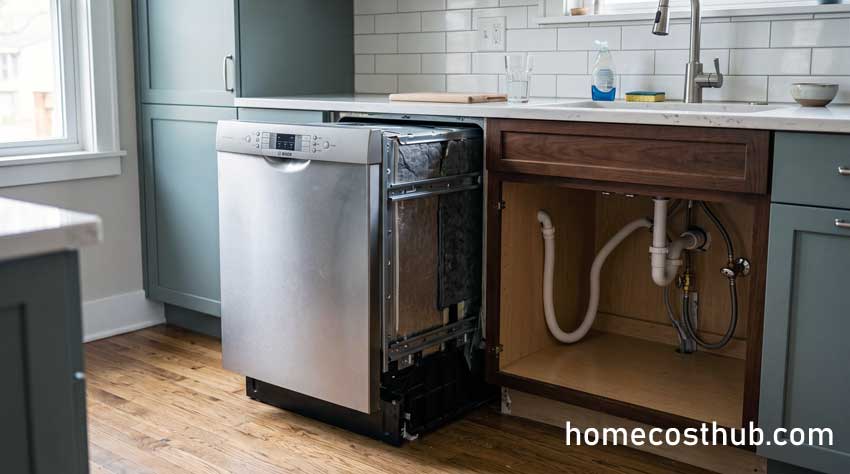
Countertop Replacement Calculator

Countertop Replacement Calculator Cost Guide
A Countertop Replacement Calculator helps homeowners estimate the potential cost of replacing kitchen work surfaces before requesting detailed quotations from countertop fabricators or remodeling contractors.
Countertop replacement cost can vary significantly depending on surface area, material, quality, fabrication requirements, existing condition, installation complexity, removal work, and optional features such as sink cutouts or waterfall edges.
This cost calculator supports both USA cost and UK cost estimates, displaying results in USD or GBP while allowing users to enter countertop area in square feet or square meters.
By separating material cost, labour cost, installation cost, additional features, and removal expenses, the calculator provides a practical price estimate for laminate, wood, solid surface, quartz, granite, marble, and other countertop replacement projects.
Countertop Replacement Calculator
Estimate countertop replacement costs in the USA or UK based on project size, countertop material, quality, project scope, existing condition, installation complexity, labour difficulty, removal, and optional upgrades.
Please enter a valid value.
USA Countertop Replacement Estimate
$0
Countertop Size: 0 ft²
Cost Breakdown
Materials$0
Labour$0
Installation$0
Additional$0
Removal$0
FREE PDF ESTIMATE
Get Your Countertop Replacement Cost PDF
Enter your details below to receive your countertop replacement estimate, selected options, and complete cost breakdown as a downloadable PDF.
✓ Your PDF is ready!
This estimate is intended for preliminary budgeting. Actual countertop replacement costs may vary based on slab selection, thickness, fabrication, seams, edge details, cutouts, site access, cabinet condition, local labour rates, plumbing work, taxes, and contractor pricing.
Free Countertop Replacement Calculator
Material / Project Types
Countertop materials vary widely in price, appearance, durability, maintenance requirements, and installation complexity.
Laminate countertops are typically among the most economical options. They are available in many colors and patterns and can provide a practical surface for homeowners working with a Budget specification.
Butcher block and wood countertops offer a warmer natural appearance. Material cost can vary depending on timber species, thickness, construction quality, and finishing requirements.
Solid surface countertops provide a smooth manufactured surface that can often be shaped and joined with relatively discreet seams. They commonly fall between laminate and premium stone products in overall cost.
Also Read:
Quartz countertops are engineered stone surfaces made using mineral aggregates and resin. They are popular because of their consistent appearance, durability, and wide range of styles.
Granite countertops are natural stone products. Individual slabs vary in pattern and quality, while fabrication, edge profiles, cutouts, and installation can all affect the final price.
Marble and premium natural stone generally sit toward the higher end of the market. Premium slab selection, veining, specialist fabrication, and careful installation can significantly increase material cost and labour cost.
Project scope also matters. Replacing a single counter section generally costs less than replacing every countertop in the kitchen. Projects involving layout changes may require additional fabrication, cabinet adjustments, plumbing changes, or new support structures.
Main Factors Affecting Cost
Countertop size is one of the primary factors affecting replacement cost because most countertop materials are priced according to surface area. Larger kitchens require more material, additional fabrication, and potentially more seams or slab sections.
Material quality can create substantial differences in the final estimate. Budget selections generally use entry-level colors, patterns, or thicknesses, while Premium and Luxury products may include designer slabs, uncommon colors, larger formats, specialty finishes, or thicker profiles.
Existing condition also affects cost. A new installation over properly prepared cabinets can be easier than replacing an existing countertop. Replacement projects may involve demolition, adhesive removal, sink disconnection, plumbing work, or repairs to cabinets and walls.
Installation type is particularly important with stone surfaces. Straightforward countertop runs generally cost less than complex installations involving unusual shapes, multiple seams, large islands, waterfall ends, detailed edge profiles, or difficult access.
Labour difficulty also affects the price estimate. Heavy stone, stairs, narrow access, complex templates, out-of-square walls, integrated features, and on-site modifications can increase labour requirements.
Optional features can further raise the total. Sink cutouts, cooktop cutouts, matching backsplashes, waterfall edges, premium edge profiles, and plumbing reconnection all require additional fabrication, materials, or professional labour.
Cost Breakdown
Material Cost: Material cost represents the estimated countertop surface material required for the project. It changes according to countertop area, material type, quality level, project scope, and existing condition.
Labour Cost: Labour cost covers measuring, handling, fabrication-related work, preparation, fitting assistance, adjustments, and other professional work required to complete the project. More complex installations increase labour requirements.
Installation Cost: Installation cost represents the expense of fitting and securing the countertop. Basic installations usually involve straightforward layouts, while custom or complex installation can include difficult seams, unusual shapes, oversized slabs, specialty supports, or intricate finishing.
Additional Cost: Additional expenses may include sink and cooktop cutouts, matching backsplash material, waterfall edges, premium edge profiles, or sink and plumbing reconnection. The Basic, Standard, and Advanced feature levels adjust these allowances.
Removal Cost: Removal cost applies when an existing countertop must be taken out before the new surface can be installed. Heavy granite, marble, or other stone materials may require additional labour and disposal effort compared with lighter surfaces.
The calculator combines material cost, labour cost, installation cost, additional cost, and removal cost to produce the estimated total project price.
Why Use This Calculator?
The Countertop Replacement Calculator can help homeowners establish a preliminary remodeling budget before contacting countertop suppliers, fabricators, installers, plumbers, or kitchen contractors.
It allows different options to be compared quickly. Homeowners can compare laminate with quartz or granite, test Budget versus Premium materials, or evaluate how a custom installation changes the estimated total.
The calculator can also highlight expenses that are sometimes missed during early planning. Countertop replacement is not limited to purchasing a slab. Professional projects may require templating, fabrication, edge finishing, sink and cooktop openings, transportation, removal of the old surface, plumbing disconnection, installation, seam work, and final adjustments.
USA and UK pricing are handled independently of the measurement system. Selecting USA displays costs in dollars, while selecting UK displays costs in pounds. Users may choose either square feet or square meters regardless of the selected country. When square meters are entered, the calculator converts the area internally using 1 square meter = 10.7639 square feet while continuing to display the original project size in square meters.
The result is intended as a planning estimate rather than a guaranteed contractor quotation, but it provides a useful starting point for comparing countertop replacement cost, repair cost, installation cost, and different material choices.
Countertop Replacement Calculator for Removal, Material & Installation Costs
Quick Answer
A Countertop Replacement Calculator estimates more than the price of the new surface. A realistic replacement budget should account for countertop area, material, removal, fabrication, installation, sink or cooktop cutouts, edge details, and any plumbing or preparation work.
What Should a Countertop Replacement Quote Actually Include?
Once you have a preliminary estimate from the Countertop Replacement Calculator, the next step is comparing that estimate with real quotations. This is where headline prices can become misleading.
Two fabricators may quote the same quartz color for the same kitchen yet arrive at noticeably different totals. One quotation may include templating, delivery, an eased edge, old-countertop removal, sink fabrication, and installation. Another may list only the fabricated stone and fitting, leaving plumbing, disposal, or specialty cuts as extras.
A useful quotation should make the project scope easy to understand.
| Quote Item | Why It Matters | Question to Ask |
|---|---|---|
| Material or slab allowance | Confirms what surface, grade, thickness, and quantity are priced | Is the exact material and slab quantity included? |
| Templating | Creates final fabrication dimensions after cabinets are ready | Is professional templating included? |
| Fabrication | Covers cutting, polishing, seams, openings, and edge work | Which fabrication items are included? |
| Sink and appliance cutouts | Undermount sinks, cooktops, and hobs require precise fabrication | How many openings are included in the price? |
| Edge profile | Decorative or built-up edges can change fabrication cost | Is the quoted edge standard or an upgrade? |
| Removal and disposal | The old countertop must usually be detached, carried out, and discarded | Does the quote include both removal and disposal? |
| Delivery and installation | Large slabs may need specialist handling | Are delivery, fitting, seams, and final adjustments included? |
| Plumbing coordination | Sinks, faucets, taps, and disposals may need disconnecting and reconnecting | Who is responsible for the plumber? |
| Taxes or VAT | Affects the amount actually payable | Is tax or VAT included in the stated total? |
The Checkatrade kitchen worktop replacement cost guide similarly recommends an itemized quotation and identifies supply, measuring, cutting, sink and hob openings, finishing, labor, fixings, and sealants among typical UK quote components. It also warns that waste removal may be separate.
Expert Tip
Do not compare countertop quotations by total price alone. Compare scope against scope. A slightly higher quotation may be better value if it already includes removal, disposal, templating, cutouts, delivery, and fitting that appear as extras elsewhere.
Cost to Replace Countertops by Kitchen Size
Kitchen size is useful for early planning, but surface area alone does not determine the final countertop replacement cost. A compact kitchen with an undermount sink, several corners, premium edging, and difficult access can cost more per square foot than a larger kitchen with two simple straight runs.
For US projects, current consumer cost benchmarks illustrate the width of the market. Angi’s 2026 data places installed countertop pricing broadly around $40–$150 per square foot across projects, while HomeGuide shows even wider material-specific ranges—for example, laminate around $20–$80 per square foot installed and quartz around $50–$200. These are planning benchmarks rather than quotations for a specific address.
| Project Size | Typical Surface Area | Common Scope | Potential Cost Drivers |
|---|---|---|---|
| Small kitchen | About 15–25 sq. ft. / 1.4–2.3 m² | One or two short runs | Minimum charges, sink opening, delivery, slab minimum |
| Medium kitchen | About 25–40 sq. ft. / 2.3–3.7 m² | Perimeter worktops with one sink | Seams, corners, backsplash interaction, removal |
| Large kitchen | About 40–60+ sq. ft. / 3.7–5.6+ m² | Multiple runs and appliance openings | Additional material, seams, access, more fabrication |
| Kitchen plus island | Varies widely | Perimeter plus separate island slab | Large-format slab handling, overhang support, waterfall ends |
HomeGuide’s current data shows why material choice must stay separate from kitchen size: granite is listed around $80–$150 per square foot installed, quartz around $50–$200, marble around $40–$150, and laminate around $20–$80. A 30-square-foot project cannot therefore be priced responsibly by multiplying the area by one universal countertop rate.
UK worktop pricing needs its own assumptions. Checkatrade’s 2026 example prices a 5 m² quartz worktop at £850 for the worktop plus £110 per m² for labor, producing a £1,400 example before unrelated project extras. That figure is useful as a UK benchmark, not as a universal national quote.
Use the Countertop Replacement Calculator to establish the likely scale of the project, then compare the result with local itemized quotes using the same material, area, cutouts, edge treatment, removal scope, and installation assumptions.
Replacement Scenarios: What You Have vs. What You Want
The old surface matters almost as much as the new one. Replacing laminate with quartz is a different job from removing granite and fitting another heavy slab, even when both kitchens have the same countertop area.
| Replacement Scenario | Main Planning Issues | What to Check First |
|---|---|---|
| Laminate → Quartz | Templating, increased weight, sink fabrication, cabinet level | Cabinet condition and support |
| Granite → Quartz | Heavy removal, backsplash risk, sink reuse, disposal | Removal scope and existing cabinet condition |
| Laminate → Butcher Block | Cutting, sealing, moisture protection, sink detailing | Finish specification and maintenance needs |
| Existing Stone → Premium Stone | Slab handling, vein layout, seams, specialty edges | Fabrication drawings and slab selection |
Laminate to Quartz
An aging laminate top is often light enough that the cabinets beneath it have never been tested by a much heavier replacement surface. Before quartz is ordered, the cabinet boxes should be checked for level, damage, weak spans, and adequate support.
The fabrication process also changes. A simple site-cut laminate installation may become a templated stone project with factory-fabricated sink openings, polished edges, seam planning, and heavy slab handling.
Also Read:
For quartz-specific budget comparisons, the Quartz Countertop Calculator can help isolate the cost implications of that material before comparing it with the full replacement scope.
Granite to Quartz
Removing an existing granite countertop can require more labor than taking out laminate. The installer must protect cabinets while dealing with heavy pieces, adhesives, seams, sinks, and adjacent finishes.
The backsplash deserves attention before demolition starts. A tiled backsplash that meets the old counter tightly may chip during removal, or a different countertop thickness may expose a visible gap afterward.
Laminate to Butcher Block
Butcher block can be easier to handle than large stone slabs in some layouts, but the project still needs careful detailing. Sink edges, exposed end grain, seams, finishing, and moisture protection affect long-term performance.
The lowest initial installation cost is not necessarily the lowest lifetime effort. Wood surfaces may need periodic refinishing or resealing depending on product and use.
Existing Stone to Premium Natural Stone
Premium marble, quartzite, or distinctive natural-stone slabs introduce decisions that do not appear in a basic square-foot estimate. Vein direction, bookmatching, seam position, slab yield, cutout placement, and edge treatment can all change material usage and fabrication complexity.
The Natural Stone Institute installation standards specifically address issues including seam placement, sink-cutout reinforcement, overhangs, joint widths, and installation tolerances. Those technical considerations are one reason stone projects should not be treated as simple material-price calculations.
For premium marble scenarios, the Marble Countertop Calculator provides a more focused material-cost reference.
Can You Replace Countertops Without Replacing Cabinets?
Yes. Countertops can often be replaced while the existing cabinets remain, provided the cabinets are structurally sound, reasonably level, securely installed, and suitable for the weight and layout of the new surface.
A countertop-only refresh can make financial sense when cabinet boxes are still in good condition. It also avoids turning a surface replacement into a full kitchen refit.
Check the cabinets before final templating, not after the new slab has been fabricated.
Existing cabinets are more likely to remain when:
- The boxes are solid and properly fastened.
- There is no significant water damage around the sink.
- The cabinet tops are reasonably level.
- The kitchen layout is staying substantially the same.
- Supports and spans are appropriate for the selected countertop.
Further inspection is sensible when:
- Particleboard has swollen near plumbing.
- Cabinet sides or rails are cracked.
- The base units visibly sag.
- Countertop runs are seriously out of level.
- An island has a long unsupported overhang.
- The replacement material is much heavier than the existing surface.
Simple cabinet decision framework:
Cabinets sound, dry, level, and secure?
→ Yes: assess support requirements for the new surface.
→ No: repair or replace affected cabinetry before final fabrication.
Layout staying the same?
→ Yes: countertop-only replacement may be practical.
→ No: check cabinet modifications, appliance positions, plumbing, and new support needs first.
Fact
Many kitchens can receive new countertops over existing cabinets. The cabinets should first be checked for structural condition, level, moisture damage, fastening, and adequate support for the new surface.
Repair, Refinish, or Replace?
A new countertop is not automatically the right answer for every worn surface.
Repair may make sense for a localized chip, seam issue, minor scratch, or isolated defect when the rest of the surface remains serviceable.
Refinishing may suit a countertop that is structurally usable but visually tired, provided the substrate and surface type are suitable for the refinishing system being considered.
Replacement becomes more compelling when damage is widespread, the substrate has failed, water has caused major deterioration, the layout needs to change, or the homeowner wants a fundamentally different material or sink arrangement.
Repair vs. Refinish vs. Replace Decision Tree
1. Is the countertop structurally sound?
No → Investigate replacement and check the cabinets beneath it.
Yes → Continue to Step 2.
2. Is the problem mainly cosmetic?
Yes → Compare cleaning, repair, or refinishing options first.
No → Continue to Step 3.
3. Is damage limited to a small, repairable area?
Yes → Request a repair assessment.
No → Compare replacement options.
4. Are you changing material, sink type, layout, or countertop dimensions?
Yes → Replacement is generally the practical path.
No → Compare repair/refinishing cost with the remaining useful condition of the existing countertop.
Angi’s current cost guidance likewise distinguishes minor repairable damage from extensive damage or structural problems when comparing repair and replacement.
Fact
Cosmetic wear may sometimes be handled through repair or refinishing. Replacement is stronger when damage, layout changes, performance needs, or material preferences justify the larger project.
Countertop Replacement Pros and Cons
| Pros | Cons |
|---|---|
| Refreshes the kitchen without automatically replacing cabinetry | Removal and disposal add work beyond buying the new surface |
| Allows a different maintenance and durability profile | Cabinet defects may become visible after demolition |
| Can support a new sink or revised work surface | Plumbing may need separate coordination |
| Provides access to updated materials and edge options | Templated surfaces can involve fabrication lead time |
| May be more contained than a full kitchen renovation | Backsplash or wall finishes can be disturbed during removal |
A countertop-only project works best when the existing layout already functions well. If the cabinets, sink position, appliances, backsplash, flooring, and lighting are all changing together, broader Kitchen Remodeling planning may give a more realistic view of the total project.
Hidden Countertop Replacement Costs Homeowners Often Miss
The most troublesome budget surprises usually occur at the edges of the countertop scope.
Plumbing Disconnect and Reconnect
An undermount sink cannot simply remain attached while the old top disappears. The sink, faucet, drain, supply lines, and garbage disposal may need to be disconnected and later reinstalled.
If the new sink has different dimensions, the drain or supply arrangement may also need adjustment.
Backsplash and Wall Repair
Old countertops may be bonded or caulked against tile, plaster, drywall, or an upstand. Removal can expose unfinished areas or damage adjacent finishes.
This does not mean backsplash replacement is inevitable. It does mean the quote should state who is responsible if repair becomes necessary.
Cabinet Leveling or Reinforcement
Stone and engineered surfaces rely on a suitable base. A visibly uneven cabinet run may need correction before final installation.
HomeAdvisor’s current cost data specifically identifies cabinet leveling, support for heavy countertops, backsplash work, and plumbing or electrical alterations among services that can increase project cost.
Additional Seams
A layout that appears simple on paper may require an extra seam because of slab dimensions, access, grain or vein direction, appliance openings, or handling limitations.
Access and Handling
Large islands can create logistical problems before installation even begins. Narrow doors, stairs, elevators, tight turns, limited parking, or oversized slabs may require additional labor or a different slab strategy.
Tax and VAT
A quote that excludes applicable tax can look cheaper than one showing the final payable amount. UK homeowners should check VAT treatment; US homeowners should check whether sales tax is included where applicable.
Checkatrade also flags waste removal and specialist work around ovens or hobs as possible UK extras, particularly where qualified trades are required.
Fact
The material is only one part of the project. Templating, fabrication, edges, cutouts, removal, disposal, delivery, installation, plumbing, and preparation can all affect the final amount.
Why Small Countertop Jobs Can Still Cost More Than Expected
Small area does not always mean a proportionally small bill.
Fabricators and installers still need to perform tasks that exist regardless of project size: scheduling a template visit, programming fabrication, cutting and polishing edges, preparing sink openings, loading the finished piece, transporting it, and sending an installation crew.
Angi notes that installers may use minimum charges for smaller jobs, which can make the cost per square foot higher than on a larger project.
A small stone project may also encounter a slab minimum. If the selected color requires purchasing a full slab even though the kitchen uses only part of it, the material cost will not fall neatly with countertop area.
When a Remnant May Help
A remnant is a usable piece left from a larger slab. It can be worth asking about for:
- small countertop sections
- utility rooms
- bars
- compact islands
- bathroom vanities
The saving is not guaranteed. The remnant must be large enough, match the desired material, accommodate the required cutouts, and allow suitable seam and vein placement.
Fact
Small projects can still carry minimum fabrication, templating, delivery, installation, and cutout charges. A remnant may help in some cases, but availability and dimensions determine whether it is practical.
US Countertop Replacement vs. UK Worktop Replacement
A US estimate should not be converted into pounds and treated as a UK worktop quotation. The two markets use different terminology, labor structures, tax treatment, supplier practices, and regional pricing.
| Item | United States | United Kingdom |
|---|---|---|
| Common term | Countertop | Worktop |
| Common measurement | Square feet / linear feet | Metres / square metres |
| Currency | USD | GBP |
| Typical trade wording | Fabricator, countertop installer, contractor | Worktop fitter, kitchen fitter, stone fabricator |
| Appliance opening | Cooktop cutout | Hob cutout |
| Tax issue | Sales tax varies by jurisdiction and scope | Check whether VAT is included |
| Regional difference | Labor and supplier pricing varies by market | London and South East labor may differ from other areas |
Checkatrade’s UK data specifically notes location, material, worktop size, custom fabrication, and fitter experience as cost influences, while its current example uses UK-specific labor pricing rather than currency-converted American figures.
Fact
Currency conversion does not account for UK labour rates, VAT treatment, fitter pricing, supplier structures, worktop specifications, or regional market differences.
Also Read:
DIY vs. Professional Countertop Replacement
DIY replacement can make sense for the right surface and the right skill level. A manageable laminate run with simple cuts presents a very different challenge from an oversized quartz island with an undermount sink.
DIY May Be Reasonable When
- The material is manageable with tools the homeowner knows how to use.
- The layout consists of straightforward runs.
- There are few difficult seams or cutouts.
- The cabinets are already level and sound.
- Plumbing and appliance coordination is minimal.
Professional Installation Is Strongly Favored When
- Using quartz, granite, marble, quartzite, or large-format porcelain.
- The project requires precision seams.
- An undermount sink needs fabrication.
- The design includes waterfall ends.
- The island or slab is unusually large.
- Site access makes heavy handling difficult.
- The manufacturer or fabricator warranty depends on approved installation.
Measurement error is particularly expensive with fabricated stone. Once a sink opening, seam, or finished edge has been cut in the wrong position, adjustment options can be limited.
The Natural Stone Institute’s technical standards cover seam placement, sink openings, cantilevers, joint widths, and tolerances, illustrating how much more is involved than placing a slab on cabinet boxes.
Angi also notes that granite and quartz installations may require specialized equipment and skills, while DIY mistakes can create fit, seam, waste, or warranty problems.
How to Compare Countertop Replacement Quotes
The strongest comparison is an itemized one. If Quote A includes demolition, disposal, templating, sink fabrication, and plumbing coordination while Quote B excludes them, the cheaper headline number may not remain cheaper by project completion.
Countertop Replacement Quote Checklist
- Confirm the exact countertop material, color, grade, and thickness.
- Verify how much material or how many slabs are included.
- Check whether templating and fabrication are included.
- Confirm removal and disposal of the existing countertop.
- List sink, cooktop or hob, faucet, and tap cutouts separately.
- Confirm the selected edge profile and any upgrade charge.
- Ask whether delivery and installation are included.
- Confirm who handles plumbing disconnect and reconnection.
- Check sales tax or VAT treatment.
- Review warranty coverage and exclusions.
Pay particular attention to exclusions written in small print. Terms such as “plumbing by others,” “backsplash excluded,” “cabinet modification not included,” or “additional seams charged separately” can materially change the final project cost.
The Countertop Replacement Calculator is most useful here as a reasonableness check. It gives you a structured estimate before you compare it with local proposals, but the contractor or fabricator quotation should still reflect the actual site conditions.
Common Countertop Replacement Mistakes
1. Budgeting Only for the Surface Material
The slab or sheet price does not represent the whole installation. Add fabrication, templating, cutouts, removal, delivery, installation, and related trades where applicable.
Better approach: Compare the total installed scope.
2. Assuming Removal Is Included
Some quotes include tear-out and disposal; others do not.
Better approach: Ask for removal and disposal as separate line items.
3. Measuring Length but Ignoring Depth
Linear length alone cannot establish countertop area.
Better approach: Measure each rectangular section by length × depth, then account for islands, special shapes, and other sections separately.
4. Changing the Sink After Templating
Stone fabrication depends on accurate sink specifications.
Better approach: Finalize the sink model and installation type before the fabricator creates production dimensions.
5. Ignoring Cabinet Condition
A new slab does not repair swollen, loose, sagging, or badly out-of-level cabinets.
Better approach: Inspect the support structure before material is ordered.
6. Assuming the Backsplash Will Stay Untouched
Removal can expose gaps or damage adjacent finishes.
Better approach: Discuss backsplash protection and repair responsibility before demolition.
7. Comparing Bids by Total Price Alone
A low bid may contain more exclusions.
Better approach: Compare materials, fabrication, removal, installation, trades, taxes, and warranties line by line.
8. Choosing Premium Stone Before Checking Access
Large or heavy pieces may not physically travel through the intended route.
Better approach: Confirm doors, stairs, turns, elevators, island size, and handling plans early.
9. Converting US Pricing Directly Into GBP
Exchange rates do not account for regional labor, VAT, supplier pricing, or UK fitting practices.
Better approach: Use regional cost assumptions and local quotations.
10. Treating Advanced Stone Installation as a Basic DIY Job
Heavy slabs, precision openings, polished seams, and support requirements leave little room for error.
Better approach: Match the installation method to the material and project complexity.
Real-World Case Study: From Laminate to Quartz
The following is an illustrative residential remodeling scenario based on common project conditions. It is not presented as a verified HomeCostHub customer project.
A homeowner has approximately 34 square feet of aging laminate countertop in a medium-size kitchen. The cabinet layout works well, so the goal is to retain the base cabinets and replace only the work surface with quartz.
The first budget assumption is simple: multiply 34 square feet by an advertised quartz price.
That number quickly proves incomplete.
The kitchen has an undermount sink, one cooktop opening, two wall sections meeting an existing tile backsplash, and a peninsula. Before templating, the cabinet boxes are checked. They are structurally sound, but one run needs minor leveling.
The homeowner then receives two fabricator quotations.
The first quotation has the lower total but does not include old-countertop disposal, plumbing reconnection, or backsplash repairs if tiles are damaged.
The second quotation costs more at first glance but includes templating, removal, disposal, one standard edge, sink and cooktop fabrication, delivery, installation, and seam finishing.
Once the exclusions are priced separately, the difference between the two proposals becomes much smaller.
The decision is not made solely on price. The homeowner also confirms:
- the exact quartz specification
- the proposed seam location
- who removes and reinstalls the sink
- whether backsplash damage is included
- what cabinet leveling is required before templating
This is the practical value of an itemized Countertop Replacement Calculator estimate: the calculator establishes the categories that should be discussed before a contractor quote is accepted.
For a similar UK project, the homeowner would normally speak in terms of a quartz worktop, square metres or metres, sink and hob cutouts, fitter or stone-fabricator charges, disposal, and VAT. The scope remains comparable, but the regional cost assumptions should be independent.
Expert Tips for Keeping Replacement Costs Under Control
Keep the layout where it already works. Moving a sink or cooktop can pull plumbing, electrical, gas, cabinetry, flooring, and backsplash work into what began as a countertop-only project.
Finalize fixtures before templating. Late sink or appliance changes can affect cutout dimensions and fabrication.
Ask about remnants for small stone jobs. A suitable remnant may reduce material waste when the required piece is small enough, though selection is limited by available stock.
Choose edge details deliberately. A standard eased or simple edge can be appropriate in many kitchens. Decorative profiles and built-up edges should earn their extra fabrication cost.
Inspect cabinets before buying the slab. Repairing a weak base before templating is less disruptive than discovering the problem while installers are carrying finished stone.
Confirm disposal responsibility. Avoid finding an old countertop sitting in the driveway because removal meant “detach only.”
Allow a contingency. Wall damage, cabinet leveling, plumbing adjustments, or backsplash repair may not be fully visible until the existing surface comes out.
Also Read:
Expert Tip
Before approving a stone order, freeze the decisions that affect fabrication: sink model, cooktop or hob dimensions, faucet or tap holes, edge profile, overhangs, seams, and backsplash relationship. Changes are much easier before the slab is cut.
Countertop Replacement Planning Checklist
Countertop Replacement Planning Checklist
- Measure the existing countertop area carefully.
- Inspect cabinets for damage, sagging, or moisture problems.
- Choose the replacement material and thickness.
- Finalize sink, faucet or tap, cooktop, and hob selections before templating.
- Decide whether the existing backsplash will remain.
- Confirm removal and disposal responsibilities.
- Compare at least two itemized quotations where practical.
- Check plumbing, electrical, or gas coordination requirements.
- Review installation access and slab-handling constraints.
- Set aside a contingency for hidden preparation work.
Quick Answer
Countertop Replacement Cost = Existing Surface Removal + New Material + Templating + Fabrication + Delivery + Installation + Cutouts + Edge Treatments + Plumbing or Appliance Work + Disposal.
Not every project requires every item, but using this structure makes it easier to identify missing costs before work begins.
Countertop Replacement Calculator FAQs
How much does it cost to replace countertops?
The cost varies widely by surface area, material, removal requirements, fabrication, cutouts, and installation complexity. Current US references place many installed countertop materials anywhere from roughly $20 per square foot for lower-cost laminate to $200 or more for some premium options, so material and project scope should be identified before using a national range.
How much does countertop replacement cost per square foot?
There is no reliable single rate for every material. HomeGuide’s current installed ranges include about $20–$80 per square foot for laminate, $80–$150 for granite, and $50–$200 for quartz. Those ranges illustrate material differences rather than guaranteeing a local project price.
How much does it cost to remove old countertops?
HomeAdvisor currently estimates old countertop removal at roughly $50–$250 depending on size and material, though real demolition pricing can vary by location, weight, access, disposal rules, and the contractor’s scope.
Does countertop installation include removal?
Sometimes, but not always. Ask for removal and disposal to appear explicitly on the quotation rather than assuming installation includes demolition.
Can countertops be replaced without replacing cabinets?
Yes, existing cabinets can often remain if they are structurally sound, level enough for the new surface, securely installed, and compatible with the new layout and material.
Can countertops be replaced without damaging cabinets?
They often can, but removal still requires care. Adhesive, mechanical fasteners, heavy stone, sink hardware, and backsplash connections can complicate demolition, so cabinet protection should be discussed before work starts.
Is it cheaper to repair, refinish, or replace countertops?
Repairing a small isolated defect is generally less extensive than replacing the entire surface, while refinishing may suit some structurally sound but cosmetically worn countertops. Replacement makes more sense when the surface has widespread damage, structural problems, or the project requires a different material, layout, or sink configuration.
Can I reuse my existing sink?
Often yes, provided the sink is in suitable condition and its dimensions and mounting system work with the replacement countertop. The fabricator should have the final sink specifications before templating or fabrication.
Does replacing countertops damage the backsplash?
Not necessarily, but there is a risk. Countertop removal can disturb caulk, adhesive, tile edges, wall finishes, or the gap where the backsplash meets the old surface.
Why can a small countertop replacement still be expensive?
Small jobs still require measuring or templating, fabrication setup, edge work, cutouts, delivery, and an installation visit. Some installers or fabricators also have minimum charges.
Can a countertop remnant reduce the cost of a small project?
It can when a fabricator has a remnant large enough for the project in a suitable material and pattern. Remnants are especially worth asking about for compact counters, bars, islands, utility surfaces, and bathroom vanities.
How long does countertop replacement take?
The on-site replacement itself may be relatively short once the fabricated surface is ready, but the full process also includes selection, templating, fabrication, scheduling, removal, fitting, and trade reconnections. Checkatrade says many UK worktop replacements take roughly one to two days for the replacement work itself, depending on material and size.
Can I replace countertops myself?
Simple laminate installations can be reasonable DIY work for an experienced homeowner, but quartz, granite, marble, quartzite, large-format porcelain, complicated seams, and undermount sinks normally involve fabrication and handling challenges better suited to specialists.
How much does it cost to replace kitchen worktops in the UK?
UK cost varies by material, size, location, fitting complexity, cutouts, disposal, and other trades. Checkatrade’s 2026 example prices a 5 m² quartz worktop at £1,400 using £850 for the worktop and £110 per m² for labor, but local quotations can differ substantially.
How can I tell if a countertop replacement quote is too high?
Compare several itemized quotations using the same material, thickness, area, edge treatment, sink and hob or cooktop openings, removal scope, delivery, installation, and tax treatment. A lower quote with several exclusions may cost more once those services are added.
Why is one quartz or granite quote much higher than another?
Differences may come from slab grade, number of slabs, fabrication, edge profiles, sink work, seams, removal, delivery, access, installer minimums, warranty coverage, and excluded trades. Compare specification and scope before assuming one fabricator is simply more expensive.
Countertop Replacement Cost Summary
• Material price is only one part of a countertop replacement budget.
• Existing cabinet condition should be checked before final fabrication.
• Compare contractor and fabricator quotations line by line, not just by total price.
• Removal and disposal may be included or charged separately.
• Sink openings, hob or cooktop cutouts, specialty edges, seams, and plumbing can change the final cost.
• Small projects may still carry minimum fabrication, delivery, and installation charges.
• US and UK estimates require independent regional assumptions rather than simple currency conversion.
• A Countertop Replacement Calculator provides a planning estimate; final pricing should come from local project-specific quotations.
Planning Your Countertop Replacement Budget
A useful countertop budget starts with the surface you want, but it should finish with the entire installed scope.
Run the project through the Countertop Replacement Calculator, then check the estimate against the parts of the job that are easy to overlook: removal, disposal, templating, cutouts, edge details, delivery, plumbing, cabinet preparation, and backsplash risk.
Before ordering material, inspect the existing cabinets and finalize the sink, faucet or tap, cooktop or hob, edge profile, and overhang requirements. For natural-stone projects, fabrication and support details should follow the material supplier’s requirements and relevant industry guidance, including applicable Natural Stone Institute installation standards.
The calculator remains a planning tool rather than a guaranteed contractor quotation. Actual costs can change with location, labor market, supplier, slab selection, layout, access, existing cabinet condition, and problems revealed during removal. Final fabrication measurements should come from the responsible fabricator or installer where professional templating is required.
When the work expands beyond countertops into cabinetry, plumbing, backsplash, flooring, appliances, or layout changes, review the project as part of the wider Kitchen Remodeling budget rather than treating each change in isolation.
About the Author
Arden Cole Linscott (Expert — Residential Construction & Remodeling Cost Analysis)
Arden Cole Linscott focuses on residential construction and remodeling cost analysis, with an emphasis on project scope evaluation, material comparisons, installation cost drivers, and practical homeowner budgeting. His HomeCostHub content is designed to help readers separate preliminary estimates from project-specific quotations and make better-informed remodeling decisions.


Scroll to bottom
Remodeling Cost Calculators